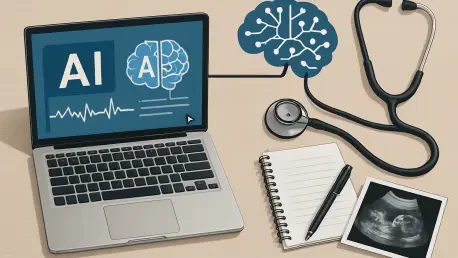

The proliferation of consumer-grade artificial intelligence has placed a universe of information at our fingertips, yet for questions concerning personal health, the stakes are infinitely higher than a simple search query. As individuals increasingly turn to general AI chatbots for medical guidance, the healthcare industry faces a critical inflection point: how to harness the power of AI without compromising the safety, accuracy, and personalization that effective care demands. In response to this challenge, virtual care and navigation company Included Health has introduced “Dot,” a clinician-guided AI assistant designed not to replace human expertise, but to integrate with it, creating a new paradigm for member engagement and support. This development signifies a deliberate move away from generic, one-size-fits-all AI toward a system deeply embedded in personal health data and governed by rigorous clinical oversight.
When Your Health Is on the Line Is a Generic Chatbot Good Enough
The rise of publicly available large language models has created a new, unregulated avenue for health inquiries. While these tools can provide general information, they operate in a clinical vacuum, devoid of a user’s medical history, benefits coverage, or local provider network. This lack of context can lead to advice that is not only irrelevant but potentially dangerous. A generic chatbot cannot understand the nuances of an individual’s health plan, nor can it differentiate between a high-quality specialist and a provider with a poor track record. Consequently, a user seeking guidance on a complex condition might receive information that overlooks critical factors specific to their situation, leading to confusion, wasted time, and suboptimal health decisions.
This gap between general information and personalized, actionable guidance is precisely where specialized healthcare AI aims to make its mark. The fundamental limitation of a generic tool is its inability to connect information to a specific person’s journey. It cannot answer pivotal questions like, “Is this surgeon in my network and known for excellent outcomes?” or “How much of my deductible have I met this year?” These are not trivial details; they are the practical barriers that often stand between a patient and the care they need. Relying on a tool that lacks this integrated knowledge forces individuals to become their own care coordinators, piecing together fragmented information from disparate sources in moments of vulnerability.
The AI Arms Race in Healthcare Why Personalized Clinically Grounded Technology Is No Longer an Option But a Necessity
The healthcare landscape, particularly within the employer benefits sector, is undergoing a rapid technological transformation. Corporate buyers, who are responsible for the health coverage of millions of employees, are no longer satisfied with passive benefits platforms. They are actively seeking innovative partners who can demonstrate a tangible return on investment through improved employee health and engagement. This has ignited an “AI arms race,” where the ability to deploy sophisticated, intelligent tools has become a critical competitive differentiator. Companies that fail to integrate meaningful AI risk being perceived as outdated, unable to meet the evolving expectations of both employers and their workforces.
In this competitive environment, the focus has shifted from mere technological capability to demonstrable clinical value and safety. Included Health, which serves a substantial portion of the market, including over a third of Fortune 10 companies, has positioned Dot as a strategic asset. The deployment of a clinically integrated AI is not just a new feature; it is a statement about the company’s commitment to responsible innovation. According to company leadership, there is a clear and growing demand from business leaders for AI-driven solutions that are not just powerful but also safe and member-centric. By being an early mover with a robust, clinician-supervised AI, the company aims to set a new standard for what employers can and should expect from their healthcare partners.
Under the Hood of Dot An AI Built on a Foundation of Personal Health Data
At its core, Dot is designed for hyper-personalization, a capability derived from its deep integration with a vast and diverse set of member-specific data. The AI assistant was meticulously trained over an 18-month period on client-specific information, giving it an encyclopedic knowledge of each employer’s unique benefits structure, including covered services, exclusions, and plan documents. This foundational layer is enriched with an individual member’s claims history, benefits utilization patterns, and, where available, information from the company’s enterprise-grade electronic health record (EHR). This multi-faceted data approach allows Dot to move beyond generic responses and provide answers tailored to a single member’s distinct circumstances and health history.
This powerful data integration translates into a seamless and practical user experience, transforming complex healthcare navigation into a simple conversation. For instance, a member can interact with Dot to ask highly specific questions like, “How much of my annual deductible is left?” or “Is bariatric surgery covered under my current plan?” and receive an immediate, accurate answer. A primary and frequently used function is assisting members in finding high-quality, in-network healthcare providers. Instead of a simple list, Dot leverages proprietary physician-quality models to recommend clinicians known for excellent outcomes, streamlining a process that is often a significant source of frustration and anxiety for patients and their families.
The intelligence driving Dot is fueled by a sophisticated data engine that synthesizes information from numerous sources to create a holistic view of each member’s needs. Beyond claims and benefits information, the system incorporates systemwide utilization data to identify efficient and cost-effective care pathways. It also analyzes insights related to social determinants of health, which can help identify potential non-clinical barriers to care, such as transportation or access to healthy food. This comprehensive data fabric ensures that Dot’s recommendations are not just clinically appropriate and financially sound but also contextually aware of the member’s broader life situation, making its guidance more relevant and actionable.
The Human Element How the Clinician in the Loop Model Creates a Safety Net
Included Health has been explicit in defining Dot’s role as a tool to augment its clinical team, not replace it. The AI is engineered to handle a wide range of administrative and informational queries, which in turn extends the reach and capacity of the human care team. By automating routine tasks like checking benefits or finding a provider, Dot frees up clinicians and care advocates to focus on more complex issues that require deep clinical expertise, empathy, and nuanced judgment. This model allows the company to scale its support services efficiently while ensuring that human intelligence is reserved for moments where it matters most.
A central feature of this hybrid model is the seamless hand-off between the AI and a human expert. Nupur Srivastava, Chief Operating Officer at Included Health, emphasizes that the system was designed to eliminate the common frustration of having to repeat information when a conversation is escalated. When a query becomes too complex for Dot or requires a clinical diagnosis, the entire context of the chat is transferred to a member of the 24/7 care team. This ensures a smooth transition and allows the human clinician to pick up the conversation exactly where the AI left off, providing a continuous and supportive experience for the member.
This “clinician-in-the-loop” framework represents a strategic fusion of technological efficiency and human empathy. It leverages the speed, availability, and data-processing power of AI while creating an unbreakable safety net of human oversight. The model acknowledges that while an algorithm can quickly parse data and answer logistical questions, it cannot replicate the emotional intelligence (EQ) and diagnostic skill of an experienced clinician. By combining automated efficiency with the expertise of its care team, Included Health aims to deliver a service that is both highly responsive and deeply compassionate, providing members with the best of both worlds.
A Blueprint for Responsible AI Building an Uncompromising Framework for Clinical Safety
Operating as a medical practice, Included Health holds its AI to a higher standard of safety than a general technology platform. The development of Dot was guided by strict, non-negotiable guardrails established by in-house medical experts. These clinical leaders defined the operational boundaries of the AI, determining which types of queries it could handle independently and which required immediate human intervention. This medically-led governance ensures that the technology operates within a framework where patient safety is the paramount concern, preventing the AI from offering advice that could be clinically inappropriate or venturing into areas best left to licensed professionals.
This commitment to safety is most evident in how Dot handles high-risk situations. The system is programmed to recognize keywords and sentiment related to serious mental or physical health crises, such as suicidal ideation. If such a “red flag” is detected, Dot does not respond with a generic helpline number, a common practice for general-purpose chatbots. Instead, its protocol triggers an immediate and urgent escalation to a clinician on the Included Health team. That clinician then proactively reaches out to the member by phone to provide direct support and connect them to emergency services if necessary. This proactive intervention model transforms the AI from a passive information provider into an active component of a clinical safety net.
The underlying principle is that an AI operating in a healthcare context must adhere to the same rigorous standards as a medical practice. Unlike a consumer technology product where errors might lead to inconvenience, mistakes in healthcare can have life-altering consequences. This philosophy shapes every aspect of Dot’s design, from its data privacy protocols to its escalation procedures. By embedding clinical oversight directly into the AI’s architecture, Included Health is creating a blueprint for responsible AI in healthcare—one that prioritizes uncompromising safety and builds trust by ensuring a human is always there to catch, guide, and support the member when they need it most.
The Strategic Roadmap Evolving Dot from a Reactive Tool to a Proactive Health Engine
While Dot’s initial launch focuses on navigating benefits and answering member queries, the long-term vision is to evolve it from a reactive tool into a proactive engine for health. The strategic roadmap includes leveraging the AI to drive preventive care by identifying and engaging members who are due for important health screenings. For example, Dot could send a personalized nudge to a member about scheduling a mammogram or a colonoscopy based on their age and health history, or check if they have received their annual flu shot, transforming the platform into a key driver of population health.
This proactive engagement will also extend to ongoing care management, positioning Dot as a “friendly extension” of the human care team. For members managing chronic conditions or following a specific treatment plan, the AI can initiate low-friction check-ins to monitor progress, offer encouragement, and provide resources to support care plan adherence. As part of programs like the company’s “Healthy Days” initiative, Dot will engage members in brief conversations about their mental and physical well-being, creating a continuous touchpoint that makes healthcare feel more supportive and less episodic.
Beyond individual member engagement, the AI strategy includes generating valuable insights for employer and health plan clients. By analyzing aggregated and anonymized data, Included Health can identify population-level health trends and gaps in care. These insights can help clients better understand the specific needs of their workforce and design more effective and targeted benefits programs. This capability elevates Dot from a member-facing tool to a strategic asset for clients, providing data-driven intelligence to improve health outcomes and manage costs across their entire population.
The introduction of Dot marked a significant evolution in how technology could be thoughtfully and safely integrated into the member healthcare journey. It stood as a testament to the idea that the true potential of AI in medicine would not be realized by replacing clinicians, but by empowering them. The system’s design, which meticulously fused the analytical power of data with the indispensable oversight of human experts, provided a compelling model for the industry. By establishing a framework where technology handled the complexities of navigation and logistics, it allowed the human element of care—empathy, clinical judgment, and direct intervention—to be applied with greater precision and impact. This hybrid approach ultimately defined a more sustainable and trustworthy path forward for digital health.