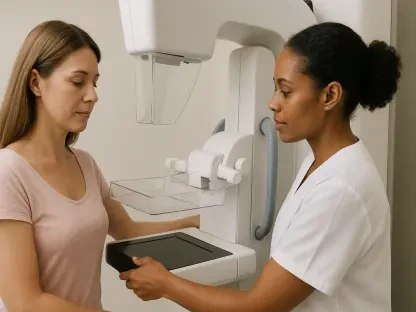

The transformation of the oncology market from a reliance on visual pathology to the high-resolution world of molecular diagnostics represents one of the most significant shifts in medical history to date. By moving away from the traditional method of identifying tumors based solely on their physical appearance under a microscope, clinicians are now utilizing the intricate blueprint provided by DNA, RNA, and protein markers. This shift signifies a departure from the one-size-fits-all approach to chemotherapy, replacing it with precision-targeted strategies that recognize each patient’s cancer as a unique biological event. Economically, this evolution is driving a massive reallocation of capital within the healthcare sector. The market for oncology molecular diagnostics, valued at approximately $5.61 billion in 2025, is projected to surge toward nearly $14 billion by 2032. This robust compound annual growth rate of over 13% demonstrates that high-precision genetic analysis has transitioned from a high-end luxury for academic researchers to a fundamental pillar of hospital infrastructure. As these diagnostics become the essential gatekeepers for high-value biological therapies, they are effectively resetting the global standard of care, ensuring that every therapeutic intervention is backed by granular genetic evidence.
The Evolution of Next-Generation Sequencing and Point-of-Care Tools
While Polymerase Chain Reaction (PCR) continues to serve as the gold standard for many diagnostic applications due to its cost-efficiency and rapid turnaround, the industry is experiencing a massive pivot toward Next-Generation Sequencing (NGS). This technology allows for a comprehensive examination of the cancer genome, enabling the detection of rare mutations, copy number variations, and structural rearrangements that were previously invisible to standard testing. The ability to sequence hundreds of genes simultaneously from a single tissue or blood sample has fundamentally changed the clinical workflow, moving from sequential single-gene testing to comprehensive genomic profiling. This approach not only identifies primary drivers of tumor growth but also uncovers resistance markers that help oncologists avoid ineffective treatments. By providing a holistic view of the tumor’s molecular landscape, NGS-based diagnostics allow for the matching of patients with clinical trials or approved targeted therapies that offer the highest probability of success.
Parallel to the rise of advanced sequencing is the increasing decentralization of diagnostic tools through point-of-care testing. Traditionally, complex molecular tests required samples to be shipped to large reference laboratories, a process that could take weeks and delay the start of critical therapies. However, newer, more compact diagnostic platforms are bringing these sophisticated capabilities directly to the hospital bedside or local oncology clinic. This transition is crucial for acute cases where immediate treatment decisions are necessary to improve survival rates. The development of automated, “sample-to-insight” systems has simplified the technical requirements for operating these machines, allowing smaller medical facilities to offer high-level molecular testing without the need for an expansive department of genetic specialists. As these point-of-care tools become more pervasive, the timeframe for personalized treatment initiation is expected to shrink from weeks to mere days, drastically improving the patient experience.
Economic Sustainability through Recurring Revenue and Clinical Specialization
The economic structure of the oncology diagnostics market is increasingly defined by the “razor and blade” business model, which ensures a steady stream of recurring revenue for manufacturers. In this setup, medical technology companies place sequencing instruments or PCR machines in hospitals at a relatively low upfront cost or through leasing agreements, while generating the majority of their profit through the continuous sale of proprietary reagents and consumables. Because every test requires a fresh set of chemical reagents and single-use cartridges, the consumables segment currently dominates the market in terms of volume and revenue. This model is particularly attractive to investors as it provides predictable cash flows and ties the success of the manufacturer to the testing volume of the healthcare provider. As screening programs become more aggressive and the number of known biomarkers increases, the demand for these high-margin consumables is expected to grow exponentially, reinforcing the financial stability of the major players in the diagnostic space.
Beyond the hardware and reagents, the market is also segmented by clinical application, with specific types of cancer driving different growth trajectories. Breast cancer diagnostics currently lead the market in total share, a result of decades of standardized screening protocols and a well-established pipeline of targeted therapies like HER2 inhibitors. However, colorectal cancer diagnostics are emerging as the fastest-growing clinical area, fueled by a heightening clinical awareness of the need for molecular profiling in gastrointestinal malignancies. The growth in this segment is also a response to the development of liquid biopsy technologies, which allow for the non-invasive monitoring of colorectal tumor DNA in the bloodstream. This ability to track disease progression and treatment response without a surgical biopsy is making molecular diagnostics more accessible to a broader range of patients, thereby expanding the overall market footprint and encouraging further investment in specialized diagnostic kits for a variety of solid tumors.
Regional Drivers and the Influence of Demographic Transitions
The global distribution of the oncology diagnostics market highlights a clear distinction between the established infrastructure of North America and the rapid expansion occurring across the Asia-Pacific region. North America remains the dominant force, supported by a sophisticated healthcare ecosystem, high levels of research and development spending, and early adoption of precision medicine by major insurance providers. The concentration of leading diagnostic companies and academic research centers in the United States and Canada has created a fertile environment for the commercialization of new molecular tests. However, the market in this region is reaching a stage of maturity where growth is driven more by the replacement of older systems with advanced NGS platforms rather than the initial adoption of molecular testing. The focus here is shifting toward enhancing data integration and clinical decision support, ensuring that the vast amounts of genetic data generated can be effectively utilized by practicing physicians.
In contrast, the Asia-Pacific region is poised to experience the world’s highest growth rate, projected at 16% from 2026 to 2032. This surge is primarily driven by the massive demographic shifts occurring in nations like China, India, and Japan, where aging populations are leading to a higher incidence of cancer cases. Governments in these regions are increasingly investing in healthcare modernization to manage the rising economic burden of chronic disease. Furthermore, the expansion of the middle class in emerging economies is creating a higher demand for advanced medical services that were previously out of reach for the general population. As localized manufacturing of diagnostic reagents increases and regional regulatory frameworks become more streamlined, the cost of molecular testing is expected to decrease. This improved affordability will likely trigger a massive uptick in the volume of diagnostic procedures, making the Asia-Pacific region the primary engine for the next decade of global market expansion.
Institutional Barriers and the Strategy of Platform Penetration
Despite the clear benefits of molecular diagnostics, the path to universal adoption is hindered by significant institutional and structural barriers. One of the primary obstacles is the high cost of implementing comprehensive genomic profiling, which remains a challenge for many healthcare systems operating under tight budgetary constraints. Beyond the cost of equipment and reagents, there is a severe shortage of skilled personnel, particularly bioinformaticians and genetic counselors, who are essential for interpreting complex molecular data and translating it into actionable clinical advice. This “human bottleneck” often prevents hospitals from fully utilizing the sophisticated tools they have purchased. Additionally, the regulatory environment for molecular diagnostics is increasingly complex, as health authorities demand more rigorous clinical evidence to approve multi-marker tests. These hurdles can delay the entry of innovative products into the market and create a disparity in the quality of care available between large academic centers and smaller community hospitals.
In response to these challenges, the competitive landscape is being reshaped by a strategy known as “platform penetration,” led by industry giants such as Roche and Abbott. These companies are focusing on creating integrated ecosystems where the diagnostic instrument, the laboratory software, and the therapeutic selection are all part of a single, seamless workflow. By securing long-term contracts for their proprietary platforms, these leaders can effectively lock in their market position and protect against competition from smaller, niche players. Innovation is also moving toward the development of highly specific mutation tests that are directly linked to the selection of particular high-value drugs. For example, recent approvals of tests that detect dozens of distinct markers for non-small cell lung cancer have set a new precedent for how diagnostics and therapeutics are bundled. This trend toward “companion diagnostics” ensures that pharmaceutical companies and diagnostic manufacturers work in tandem, creating a more efficient pathway for drug development and patient stratification.
Strategic Implementation and the Future of Diagnostic Integration
Stakeholders across the healthcare continuum moved to prioritize the development of integrated digital infrastructures that allowed for the seamless sharing of genomic data between diagnostic laboratories and clinical settings. This step was essential because it resolved the historic disconnect between the generation of genetic information and the actual decision-making process at the point of care. Hospital administrators implemented cloud-based bioinformatics platforms that automated the interpretation of complex sequencing results, thereby reducing the reliance on a limited pool of specialized genetic experts. These actions successfully lowered the operational barriers for community-level clinics, ensuring that patients in rural or underserved areas could access the same level of precision oncology that was once reserved for elite metropolitan research hospitals. By focusing on data interoperability and automated reporting, the industry finalized its transition from a fragmented collection of test providers to a unified system of comprehensive decision support.
The long-term success of the oncology market was ultimately secured by a collective push toward value-based reimbursement models that recognized the economic benefits of early and accurate molecular profiling. Payers and healthcare providers collaborated to establish clear clinical pathways where the use of advanced diagnostics was mandated as a prerequisite for expensive targeted therapies, which significantly reduced wasteful spending on ineffective treatments. This strategic alignment encouraged the continued miniaturization of sequencing technology, leading to the widespread adoption of liquid biopsies as a routine tool for monitoring minimal residual disease. As molecular diagnostics became more affordable and easier to integrate into daily hospital workflows, the focus of cancer care shifted from reactive treatment to proactive, data-driven management. These efforts collectively ensured that the molecular profile of a tumor became the primary guide for every step of the patient’s journey, permanently redefining the boundaries of modern oncology.