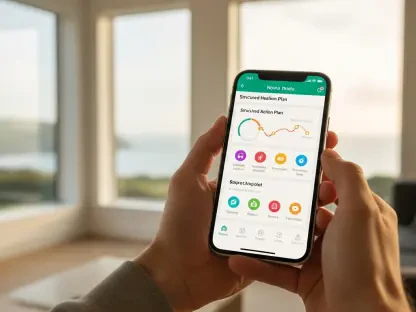

The digital health landscape has shifted dramatically as nearly one in three Americans now routinely consult artificial intelligence chatbots to navigate their personal wellness journeys and interpret complex medical data. This represents a staggering one-hundred percent increase in adoption over the previous twelve months, signaling that AI has transitioned from a niche experimental novelty into a foundational pillar of modern health management. Rather than waiting for traditional medical institutions to roll out proprietary software, consumers are proactively seeking out general-purpose large language models to gain immediate clarity on their symptoms and lifestyle choices. This movement highlights a fundamental departure from passive patient roles, as individuals increasingly prioritize speed and conversational fluidity over the rigid structures of legacy healthcare portals. Consequently, the industry is witnessing a democratization of medical knowledge that challenges the long-standing monopoly of formal clinical settings. This shift indicates a new era where technology provides an accessible first step for health inquiries.
The Rise of the Proactive Healthcare Superuser
Engagement and Behavior: The AI-Empowered Patient
The profile of the typical AI health user contradicts the assumption that technology encourages detachment; instead, it has birthed a class of proactive healthcare superusers. These individuals are characterized by an intense focus on self-monitoring, tracking an average of four distinct health metrics compared to only three among non-users. By utilizing wearable technology and mobile applications in tandem with AI, these consumers maintain a granular focus on modifiable lifestyle factors such as sleep quality, dietary intake, and daily stress levels. This data-driven approach allows patients to identify subtle patterns in their well-being before a minor issue escalates into a chronic condition. Rather than replacing the professional expertise of a physician, the AI functions as a sophisticated data synthesizer that helps the user organize their observations into a coherent narrative. This preparation enables a more sophisticated level of engagement when the patient finally enters a clinical setting.
Research into these superusers reveals that their reliance on digital tools actually enhances the productivity of the traditional doctor-patient relationship rather than undermining it. When a patient arrives at an appointment having already utilized AI to clarify their symptoms and research potential questions, the duration of the visit can be spent on high-level diagnostic reasoning rather than basic information gathering. This shift is particularly evident among those tracking physiological data, where 43% monitor sleep and 40% keep close tabs on nutrition. The AI provides these users with a preliminary framework, allowing them to present their concerns with a level of specificity that was previously rare in general practice. By transforming raw biometric data into actionable insights, these tools empower patients to advocate for their health with newfound confidence. This proactive behavior suggests that AI is not a shortcut to avoid medical care, but a strategic asset for navigating it more effectively.
Patient Journey Acceleration: The Role of Technology
One of the most significant impacts of artificial intelligence is its role as a catalyst for immediate action, bridging the gap between a health concern and professional intervention. Data indicates that approximately eighty-one percent of users take a specific, tangible step toward improving their health immediately after interacting with a chatbot. These actions range from adopting new fitness regimens and adjusting dietary habits to the critical step of scheduling a formal consultation with a licensed clinician. Far from creating a barrier to traditional services, AI acts as an accelerator that moves the patient through the healthcare system with greater speed and intent. By providing a low-friction entry point for medical inquiries, these platforms reduce the psychological inertia that often prevents people from seeking necessary care. The result is a more dynamic healthcare ecosystem where digital preliminary assessments lead to more frequent and higher-quality interactions with human medical professionals.
Furthermore, the integration of AI into daily health routines is linked to a notable increase in the utilization of both virtual and in-person medical services. While some feared that automated tools would lead to a decline in office visits, the opposite has proven true as informed patients seek validation for the insights generated by their digital assistants. This phenomenon suggests that AI serves as a navigation layer for a complex and often intimidating healthcare system, helping users identify which symptoms require urgent attention and which can be managed through lifestyle changes. By clarifying the necessity of care, these tools help optimize resource allocation, ensuring that patients who truly need professional help are directed to the appropriate channels. This symbiotic relationship between human expertise and machine intelligence is redefining the patient journey, making it more fluid and less reliant on sporadic, reactive appointments that characterize the traditional model of medicine.
Demographic Shifts and the Privacy Trade-off
Democratization: Closing the Digital Divide
The adoption of artificial intelligence in the health sector has demonstrated a unique capacity to bridge long-standing socioeconomic divides that previously hindered digital progress. Unlike expensive high-end wearables or exclusive concierge medical services, which often require significant financial investment, AI tools are frequently accessible for free via standard smartphones. This low barrier to entry has meant that adoption rates are not strictly correlated with income or formal education levels, allowing a diverse cross-section of the population to benefit from advanced data analysis. This democratization represents a major shift in how health technology is distributed, moving away from a luxury-goods model toward a ubiquitous utility. As long as a consumer has an internet connection, they can access sophisticated health insights that were once reserved for those with the means to pay for private health consultants. This trend is fundamentally altering the landscape of health equity across various social strata.
Despite this narrowing of the economic gap, a significant generational divide persists, with younger cohorts adopting AI health tools at a much higher frequency than their older counterparts. Nearly half of Millennials and Gen Z adults have integrated these technologies into their wellness routines, compared to a much smaller percentage of the Silent Generation and Baby Boomers. This discrepancy is largely driven by existing technological fluency and a higher comfort level with conversational interfaces rather than a lack of interest in health improvement among older adults. As younger generations age, their preference for digital-first interactions is expected to become the dominant paradigm in the medical industry. For now, the challenge remains to create interfaces that are intuitive enough for older populations to use, ensuring they are not left behind in this digital revolution. The focus is shifting from simple access toward usability and tailored experiences that cater to the specific needs of diverse age groups.
Information Risks: Evolving Trust and Privacy
As consumers become increasingly reliant on these digital assistants, their profiles regarding trust and data privacy are undergoing a profound and potentially risky evolution. AI users are significantly more likely to trust non-traditional information sources, including social media and automated chatbots, compared to those who do not use these tools. This shift in trust often leads to a willingness to share highly sensitive medical information with third-party tech companies that may not be bound by the same strict privacy regulations as traditional healthcare providers. This creates a complex privacy trade-off, where patients exchange their personal data for the convenience and speed of AI-driven insights. While the perceived benefits are high, the risk of data exploitation or unauthorized sharing remains a serious concern for privacy advocates. The challenge for the industry is to develop robust frameworks that protect consumer confidentiality without stifling the innovation that makes these tools so valuable to the public.
Beyond privacy concerns, the reliance on general-purpose AI introduces significant risks related to clinical accuracy and the potential for hallucinations or incorrect advice. Users are twice as likely as non-users to share their health data with consumer tech firms, often stepping outside the regulated walled gardens of traditional clinical systems. This movement away from supervised medical environments increases the likelihood that a patient might receive inaccurate triage recommendations or misinterpreted laboratory results. Even though the vast majority of AI users still hold their primary care physicians in high regard, the influence of the chatbot can sometimes overshadow professional medical advice if the two conflict. Therefore, the medical community must address the urgent need for better digital literacy among patients and more rigorous validation of health-oriented AI models. Ensuring that these tools supplement rather than subvert professional clinical judgment is essential for maintaining the safety and integrity of the modern healthcare system.
Strategic Integration for Future Healthcare Success
The rapid integration of artificial intelligence into personal health management represented a fundamental shift in the American medical landscape. As patients moved toward more proactive, self-directed care models, the traditional role of the physician evolved to accommodate hyper-informed individuals. This transition highlighted the need for a collaborative approach where digital tools served as a bridge rather than a barrier to professional expertise. Future strategies focused on establishing clear regulatory standards that protected consumer privacy while encouraging the continued democratization of health information. Ultimately, the successful management of this technological shift required a balanced focus on data security, clinical accuracy, and the maintenance of the human connection at the heart of medicine. By addressing these challenges, the healthcare industry ensured that the rise of the AI superuser led to improved outcomes and a more responsive, patient-centered system. The journey emphasized that while AI provided the data, human wisdom remained the final authority in wellness.