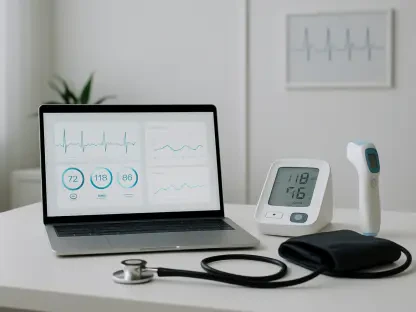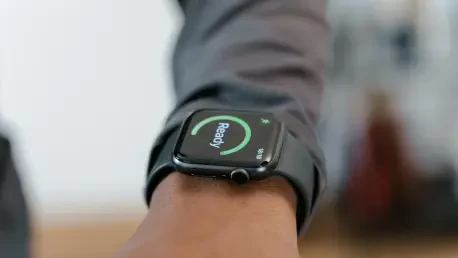

The steady migration of high-fidelity sensors from the laboratory to the wrist has fundamentally altered the baseline expectations for patient oversight in modern healthcare environments. Medical professionals no longer rely solely on the sporadic snapshots provided by office visits; instead, they are beginning to harness a persistent stream of physiological data that offers a more granular perspective on human health. This transition toward continuous monitoring represents a departure from the traditional reactive model of medicine, where symptoms must manifest significantly before intervention occurs. By utilizing sophisticated smartwatches and biosensors, clinical teams can observe subtle fluctuations in heart rate, oxygen saturation, and activity levels in real time. This persistent connectivity enables a deeper understanding of how lifestyle choices and environmental factors influence chronic conditions, effectively closing the gap between the clinic and the home while creating a more holistic narrative of patient wellness that empowers both the provider and the individual patient.
Enhancing Diagnostic Precision: The Power of Longitudinal Monitoring
Wearable technology offers a longitudinal view of a patient’s health that is simply unattainable through traditional diagnostic methods, which are often limited by their episodic nature. A standard physical examination captures a single moment in time, but a wearable device tracks metrics such as sleep architecture, respiratory rate, and electrodermal activity over several weeks or months. This constant accumulation of data allows for the application of machine learning algorithms that can detect deviations from a patient’s baseline long before clinical symptoms become apparent to the naked eye. For instance, subtle increases in resting heart rate paired with changes in sleep quality can serve as early indicators of viral infection or an impending flare-up of a chronic respiratory condition. By shifting the focus toward these early physiological signals, healthcare systems can implement preventive measures that reduce the necessity for emergency interventions and hospitalizations, thereby improving overall outcomes.
In specialized fields like cardiology, the impact of wearable devices is particularly evident in the detection of complex rhythm abnormalities such as atrial fibrillation. Landmark studies have demonstrated that consumer-grade technology can effectively flag irregular heartbeats, but the true value often lies in identifying paroxysmal events that are notoriously difficult to catch during a brief clinical ECG. While some critics point to the risk of false positives, researchers have noted that many of these unconfirmed alerts actually represent transient episodes of arrhythmia that provide critical clues about a patient’s long-term stroke risk. The ability to monitor a patient’s heart rhythm during their normal daily activities provides a far more accurate representation of their cardiovascular health than a controlled office test. This transition to decentralized diagnostics allows for more precise risk stratification and ensures that medical interventions are based on comprehensive, real-world data rather than the artificial environment of a clinic or hospital bed.
Navigating Regulatory Changes: Accountability in a Digital Era
The current regulatory landscape is evolving rapidly as agencies like the FDA adopt more flexible frameworks to accommodate the high speed of digital health innovation. By streamlining the approval process for lower-risk software and hardware, these organizations aim to bring transformative tools to the market without the multi-year delays typically associated with traditional medical devices. This modernized approach encourages technology companies to refine their algorithms and sensors continuously, ensuring that patients have access to the latest advancements in biometric monitoring. However, the relaxation of certain formal oversight requirements means that the burden of validation is shifting from centralized authorities to the actual point of care. This transition necessitates a robust internal process within healthcare systems to verify that the tools being recommended to patients meet the requisite standards for clinical accuracy and data integrity, particularly when these devices are used for diagnostic purposes.
As providers integrate these tools into their practice, they find themselves in a unique position of clinical and legal accountability regarding the data generated by consumer electronics. Without the traditional safety net of comprehensive FDA certification for every software update, clinicians must develop the expertise to evaluate the reliability of various wearable brands and their underlying proprietary algorithms. This new responsibility requires medical professionals to act as gatekeepers, determining which data points are clinically actionable and which are merely statistical noise. The challenge lies in maintaining a balance between the enthusiastic adoption of helpful new technology and the rigorous skepticism required to protect patient safety. Healthcare organizations must now invest in training programs that help staff interpret wearable data correctly, ensuring that clinical decisions are supported by high-quality evidence rather than unverified consumer metrics that could lead to unnecessary testing or psychological distress for the patient.
Integrating Complex DatOvercoming Workflow and Security Hurdles
The sheer volume of information generated by wearable devices poses a significant challenge to clinical workflows that are already stressed by administrative requirements. Integrating thousands of individual heart rate readings or activity logs into an Electronic Health Record without a clear summarization strategy can lead to cognitive overload for physicians and nurses. To make this data useful, there is an urgent need for interoperability standards that allow different devices and platforms to communicate seamlessly with hospital systems. Effective integration requires the development of sophisticated dashboards that highlight relevant trends and anomalies while filtering out the vast quantities of non-essential information. By transforming raw biometric data into actionable insights, healthcare providers can focus their attention on the patients who require immediate intervention. This structural evolution is necessary to prevent the promise of wearable technology from being buried under the weight of unmanaged data that complicates rather than simplifies care delivery.
Data privacy and cybersecurity remain paramount concerns as sensitive physiological information moves between consumer devices and professional medical networks. Many popular wearables operate within a commercial ecosystem that is not subject to the same stringent protections as traditional health insurance and hospital records, creating potential vulnerabilities for data breaches or unauthorized access. Furthermore, the variability in sensor precision across different manufacturers can lead to inconsistent readings, which complicates the standardization of care protocols. Ensuring that all patient-generated health data is encrypted and stored according to the highest security standards is essential for maintaining public trust in digital health initiatives. Addressing these technical discrepancies requires a concerted effort from both technology developers and healthcare administrators to establish a unified framework for data exchange. Only by securing the pipeline between the wrist and the medical record can the industry fully realize the benefits of widespread remote monitoring.
Future Directions: Strategic Implementation of Wearable Care
The integration of wearable devices into clinical practice necessitated a fundamental reimagining of how medical professionals interacted with patient data and remote monitoring tools. Organizations that successfully adopted these technologies focused on creating clear protocols for data triage, ensuring that only the most relevant physiological alerts reached the attending physician. Moving forward, the medical community established rigorous internal benchmarks for device validation, which effectively mitigated the risks associated with consumer-grade hardware. To capitalize on these advancements, healthcare leaders prioritized the implementation of automated analysis systems that could synthesize complex biometric trends into brief, readable reports. This shift required a commitment to ongoing education for both staff and patients regarding the limitations and strengths of remote monitoring. By fostering a culture of data-driven transparency, providers secured a more proactive role in managing patient health, ultimately transforming the way chronic conditions were monitored and treated across the entire healthcare continuum.