
Imagine a primary care physician starting their day, not buried under a mountain of paperwork, but instead spending meaningful time with patients, thanks to technology that anticipates their needs and streamlines their tasks. This is no longer a distant dream but a growing reality with the integration of artificial intelligence (AI) into electronic health record (EHR) systems. AI is reshaping healthcare by tackling age-old challenges like overwhelming administrative burdens and inefficient workflows. This review delves into the transformative role of AI within EHRs, exploring its core features, recent advancements, real-world impact, and the hurdles yet to overcome, while casting an eye toward its promising horizon.
Understanding AI in Electronic Health Records
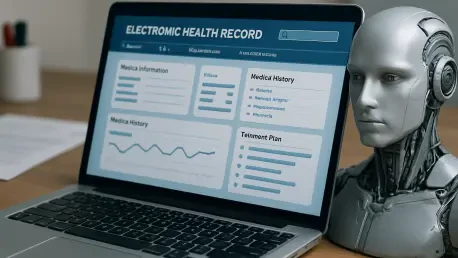
At its heart, AI in EHRs is about harnessing machine learning and natural language processing to make digital health records more than just static repositories of patient data. These technologies enable systems to analyze vast amounts of information, predict outcomes, and automate repetitive tasks, effectively acting as a virtual assistant for clinicians. The rise of AI in this space addresses critical pain points in healthcare, such as the time clinicians spend on documentation rather than patient care, a frustration long echoed across the industry.
The relevance of this technology cannot be overstated in today’s fast-evolving healthcare landscape. With increasing patient loads and complex regulatory demands, AI offers a lifeline by optimizing workflows and enhancing decision-making. Moreover, its integration into existing EHR platforms ensures that healthcare providers can adopt these tools without overhauling their systems, making it a practical solution for an overburdened sector.
Diving into Key Features and Components
Streamlining Patient Documentation with Ambient Scribing
One of the standout features of AI in EHRs is its ability to revolutionize patient documentation through tools like ambient scribing. These systems listen to patient-physician conversations in real time, transcribing interactions into structured notes with minimal human input. This not only slashes the time spent on post-visit documentation but also reduces errors that often creep into manual entries.
Beyond just transcription, features like note assist take this a step further by organizing captured data into actionable tasks and orders. The impact is profound—physicians can focus on the human aspect of care rather than being tethered to a screen. Early feedback suggests that such tools are shaving off significant minutes per patient encounter, allowing doctors to reclaim hours in their day for direct care or personal respite.
Enhancing Care with Clinical Decision Support and Data Analysis
Equally transformative is AI’s role in clinical decision support, where algorithms analyze patient data to offer real-time suggestions for diagnoses, treatments, or follow-ups. These tools act as a second set of eyes, flagging potential issues like drug interactions or missed preventive screenings, thereby elevating the quality of care. Their integration into EHRs ensures that such insights are delivered seamlessly during patient interactions.
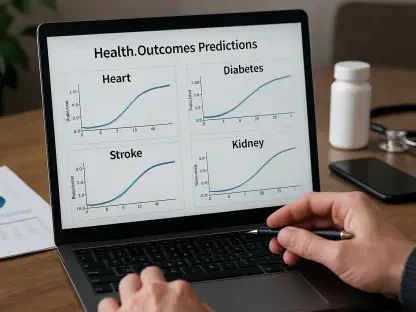
Additionally, AI excels in population health data analysis, sifting through aggregated records to identify trends and risk factors across patient cohorts. In primary care, this capability supports proactive interventions, such as identifying at-risk groups for chronic conditions. The precision and speed of these analyses are proving invaluable, empowering providers to make data-driven decisions at scale, often in settings where resources are stretched thin.
Tracking Recent Innovations in AI for EHRs
The pace of innovation in AI for EHRs is accelerating, with platforms increasingly adopting an AI-native approach, meaning they are built from the ground up to incorporate intelligent features. This shift is evident in the latest tools that prioritize seamless integration over standalone applications, ensuring minimal disruption to clinical workflows. Such advancements are setting a new standard for how technology can blend into the daily grind of healthcare delivery.
Emerging trends also show a growing emphasis on personalization, with AI systems learning from individual clinician preferences to tailor suggestions and automate routine tasks. Meanwhile, industry behavior is shifting, as both providers and vendors recognize the competitive edge of embedding AI directly into EHRs. This convergence signals a broader acceptance of AI as a core component of health tech, rather than a flashy add-on.
Exploring Real-World Impact and Applications
In practice, AI in EHRs is making tangible differences, especially in primary care settings where time is a precious commodity. Tools for medication reconciliation, for instance, automatically flag outdated prescriptions and streamline updates, cutting down on manual errors and saving clicks. This seemingly small efficiency translates into better patient safety and smoother workflows during busy clinic hours.
Beyond individual tasks, AI facilitates patient outreach by identifying those due for follow-ups or preventive care, enabling clinics to maintain continuity of care. Case studies from various healthcare sectors highlight how these systems are bridging gaps, ensuring no patient falls through the cracks. Reports indicate that such applications are not only improving outcomes but also enhancing clinician satisfaction by reducing mundane workloads.
The versatility of AI in EHRs shines through in unique implementations, such as automated scheduling and form completion, which prepare for visits with minimal input. These examples underscore the technology’s adaptability across diverse needs, from small practices to large health systems. The growing adoption reflects a consensus that AI can fundamentally enhance how care is delivered on the ground.
Navigating Challenges and Limitations
Despite its promise, AI in EHRs faces significant hurdles that temper enthusiasm. Technical inconsistencies, such as varying accuracy in transcription or decision support, can undermine trust in these tools. When outcomes are unpredictable, clinicians may hesitate to rely on AI, slowing adoption in critical settings where precision is paramount.
Regulatory challenges also loom large, particularly around data privacy and compliance with stringent health information laws. Ensuring that AI systems safeguard sensitive patient data while delivering actionable insights remains a complex balancing act. Moreover, market barriers, including high implementation costs and resistance to change, continue to limit widespread rollout, especially among smaller providers with tight budgets.
Efforts to address these issues are underway, with developers refining algorithms to boost reliability and policymakers crafting clearer guidelines for AI use in healthcare. However, overcoming these obstacles requires a concerted push from all stakeholders to prioritize interoperability and user training. Until then, the full potential of AI in EHRs remains tantalizingly out of reach for many.
Envisioning the Future of AI in EHRs
Looking ahead, the trajectory of AI in EHRs points toward greater automation, where repetitive tasks could be entirely offloaded from clinicians’ plates. Breakthroughs in natural language understanding may soon enable even more nuanced interactions, capturing the subtleties of patient dialogue with uncanny accuracy. Such advancements could redefine the patient-provider dynamic, making every encounter more focused and impactful.
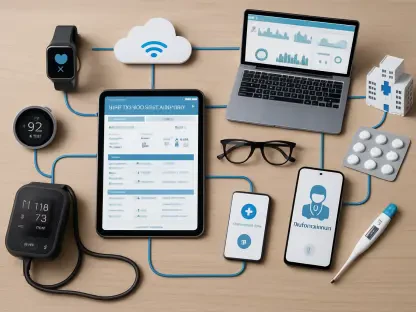
Personalization is another frontier, with AI poised to adapt not just to individual clinicians but also to specific patient needs, offering tailored care plans at the click of a button. Over the next few years, from this year to 2027, expect to see deeper integration with wearable devices and remote monitoring tools, creating a holistic ecosystem of care. This long-term vision promises not just efficiency but a fundamental shift in how healthcare prioritizes prevention over reaction.
The broader impact could be monumental, potentially reducing disparities in care access by equipping underserved regions with AI-driven insights. As these systems evolve, their ability to predict health crises before they occur might become a game-changer, saving lives and resources. The road ahead is brimming with possibility, provided the challenges of today are met with innovative solutions.
Wrapping Up the Review
Reflecting on this exploration, it was clear that AI in EHRs had already carved a meaningful niche in healthcare, particularly in easing the burdens of primary care providers. The strides made in documentation, decision support, and patient outreach demonstrated a technology that was not just promising but actively delivering results. Yet, the journey was far from complete, with technical and regulatory hurdles casting shadows over its progress.
Moving forward, the focus must shift to actionable solutions—refining AI accuracy through robust testing and fostering collaborations between tech developers and healthcare leaders to address privacy concerns. Investing in user training emerged as a critical step to ensure clinicians embraced these tools confidently. As the field advanced, stakeholders had to keep pushing for equitable access, ensuring smaller practices weren’t left behind in this digital revolution. The path ahead demanded ingenuity, but the potential to transform patient outcomes made every effort worthwhile.