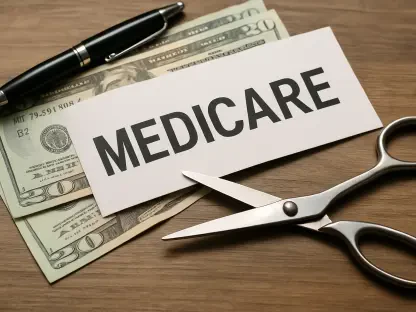

The American healthcare landscape is currently facing a precarious financial reckoning as the Congressional Budget Office significantly accelerates its timeline for the exhaustion of the Medicare Hospital Insurance trust fund. This drastic revision, which pulls the projected insolvency date forward from 2052 to 2040, signals an impending fiscal crisis that could leave millions of seniors without the full coverage they have come to rely on for essential hospital and nursing care. The twelve-year loss in stability is not merely a statistical anomaly but the direct consequence of shifting legislative priorities and the complex interplay between tax policy and social safety nets. As policymakers and economic analysts scramble to assess the damage, the focus has increasingly turned toward the recent “Big Beautiful Bill,” a legislative package whose tax-cutting measures have inadvertently hollowed out the revenue streams that once anchored Medicare’s Part A program. This unfolding situation creates a tension between the immediate desire for individual tax relief and the collective necessity of maintaining a viable national health insurance infrastructure for the elderly and disabled populations.
The Impact of Legislative Tax Adjustments
The primary catalyst for this shortened fiscal lifespan is the implementation of the “Big Beautiful Bill,” a Republican-led initiative signed into law in July 2025. While the legislation was marketed as a boon for the economy, providing broad tax cuts and specific deductions for citizens aged 65 and older, its secondary effects on the Hospital Insurance trust fund have proven to be severe. By significantly lowering the tax liabilities for seniors, the government effectively reduced the volume of revenue generated from the taxation of Social Security benefits. This specific revenue stream is a fundamental component of the Medicare funding model, and its sudden constriction has left a multibillion-dollar hole in the program’s long-term projections. The Congressional Budget Office’s report highlights that while these tax breaks provided immediate relief to household budgets, they simultaneously undermined the very foundation of the health insurance system that those households depend on for their most expensive medical needs.
The mechanics of this funding shortfall are rooted in the way the federal government allocates tax revenue to different social programs. Traditionally, a portion of the income taxes paid on high-level Social Security benefits is directed into the Medicare Hospital Insurance fund to ensure it remains solvent as the population ages. However, the new tax framework introduced a temporary but substantial deduction for the elderly, which effectively shielded a larger portion of their income from these specific levies. Consequently, the steady flow of capital into the trust fund has begun to decelerate at an alarming rate. This shift creates a paradoxical situation where the legislative attempt to improve the financial standing of the elderly has inadvertently accelerated the timeline for potential benefit cuts. Economic scorekeepers now warn that the reliance on these redirected tax funds was far greater than initially estimated, and the loss of this income cannot be easily offset by current payroll tax levels without significant structural changes to the tax code.
Structural Deficits and Evolving Demographics
To grasp the full weight of the current financial forecast, it is essential to look at the internal mechanics of the Hospital Insurance trust fund and how it manages the costs of Medicare Part A. This fund is the primary vehicle for financing inpatient hospital stays, skilled nursing facility care, and hospice services, all of which are seeing costs rise due to medical inflation and advanced technological requirements. Current projections indicate that while the fund’s balance may show marginal growth through 2031, a critical tipping point is expected to arrive in 2032. At that moment, the total annual expenditures for hospital services are forecasted to begin outstripping the total annual income from payroll and benefit taxes. This persistent structural deficit will begin to aggressively erode the trust fund’s remaining reserves. Without a course correction, the momentum of this spending will lead to total depletion by 2040, leaving the program unable to pay 100% of the claims submitted by healthcare providers for senior care services.
Beyond the immediate legislative impact, the United States is navigating a massive demographic transition that is placing unprecedented pressure on the Medicare system. With approximately 70 million individuals currently enrolled, the program is struggling to maintain a healthy ratio of active workers to beneficiaries. As the “Baby Boomer” generation continues to move into retirement, the influx of new enrollees is occurring just as the pool of workers contributing payroll taxes is shrinking relative to the total population. This demographic squeeze is further exacerbated by the increasing popularity of Medicare Advantage plans. While these private alternatives offer enticing perks to seniors, they generally cost the government more per enrollee than traditional fee-for-service Medicare. The shift toward these privatized options has accelerated the drain on the trust fund, as the government must provide higher subsidies to private insurers to maintain the level of care promised under the program’s statutory requirements.
Future Fiscal Realities and Strategic Responses
While the 2040 exhaustion date provided by the Congressional Budget Office is concerning, it remains a relatively optimistic view compared to other federal assessments. Medicare’s own trustees have offered a much bleaker outlook, suggesting that the Hospital Insurance trust fund could reach insolvency as early as 2033. The discrepancy between these two dates stems from differing assumptions regarding the future costs of physician-administered drugs and the utilization rates of hospice and hospital services. Regardless of which specific year the fund hits zero, the consensus across the federal government is that the current trajectory is fundamentally unsustainable. The volatility of the global economy and the potential for healthcare-specific inflation mean that these dates are not fixed points, but rather urgent warnings. The narrowing window for reform suggests that any delay in policy adjustments will only make the eventual solutions more painful for the American public, requiring either steeper tax hikes or more aggressive reductions in medical coverage.
Addressing the shortfall required a multifaceted approach that moved beyond the political gridlock often associated with entitlement programs. Legislative discussions eventually shifted toward technical reforms, such as implementing site-neutral payment policies to ensure that Medicare paid the same price for a service regardless of whether it was performed in a hospital or a private clinic. Policymakers also looked at restructuring the overpayments within the Medicare Advantage system to reclaim billions in lost revenue. However, the most effective long-term solutions involved a balanced combination of modest payroll tax adjustments and enhanced transparency in hospital billing practices. By focusing on these actionable steps, the government sought to stabilize the trust fund without compromising the quality of care for vulnerable populations. This proactive stance was intended to prevent a future crisis where hospitals would be forced to turn away patients due to a lack of federal funding, thereby ensuring the program remained a reliable safety net for generations.