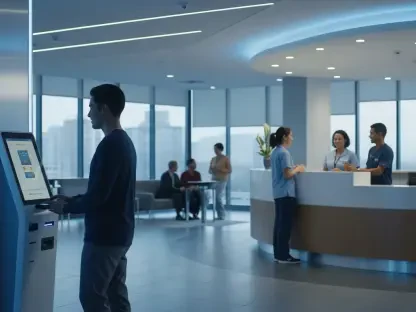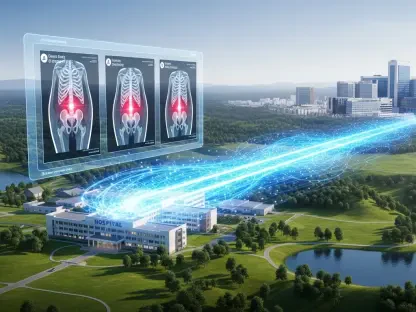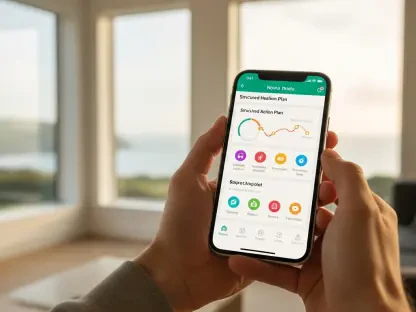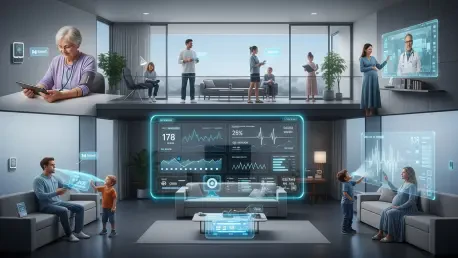

The landscape of global healthcare is currently navigating a period of profound structural change as Remote Patient Monitoring (RPM) transitions from a supplementary digital tool into a primary pillar of clinical delivery. In 2024, the market for these technologies was valued at approximately $11.7 billion, but current industry trajectories indicate a surge toward $200 billion as the decade progresses. This massive financial expansion reflects more than just a preference for new gadgets; it signals a fundamental shift in how medical professionals manage chronic illness and how systems allocate increasingly scarce human and financial resources. By utilizing digital interfaces to gather patient health data from the home environment and securely transmitting it to clinicians for real-time review, RPM effectively bridges the gap between periodic office visits and the continuous reality of living with a medical condition. This ecosystem relies on a sophisticated synergy between robust software platforms and specialized services, such as data titration and clinical support, which now account for nearly 80% of the total market share.
The Forces Driving Clinical and Economic Change
Addressing the Global Chronic Disease Crisis
The most urgent catalyst for the rapid expansion of digital health monitoring is the escalating global burden of chronic conditions, specifically hypertension and diabetes, which threaten to overwhelm traditional clinical settings. Statistics indicate that over 1.2 billion individuals aged 30 to 79 live with hypertension, yet nearly half are entirely unaware of their status, and even fewer receive the consistent treatment necessary to prevent cardiovascular events. This massive care gap presents a unique opportunity for RPM technologies to provide continuous or frequent oversight that traditional “brick-and-mortar” medicine simply cannot achieve. By offering a window into a patient’s physiological status during their daily life, these tools allow for the early detection of subtle changes—such as a steady creep in systolic pressure or erratic glucose fluctuations—that would otherwise go unnoticed until they culminated in a high-cost emergency room visit.
Furthermore, the implementation of these digital tools is becoming a matter of survival for healthcare infrastructures in low- and middle-income regions where the physician-to-patient ratio remains critically low. In these contexts, RPM functions as a force multiplier, enabling a single clinical team to manage a significantly larger population of patients without requiring a corresponding increase in physical hospital beds or clinic space. This proactive management model is particularly vital for the aging global population, where the prevalence of multi-morbidity—the presence of two or more chronic conditions—demands a level of coordination that manual record-keeping cannot sustain. By shifting the focus from episodic, reactive care to a continuous stream of actionable data, providers can move toward a preventive stance that prioritizes long-term wellness over crisis intervention.
Reimagining Healthcare Economics through Virtual Wards
Beyond the immediate clinical benefits, the adoption of “Hospital-at-Home” models is fundamentally altering the fiscal reality of modern medical institutions by reducing overhead and optimizing resource allocation. Traditional inpatient care is becoming increasingly unsustainable due to rising labor costs and the physical limitations of aging facilities, leading many administrators to seek decentralized alternatives. Recent studies have demonstrated that when patients are monitored remotely in a home setting, mortality rates can drop by over 75%, while hospital readmissions—a major financial drain for both providers and insurers—see a decrease of nearly 87%. These outcomes are not merely statistical anomalies; they represent a tangible shift toward a more efficient economic model where the home becomes a safe and effective extension of the clinical ward.
For large-scale healthcare providers, the integration of RPM data into existing Electronic Health Records (EHR) systems serves to streamline administrative workflows and significantly improve bed utilization metrics. With nearly 96% of hospitals already utilizing digital record-keeping, the infrastructure for this transition is largely in place, allowing for a smoother adoption curve than previous technological revolutions. This digital evolution also stimulates broader economic activity by driving massive investments into high-security cloud storage and AI-driven predictive analytics. As insurance payers increasingly recognize the cost-effectiveness of these programs, they are beginning to adjust reimbursement policies to favor remote interventions. Consequently, the financial incentive for hospitals to adopt RPM technology is no longer just about modernization; it is about maintaining long-term solvency in a value-based economy.
Technological Frontiers and Market Landscapes
The Integration of Intelligence and Specialized Services
The current technological frontier is defined by the sophisticated marriage of artificial intelligence and wearable sensors, moving the industry from a reactive posture to one of predictive intervention. In the recent past, remote monitoring was often limited to a patient manually uploading a blood pressure reading; today, AI algorithms can autonomously scan millions of data points to identify “pre-event” patterns that the human eye might miss. For instance, subtle changes in heart rate variability or sleep patterns, when analyzed by machine learning models, can predict an impending heart failure exacerbation several days before physical symptoms appear. This capability transforms the role of the healthcare provider from a reactive responder to a proactive navigator, allowing for medication adjustments or lifestyle interventions that can halt a downward clinical spiral before it requires hospitalization.
This shift toward intelligent monitoring is also fueling a “service-heavy” market trend, where healthcare organizations increasingly outsource the complex tasks of data titration and 24/7 monitoring to specialized third-party vendors. Instead of burdening existing nursing staff with the constant “noise” of raw data alerts, hospitals are partnering with firms that provide a layer of expert analysis, ensuring that only clinically significant events reach the physician’s desk. This model allows frontline medical staff to focus on direct patient interaction while the technical infrastructure is managed by specialists who can guarantee data accuracy and system uptime. As the industry moves closer to 2030, this collaborative approach is expected to become the standard, particularly as providers are increasingly held accountable for patient outcomes under value-based care contracts that penalize inefficiency and reward long-term health stability.
Mapping Regional Dominance and Future Opportunities
North America currently maintains a commanding lead in the global RPM market, accounting for nearly half of total revenue, largely due to its mature digital infrastructure and favorable reimbursement landscape. Approximately 50 million citizens in the region are already utilizing some form of remote health tracking, and consumer trust in wearable medical devices has reached an all-time high, creating a fertile environment for further innovation. Public and private insurers in the United States have been particularly aggressive in adopting codes that compensate physicians for the time spent reviewing remote data, which has accelerated the transition from experimental pilots to standard clinical practice. However, while North America holds the current financial crown, the focus of long-term growth is rapidly shifting toward the Asia Pacific region, where emerging economies are using digital health to leapfrog traditional infrastructure.
In countries like China and India, the lack of a dense hospital network in rural areas has made mobile-first digital health solutions a necessity rather than a luxury. These regions are seeing a surge in public-private partnerships aimed at deploying low-cost, high-reliability monitoring devices that can operate over basic cellular networks, bypassing the need for expensive physical facilities. This “leapfrog” effect is similar to how many developing nations skipped landline telephones in favor of mobile devices, and it suggests that the most innovative use cases for RPM may soon emerge from the East. Despite this rapid growth, the industry at large must still address critical hurdles regarding data privacy and the interoperability of competing software systems. As these technical and regulatory challenges are resolved, the distinction between “remote care” and “standard care” will likely vanish, resulting in a seamless, globally connected healthcare ecosystem.
Future Considerations for a Connected Ecosystem
The successful integration of remote patient monitoring into the global healthcare fabric has moved beyond the proof-of-concept phase and now requires a concerted focus on standardization and security. While the technical ability to collect data has been mastered, the industry is still working to ensure that a device from one manufacturer can speak the same digital language as a software platform from another. This “interoperability” is the final major barrier to creating a truly unified patient view, where a cardiologist, a primary care physician, and a home-health nurse can all access the same real-time stream of health information. Furthermore, as healthcare data becomes one of the most valuable commodities on the black market, the industry must prioritize the deployment of advanced encryption and decentralized data storage to protect patient privacy against increasingly sophisticated cyber threats.
Looking ahead, the most successful implementations of RPM will be those that prioritize the patient experience and reduce the “digital burden” on both the user and the provider. Rather than requiring patients to actively engage with multiple apps and devices, the next generation of tools will likely be “invisible,” integrated into everyday objects like clothing, bedding, or even bathroom mirrors. For clinicians, the focus must shift toward “single-pane-of-glass” dashboards that aggregate and prioritize data based on clinical urgency, preventing the “alert fatigue” that currently plagues many digital health programs. By streamlining these interfaces and ensuring data integrity, the medical community was able to move toward a future where healthcare is no longer a series of isolated events, but a continuous, supportive presence in the life of every patient. This evolution ultimately replaced the traditional, reactive medical model with a proactive system that valued health outcomes above all else.