
The latest updates to Medicare reimbursement for Remote Patient Monitoring (RPM) present a transformative opportunity for healthcare providers, fundamentally reshaping how they deliver and bill for chronic care management. These regulatory shifts, introduced by the Centers for Medicare & Medicaid Services (CMS), are designed to recognize and compensate for more granular and realistic patient interactions, moving beyond previous all-or-nothing billing requirements. For practices managing patients with chronic conditions, these changes are not merely administrative adjustments but a strategic inflection point. They create a direct pathway to significant, predictable revenue streams while simultaneously enhancing the quality of patient care. However, capitalizing on this potential is not as simple as adopting a few new billing codes. It demands a sophisticated technological infrastructure capable of seamlessly integrating clinical workflows, automating complex administrative tasks, and fostering continuous patient engagement. Without the right technology, providers risk being overwhelmed by the operational complexities, leaving substantial revenue and clinical benefits untapped in an increasingly competitive and value-driven healthcare landscape.
Navigating the New Reimbursement Landscape
Understanding the Financial Impact of CPT Code Updates
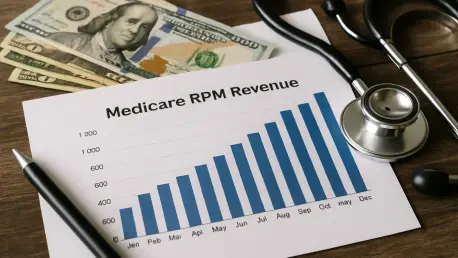
The introduction of CPT code 99445 marks a pivotal shift in RPM reimbursement, allowing providers to bill for monitoring as few as two days of patient data transmission within a 30-day period. This change addresses a long-standing challenge where providers were often uncompensated for shorter, yet clinically significant, monitoring intervals. Previously, stricter requirements meant that if a patient did not meet a high threshold of data transmission days, the entire month’s monitoring effort went unbilled, creating financial uncertainty and discouraging the enrollment of less-adherent patients. The new flexibility ensures that nearly every engaged patient contributes to the practice’s revenue, creating a more stable and predictable financial model. Clinics that have effectively integrated this code into their billing practices report a notable 12–13% increase in reimbursable revenue without needing to expand their patient base. This financial uplift is achieved by capturing value from interactions that were already happening but were previously below the reimbursement threshold, thereby turning routine clinical oversight into a consistent source of income.
Complementing the data transmission codes, CPT code 99470 offers reimbursement for 10–19 minutes of clinical management time spent on RPM services per month. This update is crucial because it acknowledges and monetizes the essential cognitive work performed by clinical staff. Managing an RPM program involves far more than just receiving data; it requires care teams to analyze trends, respond to alerts, communicate with patients about their readings, and make timely adjustments to treatment plans. Before this code, only longer, more intensive interactions were billable, leaving the bulk of this vital day-to-day management uncompensated. By allowing billing for shorter time increments, CMS validates the importance of these brief but critical interventions. This not only improves the financial viability of RPM programs but also enhances operational efficiency by aligning reimbursement with the natural workflow of care management. It empowers practices to properly staff their RPM services and ensures that clinicians’ time is valued, reducing administrative burnout and focusing their efforts on proactive patient care that drives better outcomes.
The Clinical Advantages of Modernized RPM
The consistent patient oversight enabled by a well-structured RPM program translates directly into substantial improvements in clinical outcomes, particularly for individuals with chronic diseases. Data from implemented programs demonstrates a significant 25–35% reduction in hospital readmissions, a key metric for both patient well-being and healthcare costs. This reduction is achieved through the early detection of physiological changes that may signal a worsening condition. For instance, a gradual increase in a patient’s weight could indicate fluid retention in a heart failure patient, prompting a swift clinical intervention before the issue escalates into a full-blown emergency requiring hospitalization. This proactive approach replaces a reactive model of care, empowering clinical teams to manage conditions more effectively in a home setting. Furthermore, patient adherence rates ranging from 75–97% underscore the success of modern RPM technology in engaging patients. User-friendly devices and intuitive mobile applications make it simple for patients, including older adults, to participate actively in their own care, fostering a collaborative relationship with their providers and leading to better health management.
Beyond immediate clinical benefits, a robust RPM program is a cornerstone of success in value-based care models. These models reward providers for achieving positive patient outcomes and controlling costs, moving away from the traditional fee-for-service system. By consistently monitoring patients and preventing costly acute care episodes like emergency room visits and hospitalizations, RPM directly contributes to the performance metrics that define value-based care. The data collected through RPM provides a comprehensive, real-time view of a patient’s health status between office visits, enabling more personalized and effective care plans. This continuous engagement and data-driven approach not only improves patient health but also generates a reliable revenue stream that supports the practice’s financial stability. In essence, a well-managed RPM program creates a virtuous cycle: it generates consistent fee-for-service revenue under the new codes while simultaneously improving the quality metrics that lead to shared savings and bonuses in value-based arrangements, positioning the practice for long-term success.
The Indispensable Role of Technology
Streamlining Operations Through Automation
Realizing the financial and clinical benefits of the updated RPM codes is contingent upon overcoming the significant operational hurdles they present. Manually tracking patient data transmission days, logging every minute of clinical interaction, and ensuring accurate coding for each patient every month is an administrative nightmare that can quickly negate any potential revenue gains. This is where a sophisticated care management platform becomes indispensable. Such a platform automates these critical yet tedious tasks, freeing up clinical staff to focus on patient care rather than paperwork. It can automatically flag patients who have met the two-day data transmission threshold for CPT code 99445 and meticulously log all time spent by clinicians on RPM activities to support billing for CPT code 99470. By integrating directly with a practice’s electronic health record (EHR) system, the platform ensures that all relevant data is seamlessly shared and that billing codes are correctly applied, dramatically reducing the risk of claim denials and minimizing revenue leakage. This level of automation transforms RPM from a logistically challenging service line into a highly efficient and profitable component of the practice.
The value of an advanced technology platform extends beyond mere billing automation to encompass comprehensive workflow optimization. An effective platform provides a centralized dashboard where care teams can view real-time patient data, receive alerts for out-of-range readings, and manage their daily tasks efficiently. Instead of sifting through disparate data points, clinicians are presented with actionable insights, allowing them to prioritize patients who require immediate attention. This streamlined process not only enhances the quality and timeliness of care but also improves staff satisfaction by reducing administrative burdens and making their work more impactful. The platform also plays a crucial role in maintaining patient engagement, which is the bedrock of any successful RPM program. By offering a simple and intuitive interface for patients, ensuring easy connectivity for monitoring devices, and facilitating secure communication with the care team, the technology fosters a strong patient-provider connection. This continuous loop of data sharing, clinical oversight, and patient interaction is what drives the high adherence rates and positive health outcomes that make RPM a cornerstone of modern chronic care management.
Paving the Way for Future Growth
The strategic implementation of an integrated RPM platform had already set the stage for sustained growth and superior patient care. The technological solution that was chosen not only addressed the immediate challenges of billing and compliance but also provided the scalable infrastructure needed to expand the program over time. By automating the most labor-intensive aspects of remote monitoring, practices were able to serve a larger patient population without a proportional increase in administrative staff, ensuring long-term financial viability. Furthermore, the rich data collected through the platform offered invaluable insights into patient population health trends, which helped in refining care protocols and predicting health risks more accurately. This data-driven approach solidified the provider’s position as a leader in innovative, patient-centric care and was instrumental in strengthening performance in value-based contracts. The successful alignment of clinical workflows, billing processes, and patient engagement strategies transformed the 2026 regulatory updates from a complex challenge into a measurable and lasting opportunity.