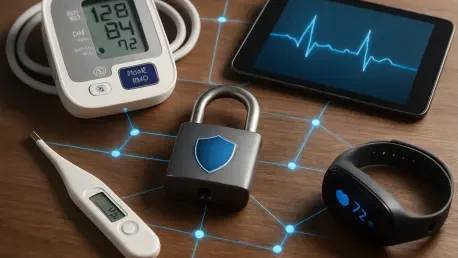

The relentless proliferation of connected medical devices has transformed the modern hospital into a complex digital ecosystem, but it has also introduced a vast and often unmanageable attack surface. For years, the primary challenge for healthcare security leaders was simply achieving basic visibility—identifying every infusion pump, MRI machine, and patient monitor connected to the network. That foundational phase is now over. In an environment of tightening budgets and increasingly sophisticated cyber threats targeting patient care, the conversation has fundamentally shifted. Healthcare organizations are now demanding more than a simple device inventory; they require security platforms that deliver tangible, measurable value. This evolution marks a critical turning point where the focus moves from merely seeing the problem to efficiently solving it through demonstrable risk reduction, intelligent automation, and a quantifiable return on investment.
The Evolving Vendor Landscape
Leaders in Outcome Driven Security
In this new era of accountability, certain vendors have distinguished themselves by directly addressing the demand for proven outcomes. Asimily has emerged as a frontrunner, earning top marks for delivering exceptional value and demonstrating a deep, healthcare-specific focus. Customers consistently praise the platform’s sophisticated “risk intelligence,” a capability that goes beyond simple vulnerability scanning. It passively analyzes devices, identifies potential weaknesses, and, most importantly, provides actionable intelligence that helps security teams effectively triage and prioritize remediation tasks. This focus on efficiency is critical for understaffed hospital IT departments. Rather than presenting a daunting list of thousands of potential vulnerabilities, the system helps pinpoint the most critical threats to patient safety and clinical operations. This pragmatic approach has resonated strongly in the market, with users highlighting its ability to justify its own cost through reduced manual effort and streamlined workflows, earning it the highest ratings for “Money’s Worth” and solidifying its position as the choice for organizations needing to maximize their security impact with limited resources.
Another powerhouse, Claroty, has solidified its position by offering a mature, polished, and highly dependable platform that excels in providing comprehensive visibility and effective risk scoring. Its solution is recognized for its reliability in identifying and classifying the full spectrum of connected assets within a complex medical environment, from modern IoT devices to legacy clinical equipment. This foundational strength is complemented by robust risk assessment tools that enable security and clinical engineering teams to collaboratively prioritize remediation efforts based on a clear understanding of potential impacts on patient care. Beyond its technical capabilities, Claroty is frequently described as a strong and transparent partner, one that understands the unique challenges of the healthcare sector. Its platform is designed for seamless integration into existing medical device ecosystems, ensuring that security measures enhance, rather than disrupt, critical clinical workflows. This combination of powerful technology and a partnership-oriented approach has made it a trusted leader for healthcare organizations seeking a comprehensive and reliable security framework.
The High Cost of Complexity
While some vendors thrive by delivering clear value, others are facing headwinds as the market’s tolerance for complexity diminishes. Armis, for instance, is commended for its powerful discovery capabilities and its ability to generate straightforward reports that help teams accelerate risk reduction. Its platform effectively illuminates the vast landscape of connected devices, providing the essential visibility that organizations require. However, some users have noted a significant learning curve associated with maximizing the platform’s potential. This feedback highlights a growing market-wide sentiment: even a highly capable tool loses its value if it requires extensive training or adds operational friction. The need for more simplified patch orchestration and more intuitive workflows has been cited as an area for improvement, underscoring the demand for solutions that are not only powerful but also immediately usable and easy to manage for resource-constrained healthcare IT teams. This dynamic illustrates that in the current climate, usability and efficiency are becoming just as important as the sheer breadth of a platform’s features.
This intolerance for operational burdens has become a significant liability for some established industry players. Legacy providers such as Palo Alto Networks and Forescout Technologies, while offering undeniably powerful and feature-rich solutions, are encountering scrutiny over their inherent complexity. Customers report that the steep learning curves associated with these platforms can create a barrier to effective implementation and daily management. A recurring theme in user feedback is the challenge of obtaining adequate and relevant training. The available educational resources are often perceived as costly, difficult to access, and, critically, not specifically tailored to the unique context of a healthcare environment. This mismatch means that security teams are left to translate generic IT security principles to the highly specialized world of medical devices, a process that is both inefficient and prone to error. Consequently, the full potential of these powerful tools often goes unrealized, diminishing their overall value and failing to deliver the expected return on investment in a sector that can ill afford such inefficiencies.
Charting the Course for Future Protection
The Push for Intelligent Automation and Control
Looking ahead, the next frontier for healthcare IoT security lies in the convergence of intelligent automation and granular control. Healthcare leaders are no longer satisfied with platforms that simply identify devices; they are seeking solutions that can proactively manage and secure them with minimal human intervention. The integration of AI-driven automation is at the forefront of this evolution, promising to deliver more intelligent and context-aware device fingerprinting. This technology can identify a device not just by its IP address but by its make, model, software version, and typical communication patterns, allowing for more accurate vulnerability prioritization. This enhanced intelligence is a direct enabler for the widespread adoption of microsegmentation. By precisely understanding what each device is and how it should behave, security platforms can create and enforce granular, device-level security policies. In practice, this means an infusion pump compromised by malware could be automatically isolated from the network, preventing it from communicating with other devices while still allowing it to be monitored by clinical staff. This shift represents a move from a reactive defense posture to one of proactive, automated containment.
Integrating Security into Clinical Operations
A parallel advancement reshaping the industry is the drive toward unified vulnerability management that breaks security out of the traditional IT silo and embeds it directly into clinical workflows. Historically, a significant gap has existed between IT security teams, who identify vulnerabilities, and clinical engineering or biomedical teams, who are responsible for maintaining and patching medical devices. This disconnect often leads to slow remediation times and potential disruptions to patient care. The next wave of security platforms aims to bridge this gap by creating a single, integrated ecosystem. In this model, a vulnerability alert for a critical patient monitor is no longer just another ticket in an IT queue. Instead, it is automatically routed into the clinical engineering workflow with context-rich information, including the device’s location, its criticality, and manufacturer-approved patching instructions. This seamless integration ensures that the right information gets to the right people at the right time, drastically reducing the time from detection to remediation. By making security an intrinsic part of clinical operations rather than a separate function, healthcare organizations can enhance patient safety and improve overall operational resilience.
A New Mandate for Security Partnerships
The central question guiding healthcare providers’ security investments definitively evolved. The dialogue shifted from a technical query of “Can we see all our devices?” to a strategic imperative: “Can we protect our assets efficiently and demonstrably without overburdening our staff?” This transition cemented a new market reality where the “prove it” mentality became the standard for evaluating security solutions. The market ultimately favored vendors that delivered automated, outcome-driven security, penalizing those whose inherent complexity created an operational drag. This clear mandate established a new benchmark for success, where a platform’s value was measured not by its list of features, but by its direct and quantifiable contribution to building a more resilient, efficient, and secure environment for patient care.