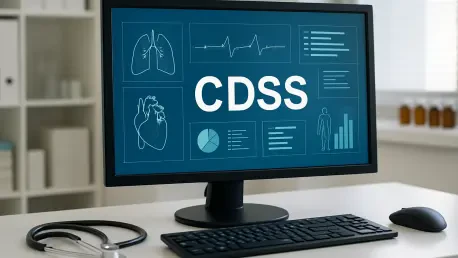

A comprehensive analysis of the global Clinical Decision Support Systems (CDSS) market has revealed a sector on the brink of significant expansion, projecting a robust Compound Annual Growth Rate (CAGR) of 10.6% for the forecast period extending from 2025 to 2031. This remarkable growth trajectory underscores the increasingly indispensable role these systems play in redefining modern healthcare delivery. At its core, CDSS technology is engineered to empower clinicians by delivering timely, data-driven, and evidence-based recommendations directly at the point of care. This capability fundamentally enhances clinical decision-making, leads to demonstrably better patient outcomes, and drives substantial gains in operational efficiency across healthcare organizations, solidifying its position as a cornerstone of the industry’s digital transformation.
The Technological Forces Shaping Modern Healthcare
The primary catalyst propelling the CDSS market forward is the sophisticated integration of advanced technologies, most notably Artificial Intelligence (AI) and machine learning. These innovations are fundamentally reshaping the capabilities of CDSS, elevating them from rudimentary, rule-based alert providers into intelligent partners in clinical diagnosis and treatment planning. By analyzing vast and complex datasets, these evolved systems can recognize subtle patterns and generate predictive insights that were previously unattainable. This technological leap is amplified by several converging industry trends, including the widespread adoption of Electronic Health Records (EHRs), which provide the rich data streams these systems need to function. Furthermore, supportive government mandates promoting Health IT and the healthcare industry’s broader pivot toward value-based care models, which prioritize quality and efficiency over volume, create a fertile environment for CDSS adoption and innovation.
Recent global developments serve as powerful testaments to this trend of deep, intelligent integration into the clinical fabric. For instance, a significant milestone was achieved in December 2023 when India’s Ministry of Health integrated AI-powered CDSS into its national e-Sanjeevani telehealth platform, a move designed to facilitate nationwide screening for complex conditions like diabetic retinopathy. This initiative showcases the immense potential of CDSS in improving public health accessibility on a massive scale. Similarly, in March 2024, Elsevier advanced its ClinicalKey AI platform with new workflow integrations aimed at delivering real-time, evidence-based information directly to clinicians during patient consultations. These examples highlight a growing consensus: the future value of CDSS is intrinsically linked to its seamless and intelligent incorporation into existing clinical workflows, where it can actively work to reduce medical errors, streamline processes, and ensure the consistent delivery of high-quality patient care.
A Granular Look at Market Composition
The CDSS market is a complex ecosystem, with its sustained growth fueled by distinct segments, each contributing uniquely to its overall value and functionality. A detailed breakdown reveals three essential components that form the system’s backbone. Hardware provides the foundational infrastructure, supplying the robust computing power and connectivity required to operate these sophisticated systems. The Software component represents the core intelligence of the CDSS, delivering the analytical engines, user interfaces, and complex algorithms that generate crucial clinical recommendations. Finally, Services are indispensable for the successful deployment and ongoing maintenance of these platforms, encompassing vital functions like implementation, system integration, comprehensive staff training, and continuous technical support to ensure optimal performance and user adoption.
Diving deeper into the market’s structure, two primary delivery models cater to the diverse needs of healthcare organizations. Cloud-based solutions are rapidly gaining traction due to their inherent scalability, flexibility, and remote accessibility, which allow providers to deploy powerful CDSS capabilities with significantly lower upfront capital expenditure. In contrast, On-premise systems remain the preferred choice for larger institutions that prioritize absolute control over their sensitive data and require extensive customization to align with specific internal protocols and stringent security requirements. The market also offers products tailored to varying levels of integration. Integrated CDSS are embedded directly within larger health IT systems, such as EHRs, providing holistic support within the clinician’s primary workflow. Meanwhile, Standalone CDSS are specialized applications offering deep expertise in a particular domain, such as oncology or cardiology. As healthcare digitization advances, integrated solutions are overwhelmingly expected to dominate the market landscape.
Global Adoption Patterns and the Competitive Frontier
Geographically, the Clinical Decision Support Systems market exhibits distinct patterns of adoption and growth, reflecting regional differences in technological readiness and healthcare priorities. North America currently commands the largest market share, a dominant position attributed to its advanced healthcare IT infrastructure, exceptionally high rates of EHR adoption, and a supportive regulatory framework explicitly aimed at minimizing medical errors through technology. Europe follows as a strong secondary market, with significant investments in digital health initiatives driving adoption, particularly in countries like Germany and the United Kingdom, which are actively leveraging technology to manage aging populations and enhance overall healthcare system efficiency.
The Asia-Pacific region, however, has been identified as the fastest-growing market, with its rapid expansion fueled by large-scale healthcare modernization projects in economic powerhouses such as China and India. This growth is further propelled by increased government spending on health informatics and a burgeoning awareness of the benefits that digital health tools can offer. In tandem, the Latin America and Middle East & Africa regions are emerging as promising new frontiers, with increasing digitization efforts and substantial investments in healthcare infrastructure paving the way for future CDSS adoption. A persistent challenge across all regions remains the critical issue of interoperability between disparate IT systems, though this very challenge is also a potent driver for innovation aimed at creating more standardized and seamlessly connected solutions.
The Path Forward to an Integrated Future
The competitive landscape of the CDSS market is characterized by a dynamic mix of established healthcare IT giants and specialized, agile innovators. Leading companies such as Cerner Corporation, now a part of Oracle, Koninklijke Philips N.V., and Wolters Kluwer N.V. are at the forefront, driving the market forward through relentless research and development. These industry leaders prioritize strategic partnerships and continuous innovation to address the evolving and complex needs of clinicians and healthcare organizations worldwide. Cerner focuses on integrating CDSS functionalities like real-time alerts directly into its Millennium EHR, while Philips leverages AI for advanced diagnostic support. Meanwhile, Wolters Kluwer powers numerous evidence-based platforms that have become indispensable tools for clinicians across the globe.
As the healthcare industry continues its profound digital transformation, Clinical Decision Support Systems are becoming further entrenched in the fabric of daily clinical practice. It is clear that the ongoing advancements in predictive analytics, big data processing, and cloud computing will continue to make these systems more intelligent, intuitive, and ultimately indispensable. The trajectory of this technology points toward a future where healthcare is fundamentally safer, more efficient, and highly personalized. This evolution ultimately promises to deliver transformative benefits to both healthcare providers and their patients on a global scale, marking a new era of data-driven medicine.Fixed version:
A comprehensive analysis of the global Clinical Decision Support Systems (CDSS) market has revealed a sector on the brink of significant expansion, projecting a robust Compound Annual Growth Rate (CAGR) of 10.6% for the forecast period extending from 2025 to 2031. This remarkable growth trajectory underscores the increasingly indispensable role these systems play in redefining modern healthcare delivery. At its core, CDSS technology is engineered to empower clinicians by delivering timely, data-driven, and evidence-based recommendations directly at the point of care. This capability fundamentally enhances clinical decision-making, leads to demonstrably better patient outcomes, and drives substantial gains in operational efficiency across healthcare organizations, solidifying its position as a cornerstone of the industry’s digital transformation.
The Technological Forces Shaping Modern Healthcare
The primary catalyst propelling the CDSS market forward is the sophisticated integration of advanced technologies, most notably Artificial Intelligence (AI) and machine learning. These innovations are fundamentally reshaping the capabilities of CDSS, elevating them from rudimentary, rule-based alert providers into intelligent partners in clinical diagnosis and treatment planning. By analyzing vast and complex datasets, these evolved systems can recognize subtle patterns and generate predictive insights that were previously unattainable. This technological leap is amplified by several converging industry trends, including the widespread adoption of Electronic Health Records (EHRs), which provide the rich data streams these systems need to function. Furthermore, supportive government mandates promoting Health IT and the healthcare industry’s broader pivot toward value-based care models, which prioritize quality and efficiency over volume, create a fertile environment for CDSS adoption and innovation.
Recent global developments serve as powerful testaments to this trend of deep, intelligent integration into the clinical fabric. For instance, a significant milestone was achieved in December 2023 when India’s Ministry of Health integrated AI-powered CDSS into its national e-Sanjeevani telehealth platform, a move designed to facilitate nationwide screening for complex conditions like diabetic retinopathy. This initiative showcases the immense potential of CDSS in improving public health accessibility on a massive scale. Similarly, in March 2024, Elsevier advanced its ClinicalKey AI platform with new workflow integrations aimed at delivering real-time, evidence-based information directly to clinicians during patient consultations. These examples highlight a growing consensus: the future value of CDSS is intrinsically linked to its seamless and intelligent incorporation into existing clinical workflows, where it can actively work to reduce medical errors, streamline processes, and ensure the consistent delivery of high-quality patient care.
A Granular Look at Market Composition
The CDSS market is a complex ecosystem, with its sustained growth fueled by distinct segments, each contributing uniquely to its overall value and functionality. A detailed breakdown reveals three essential components that form the system’s backbone. Hardware provides the foundational infrastructure, supplying the robust computing power and connectivity required to operate these sophisticated systems. The Software component represents the core intelligence of the CDSS, delivering the analytical engines, user interfaces, and complex algorithms that generate crucial clinical recommendations. Finally, Services are indispensable for the successful deployment and ongoing maintenance of these platforms, encompassing vital functions like implementation, system integration, comprehensive staff training, and continuous technical support to ensure optimal performance and user adoption.
Diving deeper into the market’s structure, two primary delivery models cater to the diverse needs of healthcare organizations. Cloud-based solutions are rapidly gaining traction due to their inherent scalability, flexibility, and remote accessibility, which allow providers to deploy powerful CDSS capabilities with significantly lower upfront capital expenditure. In contrast, On-premise systems remain the preferred choice for larger institutions that prioritize absolute control over their sensitive data and require extensive customization to align with specific internal protocols and stringent security requirements. The market also offers products tailored to varying levels of integration. Integrated CDSS are embedded directly within larger health IT systems, such as EHRs, providing holistic support within the clinician’s primary workflow. Meanwhile, Standalone CDSS are specialized applications offering deep expertise in a particular domain, such as oncology or cardiology. As healthcare digitization advances, integrated solutions are overwhelmingly expected to dominate the market landscape.
Global Adoption Patterns and the Competitive Frontier
Geographically, the Clinical Decision Support Systems market exhibits distinct patterns of adoption and growth, reflecting regional differences in technological readiness and healthcare priorities. North America currently commands the largest market share, a dominant position attributed to its advanced healthcare IT infrastructure, exceptionally high rates of EHR adoption, and a supportive regulatory framework explicitly aimed at minimizing medical errors through technology. Europe follows as a strong secondary market, with significant investments in digital health initiatives driving adoption, particularly in countries like Germany and the United Kingdom, which are actively leveraging technology to manage aging populations and enhance overall healthcare system efficiency.
The Asia-Pacific region, however, has been identified as the fastest-growing market, with its rapid expansion fueled by large-scale healthcare modernization projects in economic powerhouses such as China and India. This growth is further propelled by increased government spending on health informatics and a burgeoning awareness of the benefits that digital health tools can offer. In tandem, the Latin America and Middle East & Africa regions are emerging as promising new frontiers, with increasing digitization efforts and substantial investments in healthcare infrastructure paving the way for future CDSS adoption. A persistent challenge across all regions remains the critical issue of interoperability between disparate IT systems, though this very challenge is also a potent driver for innovation aimed at creating more standardized and seamlessly connected solutions.
The Path Forward to an Integrated Future
The competitive landscape of the CDSS market is characterized by a dynamic mix of established healthcare IT giants and specialized, agile innovators. Leading companies such as Cerner Corporation, now a part of Oracle, Koninklijke Philips N.V., and Wolters Kluwer N.V. are at the forefront, driving the market forward through relentless research and development. These industry leaders prioritize strategic partnerships and continuous innovation to address the evolving and complex needs of clinicians and healthcare organizations worldwide. Cerner focuses on integrating CDSS functionalities like real-time alerts directly into its Millennium EHR, while Philips leverages AI for advanced diagnostic support. Meanwhile, Wolters Kluwer powers numerous evidence-based platforms that have become indispensable tools for clinicians across the globe.
As the healthcare industry continues its profound digital transformation, Clinical Decision Support Systems are becoming further entrenched in the fabric of daily clinical practice. It is clear that the ongoing advancements in predictive analytics, big data processing, and cloud computing will continue to make these systems more intelligent, intuitive, and ultimately indispensable. The trajectory of this technology points toward a future where healthcare is fundamentally safer, more efficient, and highly personalized. This evolution ultimately promises to deliver transformative benefits to both healthcare providers and their patients on a global scale, marking a new era of data-driven medicine.