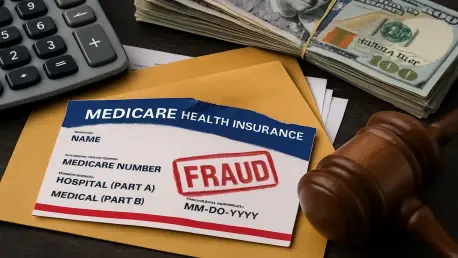

A major lawsuit initiated by the United States government alleges that a Louisiana-based hospital system masterminded a sophisticated, multifaceted scheme to defraud Medicare, placing profits ahead of patient care. The civil complaint, filed under the False Claims Act on January 16, targets Priority Hospital Group LLC (PHG), three of its long-term care hospitals, and an associated physician. At the core of the government’s case are grave accusations that the healthcare provider systematically billed for medically unnecessary services by artificially prolonging patient stays and engaged in an illegal kickback arrangement to secure a lucrative stream of patient referrals, fundamentally corrupting the medical decision-making process. The lawsuit underscores a determined federal effort to protect the integrity of national healthcare programs and hold providers accountable for exploiting vulnerable patients and taxpayer funds.
Allegations of Extended Stays for Profit
The government’s complaint meticulously details a scheme wherein PHG and its affiliated hospitals allegedly manipulated patient discharge schedules to maximize their financial returns from Medicare. According to the lawsuit, patients were frequently kept hospitalized well after their primary course of treatment had concluded or when their condition had stabilized to a point where they could be safely transferred to a less intensive and more cost-effective care setting. This practice was purportedly motivated by the specific reimbursement structure for long-term care hospitals (LTCHs), which compensates facilities based, in part, on the total duration of a patient’s stay. By artificially extending these hospitalizations, the facilities could allegedly inflate their billings and secure significantly higher payments from the federal healthcare program, constituting a direct violation of the False Claims Act, which strictly prohibits the submission of false or fraudulent claims for payment to the government.
This alleged strategy represents a profound breach of the trust placed in healthcare providers, suggesting that critical clinical decisions were driven by financial incentives rather than the genuine medical needs of the patients. The lawsuit paints a picture of a system where the well-being of individuals, many of whom are elderly or have complex medical conditions, was secondary to the organization’s bottom line. By deliberately delaying discharges, the defendants not only risked potential harm to patients who may have benefited from transitioning to a different care environment but also placed an undue financial burden on the Medicare system. The government’s action seeks to address this alleged exploitation, emphasizing that federal healthcare funds are intended to pay for necessary medical services, not to enrich providers who manipulate patient care for financial gain. The coordinated investigation and subsequent lawsuit highlight a commitment to safeguarding both vulnerable citizens and the taxpayer funds allocated to their care.
Unlawful Kickbacks and Referral Schemes
A second major pillar of the government’s case revolves around alleged violations of federal anti-corruption statutes designed to preserve the impartiality of medical judgments. The complaint specifically accuses Riverside Hospital of Louisiana, one of the facilities managed by PHG, of cultivating an illegal financial relationship with a physician to guarantee a consistent flow of patient referrals. This alleged kickback scheme was reportedly facilitated through medical directorship agreements and other forms of remuneration, which served as improper inducements for the physician to send patients to Riverside. Such arrangements are expressly prohibited by two foundational federal laws: the Anti-Kickback Statute and the Stark Law. The Anti-Kickback Statute criminalizes the act of knowingly offering or receiving payment to reward patient referrals for services covered by federal programs, while the Stark Law, a civil statute, bars hospitals from billing Medicare for services referred by a physician with whom they have a prohibitive financial relationship.
The enforcement of these anti-corruption laws is critical to maintaining the integrity of the American healthcare system. Their primary purpose is to ensure that a physician’s recommendations are based exclusively on the patient’s best interests and are not tainted by personal financial incentives. When hospitals pay for referrals, it can lead to a host of negative consequences, including overutilization of services, increased costs for federal programs, and unfair competition that disadvantages honest providers. In this case, the government alleges that the financial ties between Riverside Hospital and the physician compromised the standard of care, transforming patient referrals into a commercial transaction rather than a medical necessity. The inclusion of these allegations in the lawsuit demonstrates the government’s focus on not only recovering improperly paid funds but also on dismantling the corrupting financial arrangements that undermine patient trust and the ethical practice of medicine.
The Path to Prosecution and Accountability
The legal action against Priority Hospital Group was set in motion through the qui tam, or whistleblower, provisions of the False Claims Act. A former employee of Riverside Hospital, Michaela DeVos, originally filed the lawsuit on behalf of the United States, leveraging a powerful legal tool that empowers private citizens with inside knowledge of fraud to sue perpetrators on the government’s behalf. Following the initial filing, the Department of Justice conducted a thorough investigation into the allegations. The government’s subsequent decision to intervene and take over the prosecution is a significant development, as it indicates a strong belief in the merit of the claims and allocates federal resources to pursuing the case. Should the defendants be found liable, the False Claims Act provides for substantial repercussions, allowing the government to recover up to three times the amount of its financial losses in addition to significant civil penalties for each false claim submitted. As the relator who initiated the action, DeVos would be legally entitled to receive a portion of any funds recovered.
A Coordinated Stand Against Healthcare Fraud
The lawsuit against PHG and its affiliates represents a unified and multi-agency effort to combat healthcare fraud, waste, and abuse. Statements from high-ranking officials across several federal departments have created a powerful and cohesive narrative about the importance of holding providers accountable. Assistant Attorney General Brett A. Shumate of the Justice Department’s Civil Division affirmed that patient care must always be guided by clinical necessity, not by a provider’s financial interests. Echoing this sentiment, U.S. Attorney Zachary A. Keller for the Western District of Louisiana characterized the alleged schemes as a betrayal of public trust and an exploitation of vulnerable citizens, vowing to pursue justice. The investigation was a collaborative effort involving the Justice Department’s Civil Division, the U.S. Attorney’s Office, and the Department of Health and Human Services, Office of Inspector General (HHS-OIG), demonstrating a robust, government-wide commitment to protecting the integrity of federal healthcare programs for all Americans.