
A critical yet often invisible bottleneck within modern hospitals is causing significant delays in patient care, not because of medical error or a lack of clinical staff, but due to a fundamental breakdown in logistics. Rovex Technologies Corporation, a Gainesville-based startup founded by emergency room physician Dr. David Crabb, is set to deploy an innovative solution that tackles this systemic inefficiency head-on. Drawing from his firsthand experience with the operational hurdles that compromise patient flow, Dr. Crabb envisioned a way to apply autonomous robotics to handle the routine task of patient transport. This would allow highly trained medical professionals to disengage from logistical coordination and rededicate their time to what matters most: providing care at the bedside. The company is now rolling out its flagship robot, Rovi, in the Tampa Bay area, with the ambitious goal of transforming hospital operations, enhancing patient outcomes, and alleviating the mounting pressure on the healthcare workforce.
A Systemic Breakdown in Hospital Logistics
The challenge of patient transport delays extends far beyond minor inconveniences, creating a cascade of operational failures that ripple through an entire medical facility. Dr. Crabb’s on-the-ground observations revealed that an average wait of 63 minutes for a patient cleared for a CT scan was symptomatic of a much larger issue: a systemic capacity problem where the sheer volume of transport requests consistently outstripped the ability of human teams to fulfill them. This bottleneck has profound consequences across departments. For example, a patient occupying an emergency department bed while waiting for transport to an imaging suite or an inpatient room prevents a newly arriving patient from being seen. This not only increases wait times in the emergency room but also backs up ambulance arrivals, creating a dangerous ripple effect. The strain is placed squarely on clinical staff, who must divert their attention from medical duties to manage these logistical logjams, ultimately slowing down the pace of care for every patient in the system.
This persistent operational inefficiency carries a significant human cost, impacting both the patients who depend on timely care and the medical professionals dedicated to providing it. For patients, prolonged waits in hallways or temporary holding areas can increase anxiety and discomfort during an already vulnerable time. Delays in diagnosis and treatment can also lead to poorer health outcomes. For the clinical staff, the constant struggle against these logistical hurdles contributes to a stressful work environment, fostering frustration and burnout. Dr. Crabb, leveraging his unique background in both emergency medicine and clinical informatics, was able to diagnose this issue not merely as a staffing shortage but as a complex systems failure. His insight was that solving this problem required a technological intervention designed to augment human capabilities, thereby restoring the focus of the healthcare environment to its primary mission of healing and allowing skilled caregivers to work at the top of their license without being encumbered by non-clinical tasks.
The Emergence of an Autonomous Ally
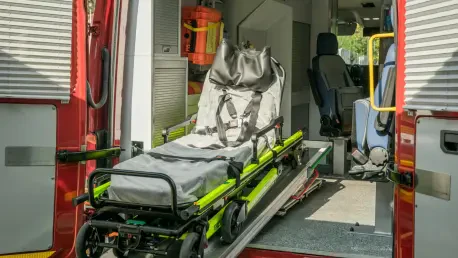
At the heart of Rovex’s innovative approach is its first product, an autonomous mobile robot named Rovi, which is meticulously engineered to integrate with a hospital’s existing infrastructure. Rather than requiring a complete overhaul of equipment, Rovi is designed to attach directly to a standard hospital stretcher and tow it safely and efficiently through the facility’s complex environment. The initial and primary use case for Rovi is the transport of low-risk, non-behavioral health patients who are stable enough for an autonomous journey. Dr. Crabb estimates this demographic accounts for a substantial 60% to 70% of all patients requiring transport, making it a high-impact target for automation. By handling this large volume of routine transfers, Rovi can liberate human transport staff to focus on patients with more complex needs, such as those requiring continuous monitoring or specialized assistance, optimizing the use of human resources across the hospital.
Beyond its core function, the Rovi robot was developed with a deep focus on the patient experience and absolute safety. The device moves at a deliberate pace of approximately two miles per hour, a speed calculated to be reassuring and non-intrusive in a busy hospital setting. It is equipped with a sophisticated array of sensors that enable it to perceive its surroundings, navigate around obstacles, and stop quickly and safely to prevent collisions. A crucial element of its design is the inclusion of a teleoperation system, which serves as a vital safety net. Should the robot encounter an “edge case” or an unusual situation it cannot resolve on its own, a human operator can remotely take control, ensuring that a person is always in the loop. This thoughtful design extends to the patient’s perspective; a front-facing screen on Rovi displays the destination and estimated travel time, providing clear information and reducing anxiety. This approach aims to make the technology feel “friendly and disarming,” fostering trust and comfort for patients in a vulnerable state.
A Strategic and Methodical Market Entry
Rovex Technologies has made a calculated decision to launch its Rovi robot in the Tampa Bay region, a market where the pressures of a large and growing aging population magnify the operational challenges faced by healthcare systems. The increasing demand for medical services in Florida consistently leads to hospital crowding, extended wait times, and slower patient turnover, creating an ideal environment for a solution designed to alleviate these specific pain points. To facilitate a successful rollout, the company established a physical presence at spARK Labs by ARK Invest in St. Petersburg. This local base is considered essential for a hands-on deployment strategy, allowing the Rovex team to provide immediate equipment maintenance, rapid response to any operational issues, and comprehensive support to its partner hospitals. This proximity is key to building strong relationships and ensuring the technology integrates smoothly into the complex, dynamic environment of a live hospital.
The deployment process for Rovi is a testament to the company’s commitment to safety and operational excellence, beginning long before the robot ever interacts with a patient. The Rovex team first creates a highly detailed “digital twin” of the entire hospital facility by using advanced sensors to map every hallway, room, and elevator. This comprehensive virtual model serves as a training ground for the Rovi fleet. In this simulated environment, the robots can learn the specific layouts, navigate intricate elevator protocols, and adapt to typical traffic patterns without any risk to patients or staff. This extensive pre-deployment training ensures that when the robots begin live operations, they are already intimately familiar with their environment. This methodical approach prioritizes a seamless and safe integration, allowing the technology to deliver on its promise of efficiency from day one while minimizing any potential disruption to the hospital’s critical daily functions.
An Innovative and Accessible Business Model
Rovex’s business model was intentionally designed to minimize the financial and operational barriers that often prevent hospitals from adopting new technologies. Instead of requiring healthcare systems to make a substantial capital investment in a completely new and costly fleet of specialized robotic stretchers, Rovex created Rovi to work with the equipment hospitals already own and use daily. Dr. Crabb noted that a single emergency room can have over a hundred stretchers, many of which remain stationary at any given time. By developing a robot that can tow these existing assets, a relatively small fleet of Rovi units can effectively serve a large number of stretchers, dramatically improving asset utilization. This capital-efficient strategy makes the adoption of sophisticated robotics far more financially viable for hospitals, allowing them to benefit from automation without a prohibitive upfront cost.
This approach aligned perfectly with the overarching goal of integrating new technology without adding complexity to the daily tasks of the clinical staff. The Rovi system was engineered to fit into the established clinical workflow, requiring no extra steps or procedural changes from busy nurses or doctors. Gaining acceptance and ensuring efficiency in a high-stakes environment like a hospital is critically dependent on this seamless integration. By automating the routine physical task of patient transport, Rovex’s solution addressed a significant source of physical and mental strain on the healthcare workforce. This thoughtful strategy not only aimed to improve career longevity for staff by reducing physical toll but also sought to fundamentally resolve logistical delays. Ultimately, the company had envisioned a future where patients received faster care and healthcare professionals could dedicate their valuable time and energy to what they do best: providing high-quality medical care.