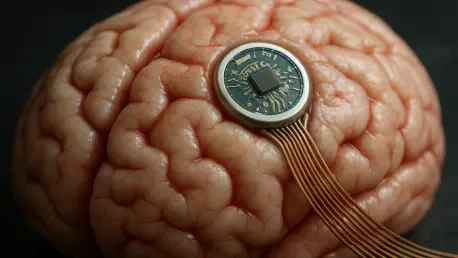

In a landmark achievement for neurotechnology, Nia Therapeutics has successfully published the first peer-reviewed in vivo validation of its Smart Neurostimulation System (SNS), a sophisticated brain-computer interface designed to address memory loss. The comprehensive study, detailed in the journal Brain Stimulation, provides compelling evidence for the viability of this wireless, fully implantable device. It represents a significant leap forward in the quest to treat memory disorders stemming from traumatic brain injury and neurodegenerative diseases. By employing a closed-loop neurostimulation approach, the system is engineered not just to send signals to the brain but to listen, interpret, and respond with precisely timed therapeutic interventions. This breakthrough moves the concept of memory restoration from the realm of theoretical science into a tangible therapeutic possibility, establishing a validated platform that could redefine treatment for millions affected by cognitive impairment and pave the way for a new generation of intelligent medical devices.
The Architectural Innovation Behind the System
The fundamental innovation of the Smart Neurostimulation System is its expansive and networked approach to monitoring and modulating brain activity. Unlike conventional deep brain stimulation devices that typically target a single, localized area to manage symptoms, the SNS is engineered to record neural signals from 60 channels simultaneously across four distinct brain regions. This multi-site architecture is critical for addressing a function as complex as memory, which is not housed in one specific location but relies on the dynamic, coordinated communication between distributed neural networks. According to CEO Michael Kahana, this design directly incorporates decades of neuroscience research demonstrating memory’s reliance on these widespread brain circuits. By capturing a holistic view of neural dynamics, the system can identify the complex patterns of activity that signify successful memory formation or failure, allowing it to deliver highly personalized and targeted stimulation precisely when and where it is needed to enhance cognitive function.
This advanced hardware is powered by an equally sophisticated closed-loop mechanism that enables it to function as an intelligent, responsive therapeutic tool. The process begins with the system continuously sensing bioelectric signals from the brain. These raw data are then processed in real-time by onboard machine-learning classifiers, which have been trained to decode neural states and predict cognitive performance. Based on this analysis, the device can determine if the brain is in an optimal state for memory encoding. If a suboptimal pattern is detected, the SNS delivers brief, low-amplitude electrical pulses to specific nodes within the memory network to guide brain activity back toward a state conducive to learning. This real-time feedback loop of sensing, decoding, and stimulating is what sets the SNS apart, transforming it from a passive implant into an active, personalized neuromodulation therapy that adapts to the user’s unique brain activity moment by moment.
Rigorous Preclinical Validation and Proven Efficacy
The preclinical validation of the SNS, conducted through a chronic study in sheep, successfully demonstrated the device’s stability and robust performance across three essential functions. The first area of validation was neural-state decoding, where the system’s machine-learning algorithms proved remarkably adept at interpreting brain activity. The classifiers were able to distinguish between states of movement and stillness with exceptional accuracy, achieving an area under the curve (AUC) between 0.92 and 0.98. Crucially, this high level of performance remained consistent throughout the entire implantation period, confirming the long-term reliability of the system’s sensing and analytical capabilities. Secondly, the study confirmed its programmable neuromodulation function. Researchers systematically adjusted stimulation parameters and observed predictable, dose-dependent changes in specific brainwave frequencies, including both alpha-band (8Hz–12Hz) and gamma-band (78Hz–82Hz) activity. This result verifies that the device can reliably and precisely modulate physiological brain signals as intended.
Beyond its functional performance, the validation study established the biocompatibility and long-term safety of the Smart Neurostimulation System, a critical hurdle for any implantable medical device. A comprehensive histological analysis conducted after the study period revealed no adverse tissue response at the implantation sites, confirming that the device materials and form factor are well-tolerated by the brain. This successful in vivo validation builds upon a strong foundation of research supported by prominent U.S. government agencies, including the Defense Advanced Research Projects Agency (DARPA) and the National Institutes of Health (NIH). Furthermore, it validates the transition from earlier human studies that used externalized, non-implantable systems. Those foundational studies demonstrated that similar machine-learning models could predict memory performance and that brief, targeted stimulation could improve delayed recall by approximately 20%. This new data confirms that a fully implantable, chronic system can achieve the necessary performance, marking it as a validated and promising platform for future therapies.
Charting a New Course for Cognitive Restoration
The successful validation of this innovative neurostimulation platform marked a pivotal moment, transitioning a promising research concept into a tangible therapeutic technology. This achievement was not merely an incremental step but a foundational one, confirming that a fully implantable, closed-loop system could safely and effectively read, interpret, and modulate the complex neural codes underlying memory. The study provided the crucial evidence that decades of research into the distributed nature of memory could be translated into an engineering reality. This milestone established a new benchmark for what is possible in the field of brain-computer interfaces, moving beyond simple stimulation to intelligent, personalized intervention. The confirmation of the system’s decoding accuracy, modulation precision, and long-term biocompatibility collectively built a strong case for its potential in future clinical applications, laying the groundwork for addressing some of the most challenging neurological conditions.