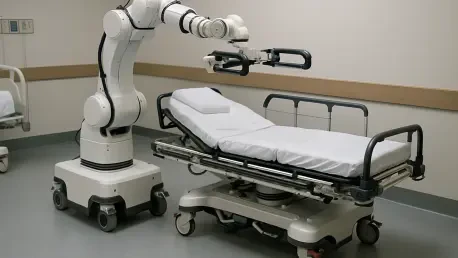

The daily task of moving a patient from a bed to a stretcher, a seemingly simple procedure, is a high-risk maneuver that has long plagued healthcare systems, contributing significantly to staff injuries and patient discomfort. At Mission Memorial Hospital, however, this routine is being fundamentally transformed. The facility has recently integrated a state-of-the-art robotic patient transfer device, the ALTA Platform, becoming a pioneer in adopting this advanced technology. This implementation not only places the hospital at the forefront of medical innovation as the second in its province to do so but also distinguishes it as the first small community hospital in the world to leverage such a system. Developed by the Canadian company Able Innovations, the platform uses a sophisticated artificial intelligence system to fully automate lateral transfers, seamlessly moving patients between surfaces like beds, gurneys, and imaging tables. This groundbreaking step promises to redefine safety and efficiency standards, offering a powerful solution to a persistent challenge in patient care and occupational health for medical professionals. The introduction of this device marks a pivotal moment, showcasing how targeted technological investment can yield profound benefits for both caregivers and their patients.
A Revolution in Patient and Staff Well-Being
Alleviating the Strain on Healthcare Professionals
The physical demands placed on healthcare workers, particularly those involved in direct patient handling, represent one of the most significant occupational hazards in the medical field. Manual lateral transfers, which involve sliding a patient from one surface to another, are a primary cause of musculoskeletal injuries, with back injuries being the most common and debilitating. Traditionally, these transfers require the coordinated effort of multiple staff members, often four or more, who must physically lift, pull, and position the patient. This process is not only labor-intensive but also fraught with risk, as awkward postures and sudden movements can lead to chronic pain and career-ending injuries. The cumulative strain from performing dozens of such transfers daily contributes to high rates of burnout, absenteeism, and staff turnover, creating operational challenges for hospitals. Furthermore, the need to assemble a transfer team can lead to delays in care, affecting patient flow and overall hospital efficiency. The ALTA Platform directly confronts this long-standing issue by replacing manual effort with precise, automated technology, fundamentally altering the physical environment for caregivers.
The introduction of the robotic patient transfer system offers a transformative solution to the physical burdens that have long been an accepted part of healthcare work. By automating the entire lateral transfer process, the ALTA Platform effectively eliminates the need for manual lifting and pulling, thereby drastically reducing the risk of injury to hospital staff. The device is designed to be operated by a single caregiver, freeing up other nurses and aides to attend to more critical patient care duties. This shift not only enhances staff safety but also improves operational efficiency throughout the hospital. With fewer personnel required for each transfer, staff can be reallocated to areas where their clinical skills are most needed, leading to better patient outcomes and a more streamlined workflow. This increased efficiency means less waiting time for patients needing to be moved for procedures or imaging, contributing to a smoother and more responsive care environment. Ultimately, by investing in technology that protects its employees, Mission Memorial Hospital is also investing in a more sustainable and effective healthcare delivery model for the future.
Enhancing Comfort and Dignity for Patients
For patients, especially those who are frail, in severe pain, or recovering from major surgery, the process of being manually transferred can be a source of significant anxiety and physical discomfort. The pulling and shifting motions inherent in a manual transfer can exacerbate pain, disturb wounds, and create a sense of vulnerability and helplessness. Patients with complex injuries, such as spinal cord damage or multiple fractures, are particularly at risk, as improper movement can lead to further complications. Beyond the physical pain, the experience can also strip patients of their dignity, as they are passively moved by a team of caregivers. This loss of autonomy, combined with the discomfort, can negatively impact the overall patient experience and even hinder the recovery process by adding unnecessary stress. The goal of any healthcare intervention is to heal and comfort, yet the very mechanics of moving patients have often been at odds with this principle. Recognizing this, the development of automated transfer technology was driven by a need to create a more patient-centric approach that prioritizes comfort and safety.
The ALTA Platform was engineered with the patient’s experience as a central focus, aiming to provide a transfer process that is as gentle and seamless as possible. The device utilizes its AI-powered system to execute a smooth, controlled motion that glides the patient from one surface to another without any jarring or pulling. This automated precision significantly reduces the pain and discomfort associated with manual transfers, providing a much more comfortable experience, particularly for those with acute or chronic conditions. Moreover, the quiet and efficient operation of the platform helps to reduce patient anxiety, fostering a greater sense of security and trust. By minimizing the number of staff members physically handling the patient, the system also helps preserve the patient’s sense of dignity and privacy. This focus on a more humane and respectful transfer process reflects a deeper commitment to patient-centered care, where technological innovation is leveraged not just for clinical efficiency but also to enhance the quality and compassion of every aspect of the patient’s journey through the hospital.
Pioneering Innovation Through Community Collaboration
The Vision of a Local Innovator
The journey to bring this revolutionary technology to Mission Memorial Hospital began not in a corporate boardroom but with the forward-thinking vision of a retired local physician. Dr. Andrew Edelson, the former site medical director, was the driving force behind the initiative. Having witnessed firsthand the physical toll that manual transfers took on his colleagues and the discomfort it caused for patients over his long career, he recognized the immense potential of the ALTA Platform to address this critical issue. Dr. Edelson championed the technology, seeing it as more than just a piece of equipment, but as a fundamental step toward creating a safer and more efficient healthcare environment. His advocacy was crucial in building momentum and securing the necessary support from hospital administration and community partners. His initiative demonstrates how experienced healthcare professionals can play a pivotal role in identifying and implementing innovations that have a tangible impact on the front lines of patient care. It was his insight and persistence that laid the groundwork for Mission Memorial to become a leader in healthcare technology.
The successful implementation of the ALTA Platform at Mission Memorial Hospital serves as a powerful case study for how smaller, community-focused healthcare facilities can spearhead technological innovation. It challenges the conventional notion that cutting-edge advancements are reserved for large, urban medical centers with vast resources. By strategically adopting automation, rural and community hospitals can effectively address some of their most pressing challenges, including persistent labor shortages and the ongoing need to enhance the quality of care with limited budgets. This initiative proves that with clear vision and strong community backing, smaller institutions can not only adopt new technologies but also set new standards for the entire industry. This move positions Mission Memorial as a model for other similar-sized hospitals, illustrating a viable path toward modernizing operations, improving patient outcomes, and creating a more sustainable work environment for healthcare staff. It underscores a growing trend where innovation is decentralized, driven by the specific needs and proactive spirit of local communities.
A Community United for Better Healthcare
The acquisition of the ALTA Platform was not the result of a single funding source but rather a testament to the power of collective community effort. The project was made possible through a dynamic partnership involving the Fraser Valley Health Care Foundation, the regional health authority Fraser Health, and the unwavering support of the local Mission community. This collaborative approach was essential in navigating the financial and logistical hurdles of procuring such advanced medical technology. Each partner played a distinct but complementary role, with the foundation leading fundraising efforts, Fraser Health providing institutional and operational support, and the community offering the grassroots enthusiasm and financial contributions that ultimately brought the project to fruition. This tripartite alliance highlights a modern and effective model for healthcare funding, where public institutions and private philanthropy work in concert to achieve shared goals. It shows that significant advancements in local healthcare are most successful when they are embraced and championed by the entire community they are intended to serve.
A substantial portion of the funding for the robotic patient transfer system was raised through the dedicated efforts of the Mission Health Care Auxiliary, a volunteer-run organization with deep roots in the community. This group generated the necessary capital primarily through its two social enterprises: the Cottage Thrift Store and the hospital’s gift shop. This remarkable achievement underscores the profound impact that dedicated volunteers can have on the quality of local healthcare services. The success of this fundraising campaign is a direct reflection of the community’s trust in and commitment to its local hospital. It demonstrates a powerful cycle where community members support local businesses run by volunteers, and the proceeds are then reinvested directly back into the hospital to purchase equipment that benefits everyone. This grassroots financial support was the cornerstone of the acquisition, showcasing a model of community-driven philanthropy that is both sustainable and deeply impactful, ensuring that Mission Memorial Hospital remains equipped to provide the highest standard of care.
A New Standard of Care
The successful deployment of the robotic transfer system at Mission Memorial Hospital marked a significant milestone, not just for the facility but for community healthcare at large. It represented the culmination of a shared vision that brought together medical professionals, community leaders, and dedicated volunteers. The initiative demonstrated that with foresight and collaborative effort, smaller hospitals could leapfrog traditional barriers and become centers of innovation. The integration of this technology did more than just solve a logistical problem; it fundamentally elevated the standards of safety and dignity for both patients and staff. This achievement stood as a powerful example of how targeted technological investment, fueled by strong community spirit, could create a more compassionate and efficient healthcare environment for everyone.