
The traditional “black box” approach to medical device manufacturing, where quality is only verified after a product is fully assembled, creates significant risks for both patient safety and operational profitability in an increasingly demanding global regulatory environment. In such systems, a single misalignment or subtle mechanical failure during the initial steps of assembly can remain undetected until the final inspection, leading to substantial waste and potential recalls that damage institutional reputations. Modern production requirements have evolved beyond these retrospective methodologies, demanding a paradigm where quality assurance is woven into the very fabric of the assembly process. This evolution necessitates the integration of high-precision sensor technology and digital motion systems that can monitor every movement in real time. By transitioning from a reactive stance to a proactive, data-driven strategy, manufacturers are finding they can maintain the stringent standards required for medical certification while simultaneously increasing throughput.
Advancing Precision through Digital Motion and Sensing
Active Monitoring: The End of Retrospective Inspection
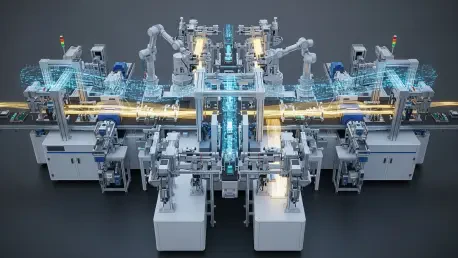
The strategic partnership between Kistler and ATS Life Sciences Systems highlights a significant shift in how medical devices are produced, specifically through the implementation of the Symphoni platform. This system utilizes advanced force and displacement sensing to conduct sophisticated waveform analysis at every individual assembly step, ensuring that each component is seated and secured according to exact specifications. Unlike traditional methods that rely on pre-assembly or post-assembly checks, this integrated approach allows for the immediate identification of defects as they occur. When a sensor detects a deviation from the expected force curve, the system can pause or flag the specific unit, preventing further value-added work on a defective part. This level of granularity is essential for complex medical devices where precision is measured in microns and any variation could result in catastrophic failure. This move toward active monitoring represents a foundational change in quality control philosophies.
Technical advancements within the Symphoni platform have set a new industry benchmark for speed and operational efficiency, effectively producing up to 320 parts per minute. This is achieved while utilizing approximately 90% less tooling than conventional assembly lines, which significantly simplifies the mechanical complexity of the factory floor. One of the most striking achievements of this collaboration is the drastic reduction in cycle times, which have been compressed from 3,750 milliseconds to a remarkably brief 750 milliseconds. Such acceleration usually introduces mechanical instability, but the platform maintains high-fidelity data collection through its digital motion system. By consolidating multiple processes into a smaller physical footprint, the system provides the flexibility needed to handle various product types on a single line. This modularity allows manufacturers to scale production rapidly without the need for extensive physical expansions, making it a highly cost-effective solution for large-scale deployments.
Performance Metrics: Redefining Throughput and Efficiency
The integration of real-time data allows for a level of process transparency that was previously impossible in high-speed environments. By capturing data at every millisecond of the assembly cycle, manufacturers can visualize the internal dynamics of the machine, identifying exactly where bottlenecks or mechanical inefficiencies arise. This transparency facilitates a more agile response to production challenges, as adjustments can be made based on empirical evidence rather than trial and error. Furthermore, the reduction in tooling requirements means that changeover times between different medical products are minimized, allowing a single facility to produce a wider variety of devices with less downtime. This shift toward high-speed, low-footprint manufacturing is particularly relevant for the production of high-volume consumables, such as insulin pens or diagnostic cartridges. The ability to maintain such high throughput without sacrificing the precision of individual component verification has redefined the limits of modern assembly.
By utilizing high-resolution sensors, the platform creates a digital twin of the assembly process, where every physical interaction is mirrored by a data point. This digital representation serves as a powerful tool for analyzing the long-term stability of the production line. Engineering teams can use this data to perform root cause analysis on failures that would otherwise seem random or intermittent. Moreover, the synchronization between the digital motion system and the sensors ensures that even the fastest movements are captured with perfect clarity. This coordination is vital for maintaining the integrity of the medical devices, as it ensures that every joint, snap-fit, and weld is executed within the required tolerances. As the industry moves toward even more complex device architectures, the reliance on these integrated sensing and motion systems will only grow. The result is a manufacturing environment where speed and quality are no longer in competition but are instead mutually reinforcing metrics that drive overall operational success.
Navigating Regulatory Landscapes and Data Integrity
Technical Innovations: Neutralizing Mechanical Noise
Operating at such high velocities presents a unique set of engineering challenges, particularly regarding the mechanical noise and vibrations that can distort sensor readings. To address this, the platform employs a patent-pending inertia compensation system designed to neutralize the unwanted forces generated by rapid acceleration and deceleration. This ensures that the force measurements remain precise, allowing the waveform analysis to focus exclusively on the assembly interaction rather than the movement of the machine itself. Without this level of compensation, the data collected at 320 parts per minute would be too noisy to be actionable, rendering real-time quality assurance impossible. By filtering out these mechanical artifacts, the system maintains a high signal-to-noise ratio, which is critical for the delicate assembly of drug delivery devices and surgical instruments. This technical refinement ensures that the speed of the line never compromises the accuracy of the underlying quality data.
The implementation of inertia compensation technology represents a significant leap forward in precision engineering for the medical sector. It allows for the use of sensitive measurement instruments in environments that were previously considered too chaotic for high-accuracy sensing. This capability is especially important when dealing with fragile components or materials that have low tolerance for excessive force. By ensuring that every measurement is a true reflection of the assembly force, manufacturers can guarantee that no damage occurs during the high-speed mating of parts. This level of control reduces the internal scrap rate and ensures that every device leaving the line is functionally perfect. This approach also extends the lifespan of the assembly equipment by reducing the impact of uncompensated forces on mechanical components. Ultimately, the ability to maintain laboratory-grade precision on a high-speed production floor provides a competitive advantage that is difficult to replicate with older, more traditional assembly technologies.
Audit Readiness: Ensuring Continuous Process Optimization
Beyond the mechanical performance, the integration of real-time data is instrumental in navigating the complex regulatory landscapes established by the FDA and the EU Medical Device Regulation (MDR). The platform generates fully traceable, audit-ready process data for every single unit produced, providing a comprehensive digital history that satisfies the most stringent compliance requirements. Manufacturers should leverage this granular information not just for documentation, but as a tool for continuous process optimization. By analyzing long-term trends in assembly data, engineering teams can identify subtle shifts in component quality or machine wear before they lead to actual defects. Moving forward, the focus must shift toward utilizing this wealth of data to drive predictive maintenance and autonomous process adjustments. Transitioning to these data-centric workflows was essential for maintaining high yields and ensuring that the next generation of medical devices meets the rigorous safety expectations of the modern healthcare market.
Adopting a data-driven approach to medical assembly required a total reimagining of how quality was defined on the factory floor. Instead of viewing quality as a final hurdle to be cleared, it became a continuous stream of information that guided every decision from the initial setup to the final packaging. This transition allowed manufacturers to eliminate the guesswork associated with manual inspections and historical testing methods. By implementing automated data collection and analysis, organizations were able to provide regulators with unequivocal proof of process stability and product safety. This transparency not only streamlined the certification process but also built a foundation of trust with healthcare providers and patients. The shift toward real-time data integration ultimately proved to be the most effective solution for managing the increasing complexity of medical devices. It provided a scalable framework that supported rapid innovation while maintaining the highest possible standards of manufacturing excellence across all production lines.