
In the critical moments following an out-of-hospital cardiac arrest, the quality of chest compressions can be the single most important factor determining a patient’s chance of survival, a challenge that is magnified exponentially in rural areas where transport times are long and resources are stretched thin. For emergency medical services (EMS) teams in these remote settings, maintaining effective cardiopulmonary resuscitation (CPR) over extended periods is a monumental physical challenge. A groundbreaking philanthropic initiative in Saskatchewan is now addressing this very issue, deploying advanced medical technology to bridge the gap between human limitations and the unrelenting demands of life-saving care. This collaboration showcases how targeted technological investment can directly empower frontline responders and fundamentally change the odds for patients in underserved communities, providing a new layer of support when every second is crucial for a positive outcome.
A Lifeline for Remote Communities
Strategic Deployment and Collaborative Impact
A significant enhancement to Saskatchewan’s rural emergency healthcare has been realized through a notable philanthropic contribution from the Health Sciences Association of Saskatchewan (HSAS). The union, which represents a diverse group of over 4,400 specialized healthcare professionals, gifted five state-of-the-art LUCAS 3.1 mechanical chest compression devices to the Saskatchewan Health Authority (SHA). This donation, valued at more than $100,000, signifies a powerful partnership between a professional association and the province’s healthcare system, aimed directly at improving patient outcomes and supporting frontline workers. The devices are being deployed to EMS teams in five specific communities: La Loche, Beauval, Estevan, Weyburn, and Esterhazy. This initiative is a clear demonstration of a union reinvesting in the very system its members serve, providing tangible tools that address critical needs in challenging operational environments and reinforcing the collaborative spirit essential for advancing public health and safety. The donation is not merely a transfer of equipment but a strategic infusion of technology designed to bolster the entire chain of survival.
The selection of the five recipient communities was a deliberate and data-driven process undertaken by the Saskatchewan Health Authority to ensure the technology would have the greatest possible impact. Rather than a random distribution, the SHA identified La Loche, Beauval, Estevan, Weyburn, and Esterhazy as high-priority areas based on a careful analysis of historical emergency call volumes and specific data related to cardiac arrest incidents. This strategic placement ensures that the advanced life-support capabilities of the LUCAS devices are positioned where they are most needed. In rural and remote settings, factors such as geographic isolation and longer transport times to definitive care facilities can negatively affect patient outcomes. By equipping EMS teams in these targeted locations, the SHA is proactively addressing known service pressures and strengthening the emergency response infrastructure. This methodical approach maximizes the return on the philanthropic investment, ensuring that these “extra sets of hands” are available to paramedics serving populations with a demonstrated and pressing need for enhanced cardiac care.
Enhancing Frontline Capabilities
The introduction of the LUCAS devices provides a profound level of support for rural paramedics who frequently operate under intensely demanding conditions. Karen Schmid, President of HSAS, emphasized the union’s pride in directly assisting these frontline professionals, who perform life-saving duties often complicated by long distances and limited personnel. The physical toll of performing manual CPR is immense, and its effectiveness can wane over time due to rescuer fatigue, a problem exacerbated during prolonged transports to a hospital. Rod MacKenzie of the SHA echoed this sentiment, describing the device as an invaluable “extra set of hands” during a critical medical event. This technology effectively automates one of the most physically strenuous aspects of resuscitation, freeing the paramedic team to concentrate on other vital interventions. This support is not just a matter of convenience; it is a critical enhancement that allows a small team to perform at a higher level, manage complex patient needs more effectively, and sustain life-support over distances that would otherwise compromise the quality of care delivered.
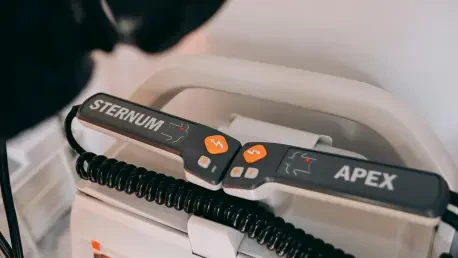
By automating the physically exhaustive task of delivering chest compressions, the LUCAS device fundamentally transforms the workflow and safety of an EMS team during a cardiac arrest response. With the machine providing continuous, high-quality CPR, paramedics are liberated to focus on a host of other critical tasks that are essential for patient survival. This includes managing the patient’s airway, administering life-saving medications, establishing intravenous access, and interpreting cardiac rhythms. This division of labor ensures that no single critical intervention is delayed or compromised because personnel are occupied with manual compressions. Furthermore, the device significantly enhances provider safety, particularly during ambulance transport. Paramedics can remain safely seated and belted while the LUCAS system continues to function perfectly, eliminating the risks associated with standing and performing CPR in a moving vehicle. This technological assistance not only elevates the standard of patient care but also creates a safer and more efficient working environment for the emergency responders themselves.
The Technological Advantage in Critical Care
Revolutionizing Patient Outcomes
For an individual experiencing a cardiac arrest, the LUCAS 3.1 device offers a crucial advantage by delivering chest compressions with a level of precision and consistency that is difficult for humans to sustain. The system is calibrated to provide compressions at an optimal rate of 102 per minute and to a consistent depth of 5.3 centimeters, adhering precisely to clinical guidelines for effective CPR. This mechanical precision is relentless, eliminating the inevitable inconsistencies that arise from rescuer fatigue during manual resuscitation efforts. As a provider tires, the rate and depth of their compressions can naturally falter, which in turn reduces critical blood flow to the brain and heart. The LUCAS device circumvents this human factor entirely, ensuring that the patient receives uninterrupted, high-perfusion CPR from the moment the device is deployed until they reach definitive care. This unwavering performance is a key factor in improving the chances of a successful resuscitation, providing a stable foundation of circulatory support upon which other medical interventions can be built.
The sustained and high-quality chest compressions delivered by the LUCAS system have a direct and profound physiological benefit for the patient. By ensuring consistent blood circulation during cardiac arrest, the device maintains a more stable flow of oxygenated blood to the heart and, most critically, the brain. This continuous perfusion is vital for preventing irreversible neurological damage, which can occur within minutes of the heart stopping. In rural settings, where the time from the initial 911 call to arrival at a major hospital can be extensive, this uninterrupted circulatory support can be the determining factor not only in survival but also in the quality of that survival. By mitigating the effects of oxygen deprivation on the brain, the technology increases the likelihood of a patient returning to their previous level of function. It transforms a prolonged transport from a period of potentially degrading manual care into a period of continuous, high-quality mechanical life support, fundamentally improving the prognosis for cardiac arrest victims in remote locations.
A New Standard of Care
The collaboration between the Health Sciences Association of Saskatchewan and the Saskatchewan Health Authority culminated in a significant advancement for rural emergency medicine. The strategic deployment of five LUCAS 3.1 mechanical chest compression devices addressed a fundamental vulnerability in pre-hospital care: the physical limitations of human responders during prolonged and high-stress cardiac arrest events. This initiative provided more than just equipment; it delivered a technological solution that directly supported frontline paramedics, enabling them to perform their duties more safely and effectively. In doing so, it established a higher and more consistent standard of emergency cardiac care for the residents of La Loche, Beauval, Estevan, Weyburn, and Esterhazy. The impact of this targeted investment reshaped the potential outcomes for some of the province’s most geographically isolated citizens, ensuring that advanced life-support capabilities were available when and where they were needed most.