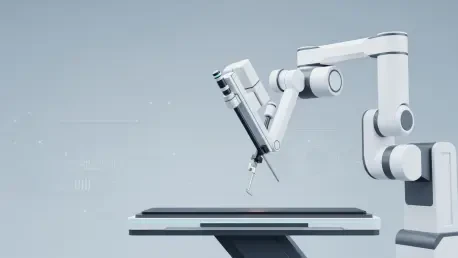

The successful completion of clinical trials for the YDHB-NS01 vascular robotic system at Peking Union Medical College Hospital represents a transformative leap in the field of neurovascular intervention. For decades, cerebral angiography has remained a foundational yet grueling diagnostic procedure, requiring surgeons to navigate ultra-thin catheters from the femoral artery in the thigh all the way to the delicate vessels of the brain. This process traditionally demands exceptional manual dexterity and subjects medical staff to prolonged radiation exposure while wearing heavy protective lead gear that often leads to chronic orthopedic issues. By introducing high-precision mechanical assistance, this new domestic technology seeks to alleviate these physical burdens while enhancing the accuracy of catheter placement. The integration of advanced robotics into the operating room does not merely supplement human skill; it fundamentally alters the ergonomics of the surgical environment, allowing for a safer and more sustainable practice for medical professionals.
Enhancing Procedural Precision: Efficiency and Ergonomic Innovation
During the recent clinical evaluation involving a cohort of 50 patients, the robotic system demonstrated a remarkable 100% technical success rate, proving that mechanical automation can match the diagnostic reliability of veteran neurosurgeons. One of the most striking outcomes was the significant reduction in procedural time, as the average duration for surgery dropped from 38 minutes under traditional manual methods to just 27 minutes with robotic assistance. This 29% increase in efficiency is particularly critical in neurological care, where time-sensitive diagnoses can dictate the trajectory of patient recovery. The YDHB-NS01 utilizes a sophisticated “remote console” architecture, which effectively decouples the surgeon from the radiation source. By operating from a shielded station, doctors can perform intricate movements without the physical strain of heavy aprons, while the system’s high-precision force feedback mechanisms provide the tactile sensation necessary to navigate the complex vascular anatomy without the risk of hand tremors.
Beyond the immediate gains in speed, the robotic interface provides a stabilized platform that standardizes the delivery of diagnostic instruments within the vascular network. Traditional manual angiography often suffers from variability caused by physical fatigue or the minute, involuntary movements of the human hand, which can complicate the navigation of tortuous arterial pathways. The YDHB-NS01 addresses these variables by translating the surgeon’s inputs into digitized, jitter-free commands that move the catheter with sub-millimeter accuracy. This level of control is supported by integrated safety protocols that monitor the pressure exerted on vessel walls, significantly lowering the risk of accidental arterial damage during the navigation phase. As the technology matures from 2026 into the coming years, such systems are expected to become the standard for high-volume hospitals, ensuring that every patient receives a uniform level of care regardless of the specific hour of the day or the physical state of the operating surgeon.
Democratizing Surgical Expertise: Training and Safety Outcomes
Perhaps the most profound finding from the study was the role of the robotic system in bridging the experience gap between senior consultants and junior medical staff. In a controlled test, a junior neurosurgeon with less than three years of clinical experience was able to surpass the performance of established manual techniques after completing only two specialized training sessions with the YDHB-NS01. This suggests that the learning curve for complex neurovascular procedures can be drastically shortened through intelligent mechanical assistance, potentially expanding the pool of qualified specialists capable of performing these life-saving interventions. Despite this shift in who can perform the procedure, the study confirmed that there was no compromise in patient safety; critical indicators such as the volume of contrast agents used and the total radiation dosage remained entirely consistent with traditional standards. This democratization of expertise suggests a future where high-stakes medical procedures are no longer limited to a small elite of practitioners with decades of manual training.
To solidify the standing of the YDHB-NS01 within the global medical community, researchers led by Dr. Zhao Yuanli looked toward more comprehensive validation strategies. While the initial results were promising, the study was categorized as an exploratory, single-center case series, which naturally invited a degree of professional caution regarding its universal applicability. The path forward involved launching larger-scale, multicenter trials that tested the system across a more diverse demographic of patients and varying clinical environments to ensure its robustness in real-world scenarios. These subsequent studies focused on long-term patient outcomes and the durability of the robotic components under the stress of high-frequency use. Achieving these benchmarks was essential for moving the technology from a successful trial phase into widespread clinical adoption. The focus remained on maintaining a balance between rapid technological integration and the rigorous safety standards that define modern neurosurgery, ensuring that innovation always prioritized the well-being of the patient above all other metrics.
The successful trial of the YDHB-NS01 provided a clear blueprint for the integration of artificial intelligence and robotics into the specialized field of neurovascular medicine. Medical institutions and hospital administrators took note of the significant efficiency gains, recognizing that adopting such technology required a parallel investment in specialized training infrastructures and updated safety protocols. The transition toward robotic-assisted surgery necessitated a shift in medical education, where the focus moved from pure manual dexterity to the mastery of digital interfaces and remote haptic feedback systems. Regulatory bodies and healthcare providers worked together to establish standardized certification processes for robotic operators, ensuring that the technology remained a tool for precision rather than a replacement for clinical judgment. By focusing on these logistical and educational frameworks, the medical community ensured that the benefits of vascular robotics were realized safely and equitably across the healthcare system, setting a new benchmark for surgical excellence in the mid-2020s.