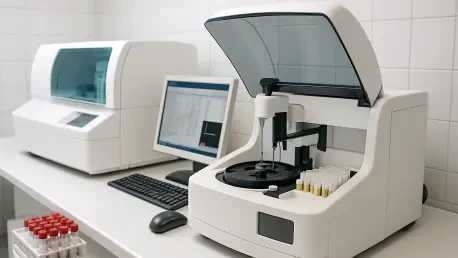

The hidden machinery of modern healthcare operates within the silent precision of laboratory reagents, where the fundamental accuracy of every clinical diagnosis depends entirely on the quality of raw materials that most patients will never see. These essential components, including high-affinity antibodies, purified antigens, specialized enzymes, and complex chemical buffers, form the absolute bedrock of the In-Vitro Diagnostic (IVD) immunodiagnostic market, enabling the manufacture of everything from simple rapid tests to high-throughput laboratory systems. As medical science transitions toward an era of hyper-personalized care, the demand for these sophisticated building blocks has reached an unprecedented scale, necessitating a complete reimagining of how diagnostic components are developed and distributed. Without the constant refinement of these biochemical tools, the global ability to detect infectious diseases, monitor chronic conditions, or identify early-stage oncology biomarkers would effectively vanish, leaving clinicians without the data required for life-saving interventions.
As of 2024, the global market for these immunodiagnostic raw materials reached a robust valuation of USD 13.23 billion, a figure that underscores its indispensable role in the broader healthcare ecosystem. Current industrial trends and the rapid integration of advanced biotechnologies suggest that this sector is positioned for a transformative decade, with projections indicating a rise to USD 29.45 billion by 2033. This growth is not merely a quantitative expansion but represents a qualitative shift in how diagnostics are integrated into daily medical practice, moving away from reactive screening toward proactive, precision-based health management. The industry is currently maintaining a steady Compound Annual Growth Rate (CAGR) of 9.3% starting from 2026, driven by an urgent global need for earlier disease detection and more reliable point-of-care testing solutions. This financial momentum reflects a world where diagnostic accuracy is no longer a luxury but a fundamental requirement for the sustainability of modern healthcare systems facing aging populations and emerging pathological threats.
Financial Projections: The Economic Engine of Diagnostics
The financial trajectory of the IVD immunodiagnostic raw material sector through 2033 points toward a period of sustained and resilient expansion, deeply rooted in the structural shifts of global healthcare delivery. Following the 2024 valuation of USD 13.23 billion, the market is expected to climb to USD 14.46 billion by 2025, maintaining a consistent upward momentum that defies broader economic volatility. This steady growth is primarily fueled by the increasing global burden of chronic diseases, particularly in oncology and cardiology, where frequent and accurate testing is the only viable path for effective patient management. As the global population ages, the sheer volume of diagnostic procedures required for routine monitoring continues to scale, creating a permanent and expanding floor for the demand of high-quality antigens, antibodies, and specialized buffers. This demographic shift ensures that the market for these core components remains insulated from typical market cycles, as the necessity for diagnostic data remains a constant priority for medical institutions worldwide.
Beyond chronic disease management, the landscape of infectious disease surveillance has undergone a permanent transformation that continues to drive significant investment in raw material production. Post-pandemic healthcare strategies have prioritized the establishment of permanent, high-capacity infrastructure for continuous pathogen monitoring, shifting the paradigm from emergency response to constant vigilance. This institutionalized approach requires a reliable and massive supply of viral and bacterial antigens to power the next generation of surveillance tools. Furthermore, the rising consumer and institutional awareness regarding the clinical and financial benefits of early diagnosis has transitioned testing from a reactive measure to a proactive health management tool. This shift is particularly evident in the growing popularity of wellness screenings and preventative panels, which require a vast array of standardized reagents. As these preventative health trends become more entrenched in clinical guidelines, the volume of diagnostic raw materials consumed annually is expected to reach new heights, cementing the sector’s role as a vital economic pillar.
Technological Innovation: Engineering the Next Generation of Reagents
Technological sophistication serves as the primary engine driving the evolution of immunodiagnostic raw materials, moving the industry toward a future defined by recombinant precision and engineered protein stability. The historical reliance on traditional polyclonal antibodies is rapidly giving way to advanced recombinant versions that offer vastly superior specificity and consistent performance across different production lots. This transition is critical for diagnostic manufacturers who require high levels of reproducibility to meet the increasingly stringent standards of international regulatory bodies. By utilizing engineered proteins, suppliers can fine-tune the binding characteristics of their reagents, effectively eliminating the variability that often plagued earlier generations of diagnostic assays. This level of molecular control allows for the development of tests that are not only more accurate but also more resilient to environmental factors, which is a prerequisite for the expansion of diagnostic capabilities into non-traditional clinical settings.
The rise of multiplex assays represents another significant technological frontier, as these systems allow for the simultaneous detection of multiple analytes within a single patient sample. Developing the raw materials for these complex assays requires an extraordinary level of chemical engineering, as reagents must exhibit minimal cross-reactivity while maintaining a high signal-to-noise ratio in a crowded biochemical environment. Manufacturers are investing heavily in the chemistry needed to ensure that multiple reactions can occur within the same vessel without interference, a feat that requires specialized blockers and highly optimized reaction buffers. Simultaneously, the miniaturization of diagnostic devices through microfluidic platforms is forcing a total rethink of reagent stability. As devices become smaller and more portable, the raw materials must remain active in microliter volumes and be compatible with the specialized polymers used in modern testing cartridges. This demand for durability and high-performance chemistry under mechanical stress is pushing the boundaries of what is possible in liquid stabilization and enzyme engineering.
The AI Revolution: Transforming Quality Control and Production
Artificial Intelligence has transitioned from an experimental tool to a core component of the manufacturing and quality control pipelines for leading immunodiagnostic reagent suppliers. In the current landscape, AI-driven systems are utilized to perform high-speed, automated visual inspections of vials, magnetic beads, and membranes with a level of precision that far exceeds human capabilities. These systems can instantly identify microscopic physical contaminants or structural anomalies that might compromise the integrity of a diagnostic test, ensuring that only zero-defect products reach the clinical market. By integrating computer vision and machine learning directly into the production line, manufacturers have successfully reduced the margin of error, which is vital for maintaining the trust of healthcare providers and ensuring patient safety. This technological integration has effectively shortened release times and reduced the volume of waste, setting a new industry standard for manufacturing efficiency and product reliability.
Predictive modeling is perhaps the most transformative application of AI within this sector, as it allows manufacturers to create a “digital thread” that connects raw material attributes to final assay performance. By analyzing massive datasets of historical production cycles, AI can predict how subtle variations in protein concentration or buffer pH levels will affect the sensitivity and specificity of an eventually manufactured diagnostic kit. This capability allows for real-time adjustments during the synthesis process, ensuring that every batch of reagents performs identically regardless of minor fluctuations in environmental conditions or starting materials. Strategic partnerships, such as the 2026 collaboration between Thermo Fisher Scientific and NVIDIA, highlight the move toward “intelligent” laboratory workflows where AI is integrated directly into the diagnostic instruments themselves. This allows for the real-time optimization of assays based on data-driven insights, paving the way for a future where the diagnostic process is continuously refined by the very machines that perform the analysis.
Detailed Product Segmentation: Core Systems and Signal Generation
The global market for immunodiagnostic raw materials is intricately divided into four primary segments, with Core Reaction Systems representing the largest and most foundational category. This segment includes the primary enzymes, reaction buffers, and complex mixtures that define the fundamental chemistry of any given assay. Because the accuracy and reproducibility of a diagnostic platform are almost entirely dependent on these core components, manufacturers typically establish long-term, highly controlled partnerships with their suppliers to ensure a consistent supply. There is a profound emphasis on standardization and regulatory qualification within this segment, as any variation in the core chemistry could lead to inconsistent clinical results across different laboratory settings. As diagnostic platforms become more automated and high-throughput, the demand for core reagents that can withstand the mechanical and thermal rigors of rapid processing continues to expand, driving innovation in stabilization technology.
While core systems provide the foundation, Signal Systems represent the fastest-growing segment of the market, driven by the relentless pursuit of higher analytical sensitivity. This category encompasses detection reagents, labels such as chemiluminescent or fluorescent tags, and various signal amplification materials designed to identify biomarkers at incredibly low concentrations. The ability to detect diseases at their earliest molecular stages depends heavily on the efficiency of these signal-generation technologies, pushing manufacturers to develop new chemistries that provide distinct and easily readable outputs. Alongside these advancements, the Carrier segment is witnessing a resurgence, particularly through the widespread adoption of magnetic bead-based immunoassays. These materials facilitate faster separation and easier automation in high-volume environments, making them indispensable for modern clinical laboratories that must process thousands of samples daily. When combined with specialized reaction environments that include blockers and stabilizers, these components ensure that biological reactions remain viable and accurate throughout their entire shelf life.
Application-Based Insights: Infectious Disease and Oncology Leadership
The clinical application of immunodiagnostic raw materials is a primary determinant of both demand volume and the required levels of biochemical purity. Currently, infectious disease testing remains the dominant application by volume, fueled by a permanent global shift toward comprehensive public health screening and the ongoing monitoring of seasonal viral outbreaks. The requirement for pandemic preparedness and the surveillance of respiratory pathogens like influenza and respiratory syncytial virus ensures a predictable and massive demand for high-quality antigens and antibodies. In this segment, traceability and the ability to mass-produce standardized reagents are paramount, as these materials are used in large-scale surveillance programs where data accuracy is essential for national and international health policy decisions. The sheer scale of these testing programs provides a stable revenue stream for raw material suppliers, allowing for continued investment in larger and more efficient production facilities.
In contrast to the volume-driven infectious disease segment, oncology stands as the clear innovation leader and the fastest-growing application area in the immunodiagnostic market. The global rise of precision medicine and the development of companion diagnostics have created an urgent need for highly specialized biomarker panels that can identify cancer-specific proteins with extreme precision. This segment demands ultra-pure reagents and unique antibodies that are often developed specifically for a single pharmaceutical therapy or a niche patient population. Regulatory bodies are increasingly encouraging the development of these targeted diagnostic tools, which in turn fuels the requirement for innovative raw materials that can provide the sensitivity needed for liquid biopsies and early-stage screening. As oncology treatments become more personalized, the demand for these sophisticated reagents is expected to surge, shifting the market toward high-value, low-volume productions that prioritize specificity over sheer quantity.
Regional Dynamics: Global Market Maturity and Emerging Powerhouses
North America continues to hold the largest share of the global immunodiagnostic raw material market, anchored by a dense and highly sophisticated ecosystem of research institutions and diagnostic giants in the United States. The region benefits from a mature regulatory framework and high levels of both private and institutional investment, which keep North American companies at the absolute forefront of reagent innovation. This dominance is further supported by a robust supply chain infrastructure and a high concentration of biotechnology hubs that facilitate the rapid transition of new discoveries from the laboratory to the commercial market. As long as the United States remains a leader in pharmaceutical development and precision medicine, the demand for specialized immunodiagnostic components in this region will likely remain the highest in the world, setting the benchmark for quality and performance standards across the entire industry.
Europe is witnessing rapid expansion characterized by a strong domestic manufacturing base and increasingly harmonized regulatory pathways that facilitate the cross-border distribution of diagnostic materials. Germany serves as the industrial heart of the European market, emphasizing high-precision manufacturing and strict quality compliance, while countries like the United Kingdom and France have become global hubs for biotechnology startups and translational research. Meanwhile, the Asia-Pacific region is strengthening its position as an emerging powerhouse by focusing on massive manufacturing capacity and cost-effective production techniques. Japan continues to lead in high-precision diagnostic platforms, but South Korea has rapidly modernized its biotech sector to transition from contract manufacturing to the development of proprietary, high-quality raw material solutions. This regional shift is creating a more balanced global supply chain, where manufacturing excellence in the East complements the research-driven innovation typically associated with the West.
Market Forces: Balancing Acceleration and Regulatory Resistance
The growth of the IVD immunodiagnostic market is influenced by a complex interplay of accelerating forces and significant institutional barriers that define the competitive landscape. The universal adoption of immunoassays in hospitals and clinical laboratories provides a permanent and reliable floor for reagent demand, as these tests are integral to the daily operation of modern medical facilities. Furthermore, the rapid expansion of healthcare infrastructure in emerging economies is creating vast new markets for foundational reagents, as laboratory networks are established to serve previously underserved populations. These drivers are pushing manufacturers to scale their operations globally and to innovate in areas such as cold-chain-free reagents and simplified testing formats. However, this acceleration is often tempered by the sheer complexity of global regulatory environments, which require extensive documentation and multi-jurisdictional certification for every new raw material introduced to the market.
Regulatory compliance represents a significant barrier to entry, particularly for smaller, innovative firms that may struggle with the high costs and lengthy timelines associated with batch traceability and clinical validation. These requirements ensure patient safety but also increase the overall cost of development, often leading to a market dominated by a few large players with the capital to navigate these complexities. Additionally, supply chain bottlenecks remain a persistent risk, as there is a limited global availability of certain high-affinity antibodies and custom antigens. Relying on a small number of specialized suppliers can create vulnerabilities during global health crises, as seen in the recent past when localized disruptions had a cascading effect on global diagnostic capabilities. To mitigate these risks, many large diagnostic firms are now pursuing aggressive vertical integration strategies, bringing the production of critical raw materials in-house to ensure stability and maintain tighter control over their quality standards.
Competitive Landscape: Strategic Consolidation and Industry Giants
The immunodiagnostic raw material market is currently undergoing a period of intense strategic consolidation, as major players move to secure their supply chains and acquire niche technological capabilities through aggressive mergers and acquisitions. This trend is driven by a desire to offer more comprehensive product portfolios and to reduce reliance on third-party vendors for critical components like enzymes and specialized antibodies. For instance, recent acquisition activity highlights how established companies are buying their way into high-growth segments such as autoantibody platforms and next-generation multiplexing technologies. This consolidation allows for greater economies of scale and provides larger firms with the resources needed to invest in AI-integrated manufacturing and advanced protein engineering. As these companies grow larger, they are better positioned to set industry standards and influence the direction of future diagnostic innovations.
Despite the dominance of industry giants like Abbott Laboratories, Roche Diagnostics, and Thermo Fisher Scientific, the market still provides significant opportunities for specialized players who focus on high-quality niche reagents. These smaller firms often lead the way in developing unique production methods, such as plant-based or synthetic antibody production, which offer more sustainable and ethical alternatives to traditional animal-derived reagents. These specialized suppliers are often the first to commercialize reagents for rare diseases or emerging biomarkers, providing the essential tools that larger firms later integrate into their broad-market platforms. This symbiotic relationship between niche innovators and global distributors ensures that the industry continues to advance technologically while maintaining the manufacturing capacity needed to meet global demand. The competition for technical expertise and proprietary biochemical processes remains fierce, ensuring that the market for these fundamental components remains dynamic and innovation-driven.
Sustainability and Decentralization: The Shift Toward Greener Testing
The move toward point-of-care (POC) testing is one of the most significant shifts in the modern diagnostic landscape, fundamentally changing the requirements for immunodiagnostic raw materials. As testing moves out of central laboratories and into clinics, pharmacies, and homes, there is an urgent need for reagents that are stable at room temperature and do not require complex cold-chain logistics. Manufacturers are responding by developing lyophilized, or freeze-dried, reagents that can be stored for long periods without degradation and are easily integrated into self-contained testing cartridges. This decentralization of testing not only improves patient access in remote or underserved areas but also increases the overall efficiency of healthcare systems by providing immediate results at the site of care. This transition requires a total rethink of reagent chemistry, focusing on durability and ease of use without compromising the analytical sensitivity expected of a professional laboratory.
Simultaneously, sustainability is becoming a non-negotiable priority for reagent procurement, as major healthcare systems integrate Environmental, Social, and Governance (ESG) goals into their purchasing decisions. There is a growing demand for “green” diagnostics, which includes the development of biodegradable reagents, the reduction of hazardous solvent usage in manufacturing, and the implementation of sustainable packaging solutions. Suppliers who can demonstrate a lower carbon footprint and provide transparent lifecycle impacts for their products are gaining a significant competitive advantage in the global market. Large-scale procurement tenders are increasingly including sustainability criteria, forcing raw material manufacturers to align their operations with international environmental standards. This push for sustainability is not only a corporate responsibility but also a practical necessity, as reducing waste and improving resource efficiency often leads to more resilient and cost-effective manufacturing processes in the long term.
Strategic Pathways for a Decisive Diagnostic Future
The maturation of the global immunodiagnostic market between 2026 and 2033 was defined by a transition toward near-perfect analytical sensitivity and the stabilization of once-fragile global supply chains. As the industry progressed, the focus moved beyond simple detection toward the identification of diseases at the molecular level, often years before physical symptoms became manifest in a patient. This leap in capability was made possible by the widespread adoption of digital traceability, where the “digital thread” created by AI and blockchain technology ensured that the history of every microliter of reagent was fully auditable and transparent. Such data integrity became a mandatory regulatory requirement, fostering a global diagnostic environment where consistency and reliability were guaranteed across all borders. This evolution essentially turned the diagnostic reagent from a simple commodity into a high-precision data tool, allowing for a level of clinical certainty that previously seemed impossible.
Moving forward, the focus must remain on the customization of reagents and the pursuit of niche production models to address the growing complexity of rare diseases and targeted oncology treatments. The industry transitioned from a “one-size-fits-all” bulk production mindset to a highly agile manufacturing model capable of producing small batches of engineered proteins tailored to specific genetic markers. To maintain this momentum, stakeholders within the sector prioritized investments in synthetic biology and decentralized production facilities to prevent future supply bottlenecks. By embracing these actionable strategies—vertical integration, AI-driven quality control, and sustainable manufacturing—the immunodiagnostic raw material market successfully secured its role as the primary pillar of 21st-century medicine. This technological and strategic foundation ensured that the next generation of diagnostic tools was not only more accurate and accessible but also fundamentally aligned with the broader goals of global health equity and environmental sustainability.