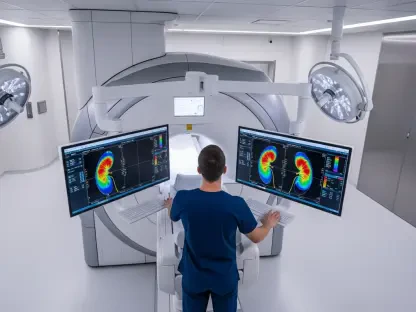

In the intricate and high-stakes environment of the cardiac catheterization lab, where clinicians make critical decisions that can alter the course of a patient’s life, the push for clearer, more comprehensive data has never been more intense. The recent acquisition of SpectraWave, an innovative developer of AI-powered vascular imaging technology, by medical technology giant Philips signals a major strategic pivot toward integrating artificial intelligence directly into the heart of coronary artery disease treatment. While the financial details of the deal remain undisclosed, the implications are profound, suggesting a future where AI-driven insights are not just an add-on but a fundamental component of image-guided therapy. This move is designed to enhance Philips’ already formidable Azurion platform, potentially setting a new standard for how coronary interventions are planned, executed, and evaluated, ultimately aiming to improve outcomes for millions of patients globally each year.
A Strategic Leap in Image-Guided Therapy
Philips has made its intentions clear, with CEO Roy Jakobs stating the company is “doubling down on image-guided therapy” to deliver superior patient care, and this acquisition stands as a testament to that commitment. The integration of SpectraWave’s cutting-edge solutions into the Philips ecosystem represents a calculated effort to fortify its leadership position in a highly competitive market. By absorbing SpectraWave, a Massachusetts-based firm founded in 2017, Philips is not merely acquiring assets but is embedding a new layer of intelligent diagnostics into its established Azurion image-guided therapy system. This strategic fusion aims to create a more powerful and seamless workflow for clinicians treating coronary artery disease (CAD). The goal is to provide a more holistic view of the coronary arteries, combining anatomical imaging with physiological data to support more precise and effective decision-making during complex procedures, thereby expanding the company’s offerings in the coronary intervention segment and reinforcing its market dominance.
At the core of SpectraWave’s contribution is its revolutionary HyperVue imaging system, a technology poised to significantly enhance procedural efficiency and diagnostic accuracy within the cath lab. This system ingeniously combines next-generation Deep Optical Coherence Tomography (DeepOCT) with near-infrared spectroscopy (NIRS), delivering unprecedented high-definition intravascular images that reveal both the structure of a blockage and its chemical composition. For clinicians, this dual-modality imaging provides a much richer understanding of plaque vulnerability, a critical factor in preventing future cardiac events. Moreover, the HyperVue system is engineered for practicality, featuring fast, long pullbacks and a no-flush catheter preparation process. These features are designed to streamline procedures and, crucially, reduce or even eliminate the need for contrast agents, which can carry risks for patients with kidney issues. Philips plans to integrate this advanced imaging capability with its existing Eagle Eye Platinum digital IVUS and IntraSight systems, creating a comprehensive suite of tools for intravascular visualization.
The Power of AI-Driven Physiology
Complementing its advanced imaging hardware, SpectraWave brings a transformative, AI-enabled physiology solution to the table with its X1-FFR technology. This non-invasive tool addresses a critical need for simplified physiological assessment in the cath lab by calculating Fractional Flow Reserve (FFR)—a key metric for determining the severity of a coronary artery blockage—from a single standard coronary angiogram. Traditionally, measuring FFR requires an invasive procedure involving a specialized pressure wire, which adds time, cost, and potential risk to the intervention. The X1-FFR, however, leverages sophisticated AI algorithms to transform routine X-ray images into a rich source of coronary physiology data, entirely eliminating the need for a pressure wire. This innovation promises to dramatically simplify percutaneous coronary intervention (PCI) workflows and makes vital physiological information more accessible. It serves as a powerful, wire-free alternative that complements Philips’ own OmniWire iFR technology, giving clinicians a broader range of options to assess ischemia and tailor treatments with greater confidence.
The true impact of this acquisition lies in the synergistic potential of integrating SpectraWave’s technologies into Philips’ vast global network. The consensus among the leadership of both companies is that this partnership will allow SpectraWave’s innovations to be scaled rapidly, making them available to a far wider audience of clinicians and patients than would have been possible for a smaller company. This move underscores a significant and accelerating trend across the medical technology industry: the deep integration of AI-driven analytics into both diagnostic and therapeutic platforms. By combining SpectraWave’s high-definition imaging and AI-powered physiological assessments, Philips is creating a more unified and intelligent ecosystem for cardiac care. This integrated approach is expected to expand the diagnostic and therapeutic options available to physicians, fostering more consistent, high-quality care and ultimately empowering clinicians to make more informed decisions for the millions of patients who undergo coronary interventions annually.
A New Era for Coronary Interventions
The acquisition of SpectraWave by Philips was more than a simple business transaction; it marked a pivotal moment in the evolution of cardiovascular medicine. This strategic alignment underscored a definitive industry shift, where artificial intelligence was no longer a futuristic concept but a present-day cornerstone of advanced therapeutic strategy. By embedding AI-driven physiological analysis and next-generation imaging directly into its core image-guided therapy platform, Philips established a new benchmark for what comprehensive coronary care could achieve. The move signaled a transition away from treating disease based solely on anatomical visualization toward a more predictive, data-rich approach that considered the functional significance of coronary lesions. This development promised to democratize access to sophisticated diagnostic insights, shaping a future where clinical decisions were augmented by intelligent, real-time data, ultimately paving the way for more personalized and effective patient outcomes.