
The global healthcare landscape is on the brink of a transformative shift, as projections indicate the infectious disease diagnostics sector is set to undergo a period of unprecedented expansion over the next decade. A comprehensive analysis forecasts the market’s value will surge from an estimated USD 28.42 billion in 2025 to a staggering USD 63.26 billion by 2035, a trajectory marked by a compound annual growth rate of 8.35%. This dramatic escalation is not merely a response to recent global health events but a reflection of a deeper, more sustained trend: the rising global prevalence of infectious diseases. This has created an urgent and growing demand for sophisticated tools that enable early detection, rapid testing, and robust disease surveillance. Consequently, the industry is witnessing a powerful momentum driven by the need for more effective outbreak management and a fundamental shift toward preventative healthcare strategies that rely on timely and accurate diagnostic information to curb the spread of pathogens.
Technological Advancements Fueling Market Expansion
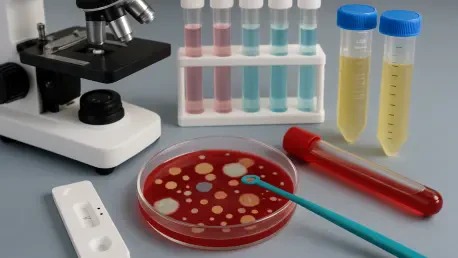
The engine driving much of this anticipated growth is the rapid adoption and continuous innovation of advanced diagnostic technologies across healthcare settings. Hospitals, clinics, and laboratories are increasingly integrating sophisticated systems that move beyond traditional methods. Molecular diagnostics, which analyze genetic material, and immunoassays, which detect antibodies or antigens, have become cornerstones of modern testing. However, the most significant shift is occurring at the point of care. The proliferation of point-of-care (POC) testing is revolutionizing how diagnostics are performed, delivering quicker results directly to patients and clinicians without the need for centralized lab processing. This acceleration in turnaround time is critical for managing infectious diseases, where immediate intervention can drastically alter patient outcomes and public health responses. This movement towards decentralized, rapid testing is a key factor underpinning the market’s robust growth projections for the coming years.
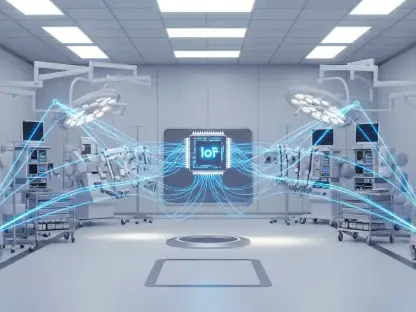
Further catalyzing this expansion is a wave of innovation focused on enhancing the efficiency, accuracy, and accessibility of diagnostic tools. High-throughput testing platforms, for instance, allow laboratories to process vast numbers of samples simultaneously, a capability that has proven indispensable for large-scale screening and surveillance programs. Alongside this, the development of microfluidics—the science of manipulating small amounts of liquid in channels—is enabling the creation of compact, automated “lab-on-a-chip” devices that require minimal sample volume and can be deployed in diverse settings. The integration of artificial intelligence is also proving to be a game-changer. AI-assisted diagnostics can analyze complex data from tests, identify patterns that may be invisible to the human eye, and predict disease outbreaks, thereby enhancing the precision and predictive power of modern diagnostic systems and paving the way for a more proactive approach to global health security.
Regional Growth and Overcoming Market Hurdles
The United States is poised to remain a dominant force within the global market, with projections showing its domestic market expanding from USD 8.66 billion in 2025 to a formidable USD 18.17 billion by 2035. This substantial growth is underpinned by several key factors unique to the American healthcare environment. A relatively high burden of infectious diseases, coupled with a highly aware patient population, creates consistent demand for diagnostic services. Furthermore, the nation’s well-developed healthcare infrastructure provides a fertile ground for the adoption of cutting-edge technologies. Significant and ongoing investments in laboratory automation and digital health platforms are streamlining workflows, reducing human error, and improving the overall efficiency of diagnostic processes. This commitment to technological modernization ensures that the U.S. market is not only a major consumer of advanced diagnostics but also a key hub for innovation and development in the field.
Despite the optimistic outlook, the path to market expansion is not without significant obstacles that could temper growth if left unaddressed. The high cost associated with advanced diagnostic tests and the sophisticated instrumentation required to run them presents a formidable barrier to widespread adoption. This is particularly true for smaller healthcare facilities, clinics in rural areas, and healthcare systems in developing nations that operate under constrained budgets. Beyond the financial considerations, logistical and technical challenges persist. Inadequate healthcare infrastructure in many parts of the world can hinder the deployment and effective use of modern diagnostic platforms. Additionally, the technical complexities involved in integrating new, often highly specialized, diagnostic systems with existing laboratory information management systems can create operational bottlenecks, delaying the tangible benefits these new technologies promise to deliver.
Charting a Course for Future Diagnostics
The trajectory of the infectious disease diagnostics market was defined by a convergence of technological ingenuity and pressing global health needs. The industry’s evolution demonstrated that innovation, particularly in areas like point-of-care testing and AI-driven analytics, was not just an enabler of growth but a critical component of future pandemic preparedness. The challenges of cost and infrastructure highlighted the necessity for developing more accessible and scalable solutions that could be deployed equitably across different economic landscapes. Moving forward, the focus shifted towards creating integrated diagnostic ecosystems that could not only detect pathogens but also predict their spread, ultimately shaping a more resilient and responsive global health framework. The journey to 2035 became less about reaching a monetary figure and more about building a sustainable infrastructure for a healthier world.