
The period of uncertainty between the discovery of a potential health issue and the delivery of a definitive diagnosis often represents the most harrowing part of a patient’s journey, a limbo filled with anxiety and speculation for both individuals and their families. This stressful waiting game, characterized by a series of fragmented tests and ambiguous results, can exact a significant emotional toll long before a treatment plan is even considered. In this context, advanced medical imaging technologies are emerging not just as tools for clinical assessment but as crucial instruments for providing clarity and emotional relief. By delivering faster, more precise, and comprehensive information, modern scanning techniques are fundamentally changing the patient experience, transforming helpless anticipation into a state of informed understanding and empowering families to face the future with a clear perspective, regardless of the outcome. This shift underscores a profound evolution in healthcare, where technological innovation directly addresses the human need for answers.
The Technological Fusion Behind Diagnostic Clarity
A Hybrid Approach to Medical Imaging
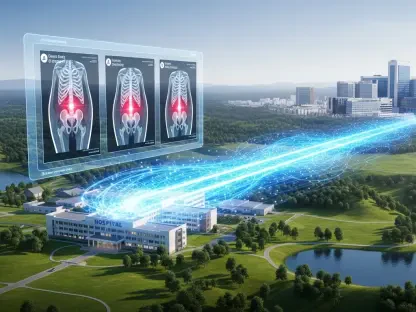
A Positron Emission Tomography-Computed Tomography (PET-CT) scan represents a powerful convergence of two distinct imaging modalities, integrated into a single, seamless assessment to provide an unparalleled depth of insight into the human body. This hybrid technology masterfully combines the functional data from PET with the detailed anatomical visuals from CT. The PET component works by detecting the metabolic activity of cells; it can highlight areas where cells are consuming glucose at an unusually high rate, a common hallmark of cancerous tumors or inflammation. Concurrently, the CT component generates a precise, three-dimensional map of the body’s internal structures, including organs, bones, and soft tissues. When these two sets of images are fused, physicians gain a comprehensive picture that simultaneously reveals the location, size, and shape of an abnormality (from the CT) and its biological behavior (from the PET). This synergy eliminates the guesswork often associated with interpreting separate scans, providing a clear, consolidated view.
This dual-capability imaging allows clinicians to move beyond simply identifying a potential problem to understanding its dynamic nature, which is critical for accurate diagnosis and effective treatment planning. For instance, in oncology, the fused images can differentiate between a benign and a malignant mass by showing the latter’s heightened metabolic activity. It enables doctors to see not only where a tumor is located with anatomical precision but also to gauge how aggressively it is growing or spreading. This level of detail is invaluable for staging cancer, as it can detect metastatic disease that might be missed by other imaging methods. Furthermore, this functional insight is crucial for monitoring treatment efficacy; a decrease in a tumor’s metabolic activity on a follow-up PET-CT scan can be an early and reliable indicator that a therapy is working, long before any change in the tumor’s size is visible on a standard CT or MRI. This provides a more immediate feedback loop for oncologists and patients alike.
Broadening the Diagnostic Horizon
The transformative impact of PET-CT technology extends across a multitude of medical disciplines, fundamentally reshaping diagnostic pathways and patient management strategies. In the field of oncology, its role has become indispensable for the comprehensive care of cancer patients. The ability to perform a full-body scan in a single session allows for the precise staging of cancer, determining if and where the disease has metastasized. This information is a cornerstone of treatment planning, guiding decisions about whether a patient is a candidate for localized therapies like surgery or radiation, or if systemic treatments such as chemotherapy or immunotherapy are necessary. Moreover, it serves as a powerful tool for evaluating treatment response, enabling oncologists to quickly assess whether a therapeutic regimen is effective or if a change in strategy is required. This rapid feedback helps in personalizing treatment, avoiding the continuation of ineffective and potentially toxic therapies, thereby improving patient outcomes and quality of life.
Beyond its well-established role in cancer care, PET-CT imaging is proving to be a game-changing tool in other complex medical fields, including neurology and the investigation of unexplained systemic conditions. In neurology, it aids in the early detection of neurodegenerative disorders by visualizing changes in brain activity and metabolic patterns that may precede structural changes visible on other scans. This can be critical for diagnosing conditions like Alzheimer’s disease or certain forms of dementia. For patients presenting with perplexing symptoms, such as a fever of unknown origin or widespread inflammation, a PET-CT can often serve as a definitive “one-stop shop” diagnostic solution. By surveying the entire body for metabolic hotspots, it can pinpoint the source of the problem, preventing a lengthy and often frustrating odyssey of multiple, disparate tests. This efficiency not only accelerates the path to a correct diagnosis but also provides clear guidance for any subsequent invasive procedures, like biopsies, ensuring they are targeted and necessary.
The Evolution of Precision and Speed
From Past Limitations to Present Capabilities
The journey of PET-CT technology is marked by a dramatic evolution from its earlier, more cumbersome iterations to the highly sophisticated systems available today. In the past, imaging systems were often beset by significant technical limitations that could prolong the diagnostic process and compound patient anxiety. Scans required longer acquisition times, forcing patients to remain still for extended periods, which was challenging for those in pain or distress. The resulting images were frequently affected by “noise”—visual artifacts that could obscure fine details and potentially lead to ambiguous interpretations. To compensate for these limitations, higher doses of radioactive tracers were sometimes necessary, raising concerns about radiation exposure. These factors often meant that the diagnostic journey was slow and uncertain, sometimes requiring repeat scans and consultations, all while families waited anxiously for a clear answer. This technological immaturity placed a heavy burden on both the patient and the clinical team striving to provide timely care.
In sharp contrast, the landscape of PET-CT imaging has been revolutionized by recent technological breakthroughs, addressing nearly all the shortcomings of previous generations. The advent of ultra-high-definition digital PET systems has ushered in an era of unprecedented image clarity and precision. These modern scanners produce images that are virtually free of noise, revealing subtle pathological details with remarkable sharpness. Integrated with advanced AI-based algorithms, these systems can optimize the image acquisition process, significantly reducing scan times while simultaneously lowering the required dose of radioactivity. This means a safer, faster, and more comfortable experience for the patient. For physicians, the benefit is twofold: they receive highly reliable, detailed information more quickly, and the enhanced image quality boosts their confidence in making a definitive diagnosis. This rapid delivery of high-quality data enables swifter decision-making, facilitates the planning of more targeted and effective treatments, and minimizes unnecessary delays in patient care.
Empowering Patients Through Information
The profound humanistic benefit of this technological progress lies in its ability to fundamentally reshape the patient’s diagnostic experience, transforming it from a period of passive, helpless waiting into a journey of informed understanding. By condensing what was once a long and fragmented series of tests into a single, comprehensive procedure, advanced PET-CT provides clarity and direction. Receiving a clear, evidence-based answer—even if the news is serious—is often less emotionally taxing than grappling with the unknown. This clarity empowers patients and their families by providing them with a concrete understanding of their situation. It allows them to process the information, ask targeted questions, and participate more actively in decisions about their care. This shift replaces fear and speculation with a tangible foundation upon which they can build a plan for the future, fostering a sense of control and agency during a time that can otherwise feel chaotic and overwhelming.
This newfound transparency in the diagnostic process does more than just alleviate immediate anxiety; it also serves to strengthen the foundation of trust between patients and their medical providers. When families can see clear, visual evidence of a condition and understand the basis for a recommended treatment plan, it demystifies the medical process and reinforces their confidence in an evidence-based approach to healthcare. The ability of a PET-CT scan to deliver a definitive answer quickly helps to build a collaborative relationship, where the medical team and the family are aligned in their understanding of the challenge ahead. This shared comprehension is invaluable, as it allows for open communication and ensures that everyone is working toward the same goal. Ultimately, the technology acts as a catalyst for empowerment, providing the factual certainty that enables families to navigate their medical journey with resilience, preparation, and a greater sense of peace.
The Synthesis of Technology and Empathy
The remarkable advancements in imaging technology ultimately found their greatest value not in isolation, but as a powerful tool that complemented, rather than replaced, the essential elements of clinical acumen and human connection. While the detailed images provided a clear map of a patient’s condition, it was the physician’s empathy and communication that guided the patient and their family through the often-difficult terrain revealed on that map. The technology provided the “what,” but the human element provided the “how”—how to understand the diagnosis, how to process the prognosis, and how to move forward with hope and a plan. This synergy highlighted that compassion and clear communication remained fundamental tenets of patient care, ensuring that high-tech medicine was always delivered with a high-touch approach. The PET-CT scan stood as a bridge between a complex clinical assessment and a concrete, actionable understanding, perfectly synthesizing scientific innovation with human reassurance to redefine patient-centered care.