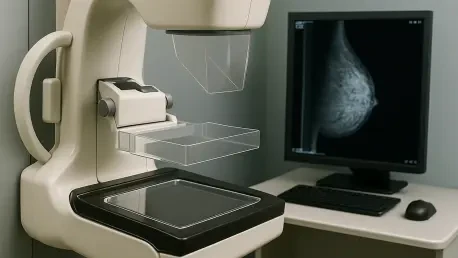

Receiving a call back after a routine screening mammogram can be an incredibly stressful experience, initiating a period of uncertainty for thousands of women each year while clinicians face the critical challenge of distinguishing benign findings from genuine malignancies. The goal is always to achieve diagnostic certainty with the least invasive means possible. A groundbreaking prospective study recently published in the European Journal of Radiology has provided compelling new evidence affirming the significant impact of contrast-enhanced mammography (CEM) in this very scenario. The research, spearheaded by Sara Marziali, M.D., from the University of Milan, evaluated the use of CEM in 198 women recalled for suspicious findings on their initial screenings. By analyzing a total of 393 breasts, the study established CEM not just as a supplementary tool but as a highly effective and accurate problem-solving modality that could reshape the diagnostic pathway for breast cancer recalls, offering a higher degree of confidence for both patients and physicians.
Unpacking the Diagnostic Performance Metrics
The central finding of the study was the exceptional overall diagnostic performance of CEM when applied to this specific clinical context of screening recalls. The investigation involved a cohort where 73 breasts were confirmed to have malignant findings and 316 had negative results, with all outcomes verified either by biopsy or through long-term follow-up. Within this framework, CEM delivered compelling and robust accuracy metrics on a per-breast basis. The technology demonstrated a sensitivity of 96.1 percent, indicating its powerful ability to correctly identify cancer when it is present. Alongside this, it achieved a specificity of 94.9 percent, showcasing its precision in correctly ruling out cancer in healthy tissue and thereby minimizing false positives. These figures culminated in an impressive overall accuracy rate of 95.2 percent. Furthermore, the study reported a positive predictive value (PPV) of 82.2 percent, a statistic that underscores the reliability of a positive CEM result, giving clinicians strong reason to proceed with a biopsy. These combined metrics paint a clear picture of a highly dependable diagnostic instrument.
Further adding to the technology’s credibility, the study provided nuanced insights through its long-term follow-up protocols, which are essential for understanding the real-world performance of any diagnostic tool. During this period, three interval cancers were detected among the participants, which included an incidental 5 mm contralateral invasive cancer, a 6 mm mucinous carcinoma, and a case of ductal carcinoma in situ (DCIS). While the detection of any cancer post-screening is significant, the overall performance of CEM was not substantially diminished. Despite these subsequent findings, the per-breast sensitivity of 96.1 percent remained notably high. Crucially, the researchers pointed out that this figure is very close to the 95.1 percent pooled sensitivity identified in a comprehensive meta-analysis of previous studies. This alignment with broader, existing research reinforces the validity of the current findings and highlights the consistent and robust performance of CEM, while also soberly acknowledging that continued clinical vigilance and patient follow-up remain indispensable components of comprehensive breast care.
The Clinical Impact of High Predictive Value
Perhaps the most significant and clinically impactful result to emerge from the research was CEM’s exceptional ability to rule out malignancy with a high degree of certainty. The study reported a negative predictive value (NPV) of 99 percent, a statistic that carries profound implications for clinical practice and patient well-being. This extremely high NPV means that when a CEM examination returns a negative result, there is an exceptionally high probability that no cancer is present. This finding is a critical piece of the puzzle for radiologists managing screening recalls. It provides them with a powerful tool to confidently exclude cancer in a large number of cases without resorting to more invasive measures. This capability directly addresses one of the major challenges in breast imaging: reducing the number of unnecessary biopsies performed on benign lesions. By providing such a high level of assurance, CEM can help streamline the diagnostic workflow, allowing medical resources to be focused on patients who truly require further intervention.
The downstream effects of this high negative predictive value extend far beyond clinical efficiency, directly impacting the patient experience. The period between a mammogram recall and a definitive diagnosis is often fraught with anxiety and emotional distress. The ability of CEM to confidently confirm the absence of cancer can significantly alleviate this psychological burden for many women. By potentially avoiding an invasive biopsy, which carries its own risks, discomfort, and recovery time, patients can receive peace of mind much sooner and with less physical toll. For the healthcare system, this translates into a more efficient use of resources, reducing the strain on pathology departments and surgical schedules. The study’s findings therefore position CEM not just as a diagnostically accurate technology, but as a compassionate and practical solution that can improve the standard of care by making the process of resolving suspicious mammographic findings faster, safer, and less stressful for women.
A New Standard in Diagnostic Certainty
Ultimately, the research established a strong consensus that contrast-enhanced mammography served as a reliable and highly accurate tool for the comprehensive evaluation of suspicious findings from screening mammography. The study’s primary strength was identified in its remarkable 99 percent negative predictive value, a figure that provided clinicians with an unprecedented degree of confidence in ruling out cancer. This key attribute suggested that the technology could help streamline the diagnostic process by safely avoiding a significant number of invasive procedures. While the researchers acknowledged certain limitations, such as a small portion of the cohort being lost to follow-up and the inherent need for caution when extrapolating findings to broader populations, the results were definitive. The work confirmed CEM’s valuable role in the modern assessment of screening recalls, solidifying its position as a critical modality in the breast imaging toolkit and paving the way for refined clinical protocols.