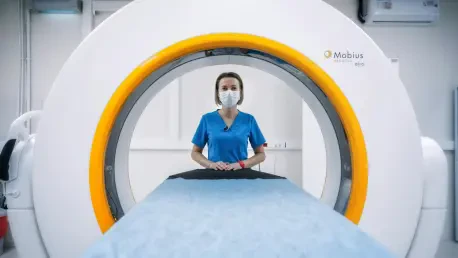

The relentless pressure of chronic staffing shortages combined with an ever-increasing demand for diagnostic services has pushed medical imaging to a critical breaking point, fundamentally redefining the role of artificial intelligence from a supplementary tool to an essential requirement for operational survival. This significant paradigm shift is not a response to technological novelty but a direct answer to the urgent, real-world constraints that threaten to overwhelm modern healthcare systems and severely limit patient access to care. As a result, the conversation surrounding AI has evolved dramatically, moving beyond academic curiosity to become a central pillar of strategic planning for any radiology department aiming for stability and growth in an increasingly demanding environment. The question is no longer whether AI has a place in radiology but whether radiology can continue to function effectively without it.
From Skepticism to Necessity a Paradigm Shift
Just a few years ago, artificial intelligence in healthcare was viewed with considerable caution, as its purported capabilities often outpaced its practical, real-world applications and raised concerns among practitioners. However, that widespread skepticism has rapidly given way to a deep-seated reliance driven by the stark reality of overburdened staff and growing patient waitlists. The prevailing attitude among healthcare administrators and clinical leaders has transitioned from “if” AI should be used to “how” it can be deployed most effectively to mitigate the intense operational strain felt across the industry. This profound change in perspective is championed by industry leaders who now assert that they cannot imagine running their departments without intelligent automation, positioning AI as a non-negotiable cornerstone of modern radiology operations and a fundamental component for ensuring the continuity of care.
The primary function of AI in this new reality is to serve as a critical support system that absorbs pressures that manual, traditional workflows can no longer sustain. Its value is most clearly demonstrated through its ability to automate time-consuming administrative tasks and remove friction from complex clinical pathways, freeing up valuable human resources to focus on patient-centric activities. This automation allows radiology departments to significantly enhance their throughput, enabling them to manage a much higher volume of patients with the same or even fewer resources. The focus has shifted to achieving practical, tangible outcomes such as improved access for patients, optimized departmental efficiency, and a meaningful reduction in the workload placed on beleaguered staff. For healthcare leaders, providing these AI-powered tools is no longer a choice but an imperative to empower their teams to deliver faster, more efficient, and higher-quality patient care.
Unlocking Dormant Data for Operational Excellence
A pivotal element enabling this AI-driven transformation is the strategic use of previously untapped health data, a resource of which an estimated 97% has remained dormant and unused until recently. Artificial intelligence’s inherent strength lies in its capacity to process and derive actionable insights from these vast and complex datasets, effectively unlocking their latent potential. By activating this dormant information, healthcare organizations can fuel sophisticated AI algorithms specifically designed to address their most pressing operational challenges, particularly in the areas of workflow optimization and dynamic resource allocation. This ability to turn raw data into intelligent, automated decision-making is what transforms AI from a theoretical concept into a powerful tool for tangible operational improvement, providing a data-driven foundation for a more resilient and responsive healthcare system.
A compelling example of this principle in action involves leveraging AI to analyze DICOM (Digital Imaging and Communications in Medicine) data sourced from a patient’s prior imaging history and other relevant characteristics. The system intelligently examines these factors to recommend more accurate and personalized appointment lengths, creating a more efficient and patient-friendly schedule. This data-driven approach yields a dual benefit. Firstly, it ensures that patients with complex diagnostic needs are allocated sufficient time for their examinations, preventing rushed procedures and potential compromises in care quality. Secondly, it identifies appointments that can be completed more quickly, thereby shortening their scheduled duration and creating new, previously unavailable openings in the calendar. Crucially, these advanced AI tools are designed to operate seamlessly in the background, performing the heavy lifting of data analysis and providing actionable recommendations without imposing any additional burden on the clinical or administrative staff.
The New Foundation of Medical Imaging
The integration of artificial intelligence became an indispensable strategy for survival and growth within the field of radiology. Driven by the relentless pressures of staffing deficits and rising patient demand, AI was strategically deployed to automate workflows, optimize scheduling, and enhance overall capacity in ways that were previously unattainable. The key to this evolution was the activation of vast, dormant healthcare datasets, which intelligent algorithms transformed into actionable intelligence for smarter, more efficient operations. This fundamental redefinition meant that AI was no longer an ancillary technology for enhancing efficiency but a core operational necessity. The overarching trend indicated that AI’s integration into the foundational fabric of radiology was not a passing phase but a permanent and essential component that had reshaped the future of medical imaging by turning data into a direct pathway for improved patient access and superior resource utilization.