
The medical community has long struggled to quantify the subtle complexities of joint movement following total shoulder replacement, leaving a gap between surgical success and functional restoration. While traditional imaging provides a clear view of hardware placement, it fails to capture the dynamic interplay of bone and muscle during actual physical activity. Recent research led by Emory Healthcare, in collaboration with Konica Minolta Healthcare Americas, Inc., is now addressing this limitation by utilizing Dynamic Digital Radiography (DDR) to evaluate patients who have undergone Total Shoulder Arthroplasty (TSA). This landmark study, spearheaded by Dr. Eric R. Wagner and published in the Journal of Shoulder and Elbow Surgery, provides a much-needed bridge between the mechanical insertion of an implant and the biological restoration of native kinematics. By shifting the focus from static post-operative checks to active motion analysis, clinicians can finally assess how well a replacement joint mimics a patient’s original anatomy.
Advancing Diagnostic Precision Through Dynamic Imaging
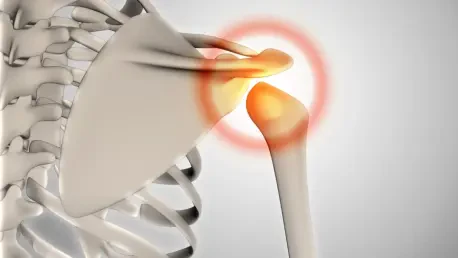
Conventional X-rays have served as the gold standard for orthopedic assessment for decades, yet their inherent static nature offers only a single “frozen” moment in time that cannot reflect the reality of a moving joint. In contrast, Dynamic Digital Radiography represents a paradigm shift by functioning as a low-dose imaging modality that captures a rapid sequence of digital images. These frames are compiled into a high-speed cineloop, or cinegram, which allows orthopedic surgeons to observe the anatomical structures of the shoulder while the patient is in active motion. This “cineradiography” capability is particularly crucial for the shoulder, which relies on the complex Scapulohumeral Rhythm (SHR) to achieve a full range of motion. By providing a non-invasive way to measure the coordinated movement of the scapula and humerus, DDR allows for the quantification of biomechanical nuances that were previously invisible during standard clinical examinations or through traditional static radiographs.
The implementation of DDR in a clinical setting offers a significant advantage in terms of diagnostic efficiency and patient safety compared to older fluoroscopic methods. Because the technology uses a flat-panel detector similar to standard digital radiography, it maintains a low radiation dose while providing the high-resolution detail necessary for precise skeletal measurements. For the Emory research team, this technology was the essential tool required to visualize and measure the subtle contributions of various joint components during the abduction process. Surgeons can now look beyond the surface level of “range of motion” and actually see how the implant interacts with the surrounding bone and soft tissue in real-time. This level of detail is vital for identifying mechanical impingements or subtle instabilities that might not be apparent when the arm is at rest. Consequently, the transition to dynamic imaging is redefining the criteria for surgical success from mere pain relief to the total restoration of physiologic movement.
Comparing Surgical Techniques and Biomechanical Restoration
The study conducted a retrospective analysis of 71 shoulders treated with either Anatomic Total Shoulder Arthroplasty (aTSA) or Reverse Total Shoulder Arthroplasty (rTSA), comparing them against a healthy control group. A primary finding revealed that while both procedures significantly improved scapular motion compared to the diseased preoperative state, neither technique successfully restored the “native” or physiologic biomechanics seen in the control group. This suggests that a lingering functional deficit remains even in cases deemed clinically successful by traditional metrics. For younger, more active patients who prioritize returning to high-level physical activities, this distinction is critical. The research indicates that while modern implants are highly effective at reducing pain and increasing basic mobility, the industry has not yet achieved a perfect replication of the original joint’s rhythm. Understanding these deficits is the first step toward developing next-generation implants and surgical protocols that aim for true biological parity.
Detailed kinematic analysis further highlighted subtle but important differences between the two main surgical approaches regarding how they influence shoulder elevation. In patients who received rTSA, the Scapulohumeral Rhythm remained relatively constant throughout the entire range of motion, indicating a stable but modified mechanical profile. In contrast, those who underwent aTSA exhibited a higher SHR during the second half of the motion compared to the first, showing a greater reliance on glenohumeral involvement as the arm moved higher in abduction. This variation suggests that the choice of procedure fundamentally alters the phasing of joint movement, even if the total range of motion appears similar on the surface. By identifying these specific patterns, surgeons can better predict how a patient will perform specific tasks post-surgery. This data-driven insight allows the medical community to move past general assumptions about shoulder mechanics and toward a more granular understanding of how different prosthetic designs interact with the body’s natural motion.
Implementation of Data-Driven Surgical Strategies
The integration of DDR findings into orthopedic practice is facilitating a move toward highly personalized surgical planning that considers the unique anatomical needs of each patient. Rather than relying on a one-size-fits-all approach, surgeons are beginning to use dynamic motion data to inform implant selection and positioning based on the patient’s lifestyle and physical demands. For instance, knowing how aTSA and rTSA differ in their motion phases allows for a more tailored strategy when treating a young athlete versus an elderly patient with different functional goals. The research team, including experts like Dr. Sameer R. Khawaja and Dr. John Sabol, emphasizes that these findings are foundational for the future of precision orthopedics. By correlating biomechanical measurements with patient-reported outcomes, the medical field is working toward a model where surgical success is predicted by objective motion data. This shift ensures that the “invisible” aspects of joint function are prioritized during the planning phase, leading to more predictable and satisfying results for the patient.
The collaboration between Emory Healthcare and Konica Minolta Healthcare successfully demonstrated that dynamic imaging is no longer a luxury but a necessity for modern orthopedic evaluation. The study proved that while current arthroplasty techniques offer life-changing improvements, the path to achieving true physiologic restoration requires a deeper commitment to objective, motion-based data. Moving forward, clinicians should consider integrating DDR into their standard post-operative protocols to better monitor patient progress and identify early signs of mechanical failure or suboptimal healing. Furthermore, the industry must focus on utilizing these kinematic insights to refine implant designs and surgical techniques that specifically address the identified deficits in scapulohumeral rhythm. As these findings were shared at major forums such as the American Academy of Orthopedic Surgeons, the medical community took a significant step toward a more transparent and data-heavy approach to joint replacement. The ultimate goal remains the alignment of mechanical intervention with the natural fluidity of human movement, ensuring that every patient can regain the highest possible level of function and quality of life.