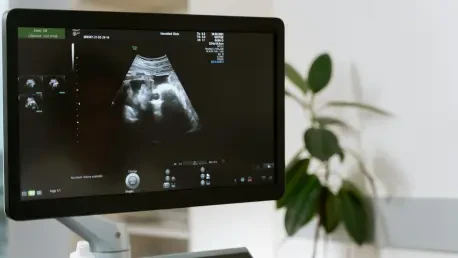

In the critical moments following a mass casualty event or in a remote battlefield, the ability to rapidly and accurately diagnose internal injuries can mean the difference between life and death. Traditional diagnostic imaging requires specialized equipment and highly trained technicians, resources that are often unavailable at the point of initial injury, creating a dangerous gap in emergency medical care. The development of artificial intelligence, however, is poised to bridge this gap by transforming complex medical devices into intuitive tools for frontline responders. A landmark collaboration between the U.S. government and a leading medical technology firm is now accelerating this vision, aiming to place the power of diagnostic ultrasound directly into the hands of those who arrive first on the scene, regardless of their prior experience with the technology. This initiative seeks to simplify the intricate process of sonography, enabling medics and EMTs to perform life-saving assessments with unprecedented ease and accuracy in the most demanding environments.
A Strategic Government and Corporate Partnership
The foundation of this ambitious project rests on a significant public-private partnership between GE HealthCare and the Biomedical Advanced Research and Development Authority (BARDA), a component of the U.S. Department of Health and Human Services. This collaboration, initially established in 2023 with a $44 million contract, was designed to pioneer AI algorithms that simplify the use of ultrasound for trauma care. The primary objective was to create a system that could guide a non-specialist user through the process of capturing and interpreting diagnostic images. Early development focused on critical areas such as the noninvasive detection of intracranial pressure and the assessment of injuries to the abdomen and lungs. The core mission is to democratize ultrasound technology, breaking down the barriers of specialized training that have historically confined its use to hospitals and clinics, thereby making it a viable and effective tool for emergency personnel in pre-hospital settings.
Building on the initial progress, the partnership has been significantly expanded with an additional $35 million in funding, bringing the total contract value to a reported $64 million. This new phase broadens the project’s scope and sets more ambitious technological targets for the AI-driven tools. The expanded goals include developing capabilities for more detailed assessments of lung conditions, such as identifying pleural pathologies, which can be critical in trauma cases. Furthermore, the project aims to refine the detection of intra-abdominal injuries and substantially enhance the overall usability and reliability of point-of-care ultrasound devices. By empowering first responders to conduct these complex assessments, the initiative promises to revolutionize field-based medical diagnostics, allowing for faster and more informed triage decisions that can dramatically improve patient outcomes in emergencies.
The Broader Vision for AI in Medical Imaging
This government partnership is a cornerstone of GE HealthCare’s broader corporate strategy, which places a heavy emphasis on the integration of artificial intelligence across its medical imaging portfolio. To fortify its position in this rapidly evolving sector, the company has pursued an aggressive acquisition strategy, investing billions to bring specialized AI firms into its fold. Major takeovers have included the $2.3 billion acquisition of Intelerad, a medical imaging software provider, as well as the purchases of Icometrix for approximately $98 million and MIM Software for around $259 million. Each of these companies brings unique AI-driven capabilities and expertise, from neurological imaging analysis to radiation oncology software, collectively strengthening GE HealthCare’s ability to develop and deploy sophisticated, AI-enabled diagnostic solutions across a wide range of medical disciplines.
The company’s leadership views these substantial investments as fundamental to shaping the future of medical diagnostics. CEO Peter Arduini has articulated a vision where patient diagnoses will rely not on a single imaging modality but on the seamless integration of multiple data sources, all analyzed and synthesized by powerful AI algorithms. This approach is expected to yield more comprehensive and accurate clinical insights. Arduini also highlighted a “flywheel effect” observed by the company, where the deployment of advanced AI-enabled devices has led to a corresponding increase in the capture rate for service contracts, suggesting a strong market appetite for these technologies. Despite this optimism, the company remains pragmatic, acknowledging and disclosing to investors the inherent risks associated with its deep investment in AI, including the significant challenges of achieving widespread global adoption and navigating the complexities of deploying such advanced systems on a massive scale.
A New Frontier in Emergency Medicine
The focused effort to equip first responders with AI-guided ultrasound tools represented a pivotal shift in pre-hospital care. By leveraging sophisticated algorithms to simplify device operation and automate image interpretation, the initiative paved the way for a new standard in emergency diagnostics. The project successfully aimed to overcome the steep learning curve traditionally associated with sonography, ensuring that individuals without years of specialized training could confidently perform critical assessments. This technological advancement held the promise of transforming triage protocols, enabling faster and more accurate decision-making at the scene of an emergency. Ultimately, the fusion of artificial intelligence and portable imaging technology established a new capability that enhanced the effectiveness of frontline medical personnel and improved survival rates in critical situations.