The silent progression of Alzheimer’s disease, often beginning decades before the first noticeable symptoms of memory loss appear, has long posed one of the greatest challenges in modern medicine. For patients and their families, the diagnosis frequently arrives too late, after significant and irreversible neurological damage has already occurred. However, a groundbreaking development promises to rewrite this narrative, shifting the paradigm from reactive management to proactive intervention. A recent, large-scale clinical assessment has demonstrated the profound potential of a simple, scalable blood test to detect the key biological markers of Alzheimer’s with remarkable accuracy, offering a glimpse into a future where this devastating condition can be identified and potentially treated at its earliest stages. This innovation is not merely an incremental improvement; it represents a fundamental leap forward in our ability to understand, diagnose, and ultimately combat the disease on a global scale.
A Revolution in Neuropathological Insight
The Scale of the Trøndelag Health Trial
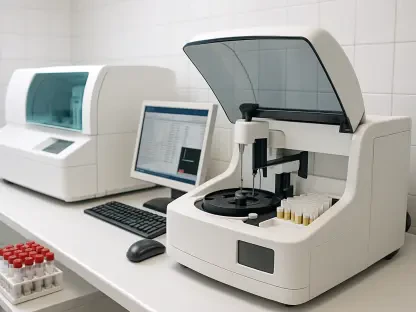
A landmark study published in the journal Nature has provided the most comprehensive view to date of Alzheimer’s pathology across a general population. Researchers analyzed over 11,400 samples from the Norwegian Trøndelag Health trial, making it the largest population-based evaluation of the disease’s neuropathological changes ever conducted. This extensive research was made possible by the ultrasensitive Simoa blood test developed by Quanterix, a platform capable of detecting minuscule concentrations of disease-specific proteins. The sheer volume of data generated by the trial has offered unprecedented clarity on how the biological markers of Alzheimer’s accumulate over a lifetime. By moving beyond small, symptomatic patient groups to a broad community-based cohort, the findings provide a clear and actionable map of the disease’s prevalence. This approach transforms our understanding from a clinical-symptomatic model to a more fundamental, biological one, revealing the disease’s hidden footprint long before it manifests as cognitive decline.
Decoding the pTau-217 Biomarker
At the core of this diagnostic revolution is the measurement of a specific biomarker known as phosphorylated tau at threonine 217, or pTau-217. This protein is a key indicator of the formation of neurofibrillary tangles, one of the two hallmark pathologies of Alzheimer’s disease. The study’s most striking finding was the dramatic and direct correlation between age and the prevalence of elevated pTau-217 levels. Among individuals aged 58 to 70, approximately 10% showed biological signs of the disease. This figure soared to nearly 65% in those over 90 years old. This data powerfully illustrates the concept of a long preclinical phase, where the disease silently progresses for years or even decades. The technological achievement of the Simoa blood test lies in its ability to precisely quantify these trace amounts of pTau-217 in a blood sample, a task that previously required more invasive and costly procedures such as cerebrospinal fluid analysis or advanced PET imaging, making widespread screening a feasible reality.
Translating Data into Clinical Action
Identifying a Treatable Population
The implications of these findings extend far beyond the research laboratory and into the realm of public health and clinical practice. The study effectively segmented the population over 70 into distinct stages of the disease continuum, revealing that approximately one-third of this demographic is affected. The data showed that 10% are in a preclinical stage (biomarkers present without symptoms), 10.4% are in a prodromal stage (mild symptoms), and 9.8% have progressed to full-blown dementia. Critically, these results indicate that an estimated 10% of the entire population over 70 now meets the established eligibility criteria for newly approved disease-modifying treatments. This is a transformative statistic, as it identifies a massive, previously hidden cohort of individuals who could benefit from early therapeutic intervention. The ability to pinpoint these patients before significant cognitive deterioration occurs opens a crucial window for treatments designed to slow or halt the disease’s progression, potentially preserving quality of life for millions.
Streamlining Diagnostics and Future Research
Beyond identifying at-risk individuals, the blood test serves as a powerful tool for diagnostic clarification and research optimization. A significant number of patients who present with cognitive impairment or dementia do not have underlying Alzheimer’s pathology; their symptoms stem from other causes. This new test can effectively rule out Alzheimer’s-related changes in these individuals, preventing misdiagnosis and ensuring they receive appropriate treatment for their actual condition. This enhanced accuracy has a ripple effect on the development of future therapies. By ensuring that clinical trials enroll participants with confirmed Alzheimer’s pathology, researchers can obtain clearer and more reliable results, accelerating the drug development pipeline. This trend toward blood-based diagnostics is gaining significant regulatory traction, underscored by recent FDA clearances for similar tests from companies such as Fujirebio and Roche, signaling a broad and definitive shift in the standard of care for neurodegenerative diseases.
A New Standard of Care Emerged
The comprehensive validation of this ultrasensitive blood test marked a pivotal moment in the long fight against Alzheimer’s disease. This research provided the definitive, population-scale evidence needed to move the field from an era of late-stage, symptom-based diagnosis to one of early, biologically-driven identification. The actionable data supplied a roadmap for public health initiatives, while the technology armed clinicians with a practical tool to pinpoint treatable populations long before irreversible damage had occurred. This breakthrough streamlined the diagnostic process, improved the efficiency of clinical trials, and ultimately established a new benchmark for neurological care. The ability to peer into the silent beginnings of the disease through a simple blood draw fundamentally altered the landscape of what was possible in managing this formidable condition.