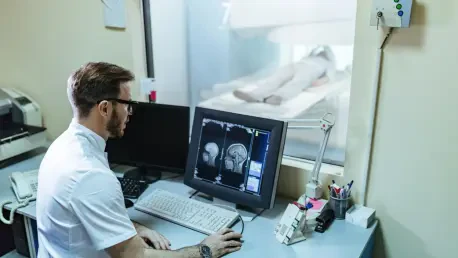

The field of radiology stands at a technological crossroads, where the sheer volume of patient data and the complexity of clinical histories present a formidable challenge to even the most experienced practitioners. In this high-stakes environment, a new class of artificial intelligence is emerging not as an automated replacement for human expertise, but as a sophisticated collaborator. Large language models (LLMs) are beginning to permeate every stage of the radiological process, from the initial imaging request to the final diagnostic report, promising a future of enhanced efficiency, accuracy, and a profound transformation in how the next generation of radiologists is trained. This technological shift is fundamentally altering the day-to-day realities of the profession, turning information overload into actionable insight.
Streamlining Clinical Workflows with Intelligent Automation
A significant bottleneck in modern radiology has long been the laborious process of gathering and synthesizing a patient’s complete clinical history before interpreting a new scan. Radiologists traditionally spend valuable time manually combing through electronic health records, searching for critical details scattered across various documents. LLMs are now being deployed to master this exact challenge with remarkable efficiency. When tasked with a narrow and well-optimized objective, such as preparing a case summary for an oncology patient, an LLM can rapidly extract and organize essential data points. It can identify the primary tumor type, compile a history of treatments like chemotherapy or radiation, and summarize findings from prior imaging studies. This automated pre-analysis frees clinicians from time-consuming administrative work, allowing them to dedicate their full cognitive capacity to the nuanced task of image interpretation. By augmenting this crucial preparatory phase, AI acts as an intelligent assistant, ensuring that the radiologist has a comprehensive, coherent patient overview at their fingertips, thereby enhancing diagnostic precision and streamlining the entire workflow.
The Dawn of AI-Powered Pedagogy
The integration of artificial intelligence ultimately transformed the landscape of medical education, ushering in an era of interactive and personalized training. Specialized LLMs were developed to serve as dynamic educational tools, fundamentally changing how trainees learned the art and science of diagnostics. One such innovation, an “AI Attending Voice Mode,” created a simulated apprenticeship where a trainee could review cases and verbally commit to a diagnosis, just as they would with a human mentor. The AI would then provide immediate, pointed feedback, guiding the learner through their reasoning and highlighting potential oversights. This created a safe, low-pressure environment where making mistakes became a constructive part of the educational journey, free from the judgment of a live clinical setting. Trainees engaged in a dialogue with the AI while scrolling through images, asking field-specific questions and receiving instant, contextually relevant answers. This interactive model successfully cultivated a more profound and confident understanding of radiology, preparing a new generation of physicians who were innately skilled at collaborating with intelligent systems.