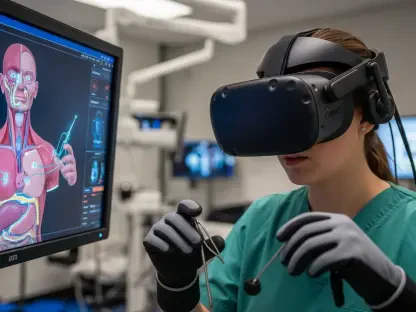

Hospital leaders are establishing command centers to tackle ongoing challenges related to capacity and operations.
When we think of a “command center,” we might imagine a dimly lit room filled with large screens. A team of experts wearing headsets shares real-time data with a concerned director, who moves around making swift decisions that can impact patient care. This scenario often appears in suspense movies rather than in actual healthcare settings.
In reality, hospital command centers are much less dramatic. They lack the excitement of NASA’s Mission Control or a secret operation, yet their goal is to utilize technology effectively to allocate the right resources at the right time. The decisions made in these centers can have significant implications for patient care.
What Is a Hospital Capacity Command Center?
Hospital Capacity Command Centers are crucial for managing patient flow within healthcare facilities. They integrate various services, such as patient transfers, bed management, transportation, and patient access, into a centralized location. This center can take the form of a physical space, a virtual hub, or a combination of both. Hospital Capacity Command Centers track how patients move through the healthcare system and utilize real-time data and analytics to make informed decisions. They can operate within a single hospital, multiple hospitals, or an entire health system, depending on the organization’s needs.
Over the past ten years, Hospital Capacity Command Centers have rapidly expanded. A national survey conducted in 2022 revealed that at least 25 out of 31 health systems that responded already have CCCs in operation, while five additional systems are planning to establish one.
Strategic Drivers Behind this Innovation
Hospital leaders establish Critical Care Command Centers (CCCs) to tackle various common capacity and operational challenges..
Reducing ED Boarding Through Centralized Capacity Management
Reducing long wait times in the emergency department is the primary reason for establishing a Clinical Care Center. To effectively manage urgent care boarding, hospitals monitor the number of patients waiting for inpatient beds and the duration of their wait. Emergency department boarders occupy spaces that are essential for treating new patients. Long wait times can lead to overcrowding, safety risks, and poor patient outcomes, resulting in longer hospital stays. The Joint Commission recommends that boarding times be kept to four hours or less.
These facilities offer a proactive approach for hospital administrators to manage patient boarding. They help identify the clinical services that are most needed and work to decrease wait times for the most urgent cases. CCCs can implement strategies such as ambulance diversion, calling in on-call providers, and ensuring timely discharges from inpatient units.
Cutting Length of Stay to Improve Throughput and Margin
Patients often remain in the hospital longer than necessary, occupying valuable bed space, disrupting hospital operations, and potentially leading to worse health outcomes. This extended stay can also result in denied insurance claims. To address this issue, healthcare leaders are establishing Care Coordination Centers aimed at reducing the length of patients’ hospital stays. They enhance the patient experience from the moment of admission until discharge. By decreasing the overall length of stay, hospitals can also improve the emergency department. boarding times, allowing patients to be admitted to inpatient services more quickly and receive timely treatment.
Care centers help hospitals operate more efficiently by optimizing bed management. This requires close collaboration between bed management and cleaning services. Some centers work alongside case managers and other healthcare providers to resolve issues that delay discharges. This may involve coordinating with various hospital departments to tackle problems related to medications, durable medical equipment, or necessary tests. These improvements are made possible because CCCs play a crucial role in the healthcare system.
The patient journey is considered in its entirety.
The team collaborates to enhance patient flow.
Support services coordinate to reduce the length of stay.
Optimizing Bed Utilization Across the Health System
Health systems often face issues with hospital capacity. Larger hospitals, like academic medical centers, often have more patients than available beds. This can cause delays in patient care. However, not every patient in these large hospitals needs specialized treatment. Smaller community hospitals usually have available beds and can treat these patients
Administrators in Capacity Command Centers (CCCs) keep track of bed availability and the services different hospitals offer. This knowledge helps them quickly transfer patients to the right level of care, reducing the time patients spend in inappropriate beds. By knowing the current capacity, administrators can determine specific bed needs. This helps Intensive Care Units (ICUs) find patients ready to move to lower levels of care. Sometimes, a doctor in the care center manages ICU capacity and organizes patient admissions from different sources, like transfers and post-surgery cases, to meet demands while reducing delays.
Reducing Transfer Declines to Protect Revenue and Access
Hospitals often have to turn away or delay patient transfers because they don’t have enough available beds. This causes problems for patient care, frustrates the doctors sending patients, and can affect hospital revenue.
Care Coordination Centers help manage hospital capacity by balancing incoming transfer requests with available resources. They focus on patients who will benefit most from the hospital’s specific services. CCC efforts to track discharges and organize admissions improve hospital capacity, allowing them to accept more patients. Additionally, simplifying the transfer acceptance process by increasing the number of available pathways can help reduce the number of transfers that are declined.
Addressing OR and PACU Boarding to Prevent Surgical Bottlenecks
Operating Room (OR) and Post-Anesthesia Care Unit (PACU) boarding create serious capacity problems, especially in Academic Medical Centers (AMCs). These challenges often lead to the setup of Capacity Command Centers (CCCs).
PACU boarding happens when patients stay in the PACU waiting for an inpatient bed, usually in the Intensive Care Unit (ICU). OR boarding occurs when patients have to wait in the OR because there aren’t enough PACU beds available.
Both types of boarding show poor bed usage caused by the timing mismatch of when beds become available. Surgical patients often compete for the same beds as patients coming from the Emergency Department (ED). Research shows that up to 70% of ICU diversions come from the variability in surgical volumes. These delays can be costly for hospitals and can disrupt timely surgeries.
Capacity Command Centers monitor delays linked to these boarding problems, both in real time and historically, to tackle ongoing challenges. They can adjust scheduled surgery times, free up unused slots, and request to move patients from ICUs to help reduce delays. A physician in the CCC can help prioritize patients in different ICUs (medical, surgical, cardiac, neuro) when needed, improving the use of available capacity.
Managing Staffing Shortages with Real-Time Operational Visibility
Healthcare staffing shortages were a problem even before the pandemic, but COVID-19 made it worse. Care Coordination Centers help by monitoring hospitals in real-time and ensuring staff are placed where they are most needed.
CCCs track bed availability and staffing levels to match resources with current and expected patient needs. They analyze data on services like patient transport and cleaning, which helps existing staff be used more effectively. For example, CCCs can schedule shifts to align with patient discharge times. They also manage nursing float pools to assign staff wherever they are needed in the healthcare system.
Expanding Centralized Patient Monitoring and Virtual Care Services
Community Care Centers offer a budget-friendly option for smaller hospitals that want to set up centralized patient monitoring systems. These systems allow hospitals to monitor patients for falls using video feeds and track sepsis in real-time with clinical data. Some are also adding services like tele-sitter programs, virtual ICUs, and hospital-at-home care. These approaches help to improve cost-effectiveness and make patient care more accessible. By looking at the overall system, care centers can deliver these services where they are most needed.
How to Build or Grow a CCC
Capacity Command Centers vary greatly and are influenced by different drivers. While there are common reasons for creating them, each has unique functions, governance, and scope, whether at a single hospital or across a health system.
The decision to establish a Capacity Command Center is not about whether centralized capacity management improves outcomes. The question is whether an organization can execute the operational redesign required to make it work. Building a command center means convincing clinical units to surrender bed allocation authority to a central team and reengineering discharge workflows across departments.
Health systems that succeed treat implementation as an organizational change initiative, not a technology deployment. Those that fail typically underestimate the governance complexity or attempt to layer centralized coordination onto existing siloed workflows without addressing the underlying resistance.
The competitive reality is straightforward: hospitals that cannot solve their capacity management problem will continue bleeding margin through emergency department diversions, transfer declines, and surgical delays while better-coordinated systems capture that volume. The gap between high-performing and struggling hospitals is increasingly determined not by clinical capability but by operational sophistication. Capacity Command Centers represent one answer to that gap, but only for organizations willing to redesign how capacity decisions are actually made.