
The Lions World Vision Institute (LWVI), an organization renowned for bringing vision care directly to communities via mobile clinics, is embarking on a multimillion-dollar construction project for a stationary facility, a strategic pivot that addresses a fundamental flaw discovered in mobile healthcare delivery. For years, the institute successfully identified vision problems in thousands of children, but a recurring and frustrating pattern emerged: a significant number of these children never received the follow-up care they desperately needed. The existing healthcare ecosystem, fraught with logistical and socioeconomic barriers, created a chasm between diagnosis and treatment. This realization prompted a profound evolution in strategy, shifting from a model of mobile intervention to a comprehensive “hub-and-spoke” system designed to build a permanent, accessible bridge to clear vision for every child in the Tampa Bay area. This initiative is not a departure from their mission but a necessary and ambitious expansion to fulfill it more completely.
The Limits of Mobile and Voucher-Based Care
A primary catalyst for this strategic shift was the inherent inadequacy of the common follow-up process, which often begins and ends with a simple voucher. When a child fails a school vision screening, the standard procedure is to send them home with a referral for an appointment with an eye care provider. However, this seemingly straightforward step represents a significant roadblock for countless families. Parents may lack reliable transportation to get to a clinic, or they may be unable to take time off from multiple jobs to accommodate a weekday appointment. Furthermore, a deep-seated financial distrust can prevent families from pursuing services advertised as “free,” as past experiences may have led them to fear hidden fees or unexpected costs. In some cases, personal pride can also become a barrier, making it difficult for families to accept what they perceive as assistance. These compounding factors mean that a piece of paper, intended to be a key to better health, too often goes unused, leaving children’s vision problems unaddressed.
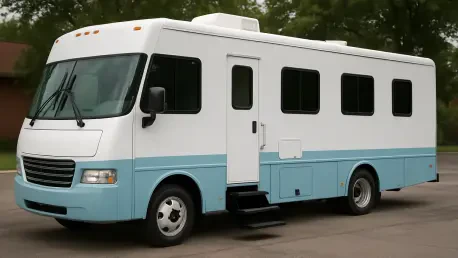
Even LWVI’s own innovative mobile program, which successfully removed many of these barriers, eventually confronted its own ceiling of effectiveness and scale. The organization’s model was a significant improvement, allowing children to be screened, select their own frames from a wide variety, and leave wearing new glasses on the same day. This immediate fulfillment was crucial, as children are far more likely to wear glasses they have personally chosen. Yet, despite its success, the model was constrained by its very nature. Mobile vans are expensive to purchase, operate, and maintain. Staffing is finite, and a limited number of vehicles cannot possibly be present in every school and community simultaneously. This reality meant that while the care provided was excellent, its reach was inherently limited. The organization recognized that to truly solve the systemic problem of pediatric vision care access, it needed a solution that was not dependent on the location of a van on any given day, leading to the conclusion that a permanent anchor was essential for scalable impact.
The Hidden Impact of Uncorrected Vision
The consequences of uncorrected vision problems in childhood are far more profound and pervasive than commonly understood, often creating a domino effect that impacts every facet of a child’s development. A frequent and tragic outcome is misdiagnosis, where a child’s difficulty in the classroom is incorrectly attributed to a learning disability or a behavioral issue when the root cause is simply an inability to see clearly. Many children do not know how to articulate the problem of blurry vision because it is the only reality they have ever known; they have no frame of reference for what “clear” sight looks like. As a result, teachers may observe symptoms like poor reading performance, a lack of participation in class activities, or general disengagement without ever realizing that the student cannot decipher the words on a page or see the whiteboard from their desk. This disconnect between the physical problem and its behavioral symptoms can lead to years of academic struggle and diminished self-esteem, placing a child on a negative trajectory that could have been easily avoided.
Conversely, the transformation that occurs when a child’s vision is corrected is often immediate and life-altering, underscoring the critical importance of timely intervention. LWVI’s leadership has recounted observing children who struggled with basic motor skills, such as holding a handrail on a bus, suddenly gain a surge of confidence and physical stability almost instantly after receiving their first pair of glasses. This powerful anecdotal evidence is consistently reinforced by feedback from educators, who report dramatic improvements in students’ reading abilities, classroom participation, and even school attendance once their vision issues are resolved. The simple act of providing clear sight can unlock a child’s potential, turning a struggling student into an engaged learner. This direct, observable impact reinforces the foundational belief driving the institute’s expansion: that addressing vision problems early does not just help a child see better, it fundamentally changes the entire path of their life by removing an invisible but formidable barrier to success.
The Hub-and-Spoke Model as a Comprehensive Solution
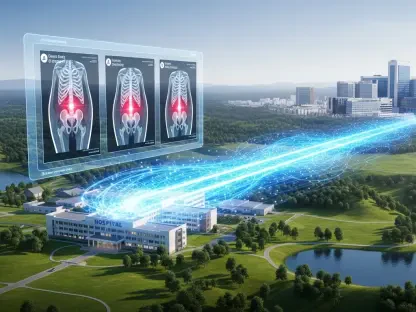
To address the dual challenges of limited access and scalability, LWVI is developing a new Vision Health Center, a $16 million, 30,000-square-foot facility in Ybor City slated to open in 2027. This center is designed to function as the permanent “hub” in a more robust and reliable “hub-and-spoke” healthcare model. The existing mobile clinics will continue to operate as the “spokes,” performing crucial outreach and providing immediate care directly in schools and underserved neighborhoods. The permanent center, however, will serve as a stable, accessible anchor for the entire system, overcoming the logistical limitations of a purely mobile approach. This new hub is engineered to dramatically expand accessibility by offering extended hours, including evenings and potentially Saturdays, to better accommodate the demanding schedules of working families. It creates a proactive and dependable healthcare resource, empowering families to seek care on their own terms rather than waiting for a mobile unit to visit their specific area.
This new infrastructure is strategically designed to broaden the service population, reaching thousands of children who are often missed by school-based mobile clinics. This includes homeschooled students, children in the foster care system, and those attending charter schools that may not be on the regular mobile unit rotation. By establishing a centralized point of care, the institute can serve a much wider demographic and ensure that no child falls through the cracks due to their educational circumstances. Furthermore, the facility opens the door to future partnerships with county programs, creating the potential to serve adults aged 18 to 64 who also face significant barriers to accessing vision care. This expansion transforms the organization’s role from a targeted pediatric service provider into a more comprehensive community health institution, building a sustainable infrastructure capable of serving a broader spectrum of the population for years to come.
A Commitment to Professional and Continuous Care
The construction of the Vision Health Center represented a deliberate move to solidify the institute’s role as a provider of professional medical care rather than a temporary, “pop-up” style service. This was a critical distinction in the organization’s strategic planning. Every screening and exam performed, whether in a mobile unit or at the future center, was and will continue to be conducted by a licensed optometrist or ophthalmologist, with glasses dispensed by licensed opticians in full compliance with Florida state regulations. This unwavering adherence to professional standards ensured that the care provided was not just accessible but also of the highest quality. This commitment was central to building trust with families and establishing the organization as a legitimate and reliable part of the regional healthcare landscape, dismantling the skepticism that often accompanies free services.
Ultimately, the institute’s decision to build a permanent home was driven by its dedication to forming long-term patient relationships. The organization concluded that a “one-and-done” model was insufficient for addressing a lifelong health need like vision. To support this, it maintained a centralized database to track patient history, monitor changes in vision over time, and provide free replacements for glasses that were lost or broken. This framework ensured a continuity of care, solidifying the institute’s role as a long-term health partner for the children it served. The new center was the physical manifestation of this philosophy, a lasting infrastructure designed to systematically dismantle the barriers that prevent children from receiving critical vision care. The goal was not merely to construct a building but to build a sustainable system ensuring a child’s future would be defined by their abilities, not by a correctable health problem.