
The relentless demand for comprehensive medical documentation has long been a primary driver of professional exhaustion among healthcare providers, yet recent data suggests that artificial intelligence might only offer a partial reprieve from this administrative burden. A comprehensive study published in the Journal of the American Medical Association (JAMA) has analyzed the real-world impact of AI scribes on healthcare providers by examining data from over 8,500 clinicians across five major medical centers. This research provides a grounded look at a technology that has frequently been marketed as a definitive cure-all for the burnout crisis that plagues the modern medical field. While the integration of these sophisticated tools into daily workflows has yielded measurable benefits, the findings suggest that their current impact is best described as a modest improvement rather than a total transformation of the medical landscape. For many clinicians, the promise of a keyboard-free existence remains just out of reach as the complexities of electronic health records continue to demand significant manual attention and cognitive labor despite the presence of digital assistants.
How AI Scribes Assist Modern Medical Documentation
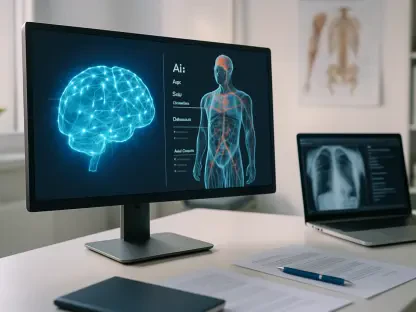
These specialized tools, often categorized under the umbrella of ambient clinical intelligence, utilize sophisticated natural language processing to listen to live patient-doctor conversations and convert them into structured medical notes. The fundamental objective behind this technology is to reduce the “clerical burden” that historically forces physicians to spend hours tethered to their keyboards during and after patient encounters. By automating the note-taking process through generative algorithms, health systems aim to restore the human element of medicine, allowing clinicians to spend more time looking directly at their patients and less time navigating the labyrinthine interfaces of the Electronic Health Record (EHR). The software functions by filtering out casual conversation and non-clinical details, focusing instead on capturing symptoms, physical examination findings, and treatment plans in a format that mirrors traditional medical charting standards. This shift represents a move toward more naturalistic workplace interactions where the technology acts as a silent, background observer rather than a primary focus of the clinical encounter.
As the implementation of these systems expands from 2026 to 2028, the technical sophistication of AI scribes is expected to evolve from simple transcription to more predictive and contextual documentation. Currently, the primary value proposition lies in the reduction of cognitive load, as doctors no longer need to mentally track every specific detail for later entry into the system while simultaneously diagnosing a patient. By capturing the dialogue in real-time, these tools minimize the risk of omitting critical information that might otherwise be forgotten during a busy shift. However, the reliance on these automated systems introduces a new layer of responsibility, as clinicians must remain vigilant in overseeing the output generated by the machine. While the AI handles the bulk of the initial drafting, the final clinical responsibility still rests with the human provider, who must verify that the nuances of the patient’s condition have been accurately captured and translated into the permanent medical record. This dynamic highlights the evolving nature of the clinician-AI partnership, where the tool serves as a foundational assistant rather than a completely autonomous scribe.
Evaluating Time Savings for Different Provider Groups
The JAMA study tracked clear and quantifiable improvements in workflow efficiency, with users across various medical disciplines saving an average of 16 minutes per day specifically on documentation tasks. However, these benefits were not felt equally across the board, revealing that the effectiveness of AI scribes is highly dependent on the specific nature of a clinician’s workload and their level of engagement with the software. Primary care doctors and “power users”—those who utilized the scribe for at least 50% of their patient visits—saw much larger gains than their counterparts in more procedure-heavy specialties. For these high-utilization groups, the time saved often reached nearly 30 minutes a day, proving that the technology is most effective for those whose work involves the heaviest conversational loads and the most complex longitudinal patient histories. This disparity suggests that while the software is a versatile tool, its maximum utility is currently realized in settings where the patient-provider dialogue is the primary source of clinical data for the medical record.
Beyond the raw minutes saved, the data indicates that female providers and advanced practice clinicians tended to experience higher-than-average improvements in their overall workflow efficiency when utilizing these AI tools. This demographic trend may reflect differences in communication styles or the historical distribution of documentation burdens within academic medical centers. For a primary care physician managing a dozen complex cases in a single afternoon, a 30-minute reduction in documentation time can be the difference between a manageable shift and an overwhelming one. However, for specialists such as surgeons or radiologists, whose documentation is often more standardized or image-based, the impact of an ambient listening tool is naturally more limited. These findings underscore the importance of targeted implementation strategies, where health systems prioritize the rollout of AI scribes to the departments that suffer most from “documentation fatigue” to achieve the highest possible return on the investment of time and resources.
The Economic Impact on Healthcare Systems
Financially, the broad implementation of AI scribes has led to a slight but measurable increase in productivity across the studied institutions, with clinicians seeing approximately 0.5 more patients per week. This productivity gain resulted in a modest revenue bump of roughly $167 per month in billings per provider, primarily driven by evaluation and management (E&M) codes. While this specific dollar amount may not immediately cover the high enterprise licensing fees associated with modern clinical AI software, the study suggests that the long-term financial viability of these tools should not be measured solely by direct billings. The true return on investment for a healthcare organization often resides in less tangible metrics, such as improved doctor satisfaction and the mitigation of clinician turnover rates. In an era where recruiting and retaining high-quality medical staff is increasingly expensive and competitive, any tool that can demonstrably reduce daily friction and improve the professional quality of life for a provider has significant underlying economic value.
When evaluating the cost-benefit analysis, administrators must also consider the potential for higher-quality documentation to lead to better reimbursement outcomes and fewer insurance claim denials. AI scribes, by capturing a more complete picture of the clinical encounter, often produce notes that are more detailed and compliant with complex billing requirements than those written by an exhausted physician at the end of a long day. This improvement in the quality and specificity of medical records can indirectly boost a health system’s bottom line by ensuring that all services provided are accurately reflected and billed. Furthermore, the 1.7% increase in patient volume, while seemingly small on an individual basis, represents a significant boost in access to care when scaled across an entire medical center or health network. As these systems become more integrated into the financial infrastructure of medicine from 2026 to 2028, the focus will likely shift from simple time-saving metrics to how AI can optimize the entire revenue cycle while maintaining a high standard of patient care.
Why AI Hasn’t Eliminated After-Hours Work
One of the most notable and perhaps disappointing findings of the JAMA analysis was that AI scribes did not significantly reduce “pajama time,” the hours clinicians spend working on records at home. This phenomenon suggests that saved time during the clinical day is often immediately consumed by other administrative tasks that the AI is not yet equipped to handle, such as responding to an ever-growing volume of patient portal messages or reviewing complex laboratory results. The nature of modern medicine has shifted such that the “clerical burden” is no longer just about writing notes; it encompasses a broad spectrum of digital communication and data management that requires constant human intervention. Consequently, even when the AI successfully handles the transcription of a patient visit, the physician still finds themselves tethered to their computer during their personal hours to manage the secondary administrative requirements of the digital healthcare ecosystem.
Furthermore, the requirement for human oversight means that clinicians must still spend time in the evening reviewing and editing the AI-generated drafts to ensure clinical accuracy and safety. While the software is proficient at capturing the general flow of a conversation, it can still struggle with complex medical terminology, accents, or nuanced clinical reasoning that requires the discerning eye of a trained professional. This “review phase” is a critical safety check, but it also means that the time-saving benefits of the AI are not entirely additive; a portion of the time saved during the patient encounter is simply reallocated to the editorial process later in the day. Until AI systems can demonstrate a level of reliability that requires only minimal human auditing, the dream of completely eliminating after-hours documentation will likely remain unfulfilled. This reality highlights the need for a more holistic approach to administrative reform that addresses the entirety of the clinician’s digital workload rather than just the note-taking portion.
The Role of AI in Administrative Reform: Next Steps
The recent findings indicate that while AI scribes are a powerful tool for chipping away at administrative bloat, they are not a silver bullet for the burnout crisis and must be paired with broader structural changes. The technology effectively addresses the specific problem of note-taking, particularly for high-volume conversational specialties, but it does not yet simplify the broader, complex ecosystem of modern healthcare administration. For health systems looking to maximize the benefits of these tools, the path forward involves viewing AI as just one part of a multi-faceted strategy to reform how medical work is documented and managed. This includes reevaluating the necessity of certain EHR tasks, streamlining patient communication channels, and ensuring that the implementation of new technology does not inadvertently create new forms of “digital busywork” that offset the time savings provided by the AI scribe itself.
Looking ahead, organizations should focus on deep integration between AI scribes and other clinical decision support tools to create a more seamless experience for the provider. Instead of acting as a standalone transcription service, future iterations of this technology could potentially assist in ordering labs, summarizing historical records, and flagging potential medication interactions in real-time during the patient encounter. This evolution would move the AI from a simple record-keeper to a proactive clinical assistant, potentially providing the more transformative relief that healthcare providers are seeking. In the interim, health systems should manage expectations by acknowledging that AI scribes provide modest, meaningful relief rather than a total elimination of administrative duties. By grounding technology adoption in data-driven research and realistic goals, the medical community can continue to refine these tools until they truly serve the needs of those on the front lines of patient care. In conclusion, clinicians found that while AI scribes reduced documentation time, the overall impact on burnout remained limited by the persistent demands of other clerical tasks and the necessary oversight of automated outputs.