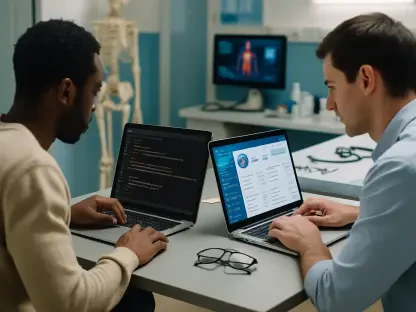

The rapid integration of generative artificial intelligence into the personal health sector has fundamentally altered how individuals approach medical inquiries and diagnostic procedures. As platforms like Grok encourage users to submit highly sensitive imagery, such as X-rays and MRI scans, for instantaneous analysis, the boundary between clinical expertise and algorithmic convenience begins to blur. This trend presents a significant paradigm shift where the promise of a “second opinion” is available with a single upload, yet it simultaneously bypasses the traditional safeguards of the healthcare industry. While the allure of immediate answers is powerful, particularly in a landscape where medical appointments can be difficult to secure, the risks associated with such data sharing remain largely unquantified for the average user. Consequently, the intersection of advanced technology and private biological information necessitates a critical examination of the trade-offs being made in the name of efficiency.
The Shift Toward Digital Self-Diagnosis
Privacy Implications: Data Ownership and Security
Digital privacy advocates have voiced intense concern regarding the permanence of data once it enters the ecosystem of a private technology firm. When a person uploads a medical scan to a platform like Grok, they are essentially transferring ownership of a highly personal biological record to a corporate entity. Unlike a hospital, which operates under strict mandates to protect patient identities, an AI company may utilize this data to refine its underlying models or even share it with third-party partners under the guise of service improvement. This creates a permanent digital footprint of a user’s health history that could, in theory, follow them across various platforms or even impact future insurance considerations if data is ever leaked or sold. The lack of clear boundaries regarding how long these files are stored or who has the ultimate authority to delete them places the burden of risk entirely on the individual user, often without their full understanding of the potential long-term consequences.
Furthermore, the cybersecurity infrastructure of social media-adjacent AI platforms may not meet the specialized standards required for medical-grade information. In recent years, high-profile data breaches have demonstrated that even the most robust tech giants are vulnerable to sophisticated cyberattacks aimed at harvesting sensitive user profiles. If a database containing thousands of medical scans and associated user metadata were compromised, the potential for identity theft or medical blackmail would be unprecedented. Moreover, the practice of using real-world health data to train neural networks introduces the possibility of “data leakage,” where specific details from a training set might inadvertently be reproduced in responses given to other users. This architectural vulnerability suggests that the current state of consumer AI is not yet equipped to handle the gravity of professional medical documentation. The convenience of a quick scan is thus overshadowed by the lingering possibility of a permanent and irreparable loss of personal data confidentiality.
Legal Gaps: Regulation and Accountability
One of the most significant hurdles in the adoption of AI for medical use is the existing regulatory vacuum regarding non-clinical software platforms. In the United States, the Health Insurance Portability and Accountability Act (HIPAA) provides a robust framework for how doctors and hospitals handle patient data, but these rules generally do not apply to consumer-facing AI applications. This means that if a platform like Grok mishandles medical information, the user may have little to no legal recourse compared to a breach occurring within a traditional medical facility. This gap in legislation allows technology companies to operate with a degree of flexibility that is entirely absent in the healthcare sector, creating a lopsided relationship where the user provides all the data but receives none of the standard legal protections. As long as these platforms are marketed as “information tools” rather than medical devices, they can avoid the rigorous testing and validation required by government agencies like the Food and Drug Administration.
This regulatory disparity also extends to the issue of professional liability, as an AI cannot be held accountable for a missed diagnosis in the same way a licensed physician can. If a human doctor makes a catastrophic error, there is a clear pathway for investigation and malpractice claims, but the developers of an AI model are typically shielded by complex end-user license agreements. These agreements often state that the software is provided “as is” and that the user assumes all risks by utilizing the service for health-related inquiries. This shift of responsibility away from the provider and onto the consumer is a radical departure from the established ethics of the medical profession, which prioritizes the principle of “do no harm.” Without a modernized legal framework that specifically addresses the unique challenges posed by diagnostic AI, the public remains exposed to significant risks. Establishing new standards for algorithmic transparency and data handling is therefore essential before these tools can be safely integrated into the broader public health infrastructure.
Clinical Reliability and Patient Safety
Technical Limitations: The Risk of Hallucination
Beyond the concerns of privacy, the technical accuracy of AI-driven medical advice remains a subject of intense debate within the scientific community. Large language models are designed to predict the next logical token in a sequence, which can lead to “hallucinations” where the software presents false information with absolute confidence. In a medical context, such errors are not merely inconveniences but can be life-threatening if a patient delays seeking professional help based on an incorrect AI assessment. For instance, an algorithm might misinterpret a benign shadow on an X-ray as a sign of a serious condition, or conversely, it might overlook a subtle indicator of a malignant growth that a trained radiologist would recognize instantly. The reliance on pattern recognition rather than biological understanding means that AI lacks the necessary context to account for a patient’s specific medical history, lifestyle factors, or physical symptoms that aren’t captured in a single static image or text prompt.
This discrepancy between algorithmic output and clinical reality highlights the danger of replacing human expertise with automated systems. While modern AI models have shown impressive performance in controlled laboratory settings, their application in the messy and nuanced world of human health is often fraught with inconsistency. Previous iterations of similar technology from other tech leaders have been criticized for providing outdated or dangerous guidance for complex diseases like cancer or liver failure. These failures demonstrate that without the oversight of a licensed professional who is licensed and ethically responsible for the outcome, the use of AI for diagnostics remains a high-stakes gamble. The psychological impact of receiving an incorrect diagnosis from a machine can also lead to unnecessary stress or a false sense of security, both of which undermine the efficacy of actual medical treatment. Thus, the role of AI must be carefully restricted to that of a supportive tool for professionals rather than a standalone diagnostic authority for the general public.
Future Perspectives: Navigating the Hybrid Model
As the technology continues to evolve from 2026 to 2028, the most effective path forward involves a hybrid model that prioritizes human oversight alongside algorithmic assistance. The goal should not be to exclude AI from the medical field but to ensure that it is implemented in a way that enhances, rather than replaces, the physician-patient relationship. Professional medical institutions are already beginning to explore how secure, HIPAA-compliant AI tools can help radiologists flag urgent cases for faster review. By keeping the technology within the bounds of traditional healthcare infrastructure, the benefits of rapid analysis can be harnessed without exposing patients to the privacy risks inherent in consumer-facing social media platforms. This controlled environment allows for rigorous validation of AI outputs, ensuring that the software acts as a “second set of eyes” for a trained doctor who retains final decision-making authority over the diagnostic process and treatment plan.
In addition to technical safeguards, there is an urgent need for public education regarding the limitations of consumer AI in a health context. Users must be encouraged to view platforms like Grok as experimental or conversational tools rather than verified medical resources. Promoting a culture of skepticism toward unverified automated advice can prevent the dangerous trend of self-treatment based on unconfirmed data. Furthermore, as the legal landscape catches up to technological capabilities, clear guidelines for the labeling of health-related AI services will be necessary to inform consumers of the risks involved. By fostering a more informed public and a more strictly regulated tech industry, society can navigate the complexities of AI in healthcare more safely. Ultimately, the preservation of human health and digital privacy must remain the primary focus, ensuring that innovation does not come at the expense of fundamental patient safety or the secure management of personal medical histories.
Practical Steps: Moving Forward Safely
The responsible path forward required a proactive approach from both consumers and regulatory bodies to ensure that medical safety was not compromised by technological ambition. Users were advised to prioritize traditional clinical settings for the interpretation of complex medical imagery, utilizing AI only as a supplementary point of reference after consulting with a licensed professional. To mitigate privacy risks, individuals were encouraged to read data usage policies carefully and avoid uploading identifying information alongside their medical scans. Lawmakers moved toward drafting specific protections that extended medical privacy rights to include interactions with generative AI platforms, bridging the gap left by older legislation. These combined efforts focused on creating a transparent environment where the benefits of rapid diagnostic assistance could be explored without sacrificing the rigorous standards of the medical profession or the fundamental right to data sovereignty.