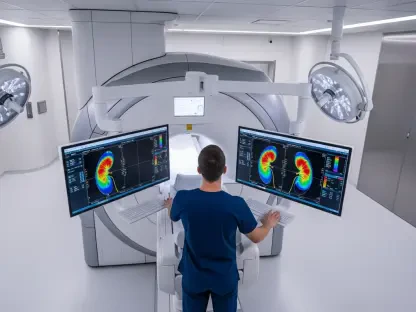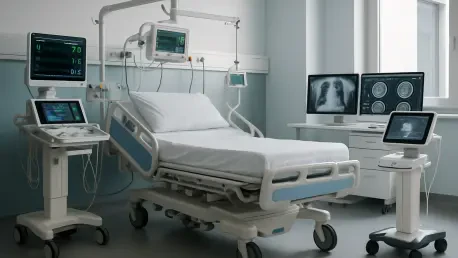

The same hospital where surgeons perform microscopic miracles might still rely on digital infrastructure that struggles with the simple, secure transfer of a patient’s medical history from one department to another. This glaring disconnect between advanced clinical practice and antiquated administrative technology forms the backdrop for a major statewide initiative. New York is confronting this challenge head-on with a new $300 million investment aimed at propelling its healthcare facilities into the digital age, ensuring the technological backbone of its hospitals is as sophisticated as the care they provide.
Beyond the Stethoscope to the Digital Frontier
The central question facing New York’s healthcare system is whether its foundational infrastructure can support the demands of modern medicine. For years, a significant gap has widened between the capabilities of cutting-edge medical procedures and the often-outdated digital systems that manage patient data, coordinate care, and protect sensitive information. While medical innovation has accelerated, the underlying IT frameworks in many facilities have lagged, creating inefficiencies and potential vulnerabilities.
This technological debt presents a substantial barrier to progress. It hinders the seamless integration of new diagnostic tools, complicates data analysis for population health trends, and can frustrate both clinicians and patients who expect the same level of digital convenience in healthcare as they experience in every other aspect of their lives. The new funding represents a determined effort to close this gap, transforming hospital operations from the server room to the patient bedside.
An Urgent Prescription for a Digital Overhaul
The push for a system-wide upgrade is fueled by a convergence of critical pressures. The healthcare sector has become a prime target for cyberattacks, with malicious actors seeking to exploit vulnerabilities in legacy systems to access and hold sensitive patient data hostage. Outdated IT not only poses a security risk but also hampers the speed and accuracy of clinical decision-making, as physicians and nurses struggle to access a complete patient picture from disparate and non-communicative platforms.
Furthermore, the post-pandemic landscape has cemented the role of telehealth as an essential component of care delivery. Patients now expect robust and accessible virtual care options, a demand that requires significant investment in secure and reliable digital infrastructure. Ultimately, modernizing this technological foundation is inextricably linked to providing equitable access to quality care, ensuring that all New Yorkers, regardless of their location, can benefit from a connected and efficient healthcare system.
The Anatomy of a Landmark Investment
The $300 million infusion, part of the Statewide Health Care Facility Transformation Program, is meticulously allocated across 22 distinct projects designed to address these core challenges. A primary focus is the modernization of Electronic Health Records (EHR) systems, the digital heart of any modern hospital. Notable projects include a $54 million transformation at Richmond University Medical Center and The Brooklyn Hospital Center’s $33 million implementation of the Epic EHR platform. Similarly, Rome Memorial Hospital will receive $19 million to consolidate its multiple outdated EMRs into a single, integrated solution, streamlining workflows and improving data consistency.
Another critical pillar of the investment is fortifying cybersecurity defenses. Montefiore Health System is undertaking a major $41 million initiative to bolster its digital security, while the One Brooklyn Health System is directing $26 million toward a dual-purpose project to enhance both its security posture and its EHR capabilities. Recognizing the growing importance of remote care, the state is also funding the expansion of virtual services, with SUNY Health Science Center at Syracuse receiving $2.4 million to significantly broaden its telehealth offerings.
A Vision for Patient Centered Modernization
State leadership has framed this investment as a fundamental step toward creating a more resilient and patient-focused healthcare ecosystem. Governor Kathy Hochul emphasized the goal of building a system that delivers safe, reliable, and connected care. This sentiment was echoed by Health Commissioner Dr. James McDonald, who highlighted the critical importance of strengthening the security surrounding private patient data, a cornerstone of public trust in the healthcare system.
This $300 million allocation is not an isolated measure but a significant component of a sustained, long-term strategy. It is part of the more than $1.75 billion awarded through the Statewide Health Care Facility Transformation Program. In a broader context, this funding contributes to the over $4.7 billion in healthcare capital funding directed by the state over the last decade to improve access, elevate quality, and promote health equity across all communities.
A Strategic Blueprint for a Connected New York
The distribution of funds follows a clear and deliberate blueprint for systemic improvement. The first pillar of this strategy prioritizes foundational upgrades, recognizing that core IT infrastructure—like robust servers, secure networks, and modern EHR systems—is the bedrock upon which all future medical innovation will be built. Without a solid digital foundation, advanced tools and data analytics cannot be effectively implemented.
A second crucial pillar involves providing targeted support to financially distressed providers. This ensures that essential community hospitals and smaller health systems, which often lack the capital for major technological overhauls, are not left behind. By modernizing these vital institutions, the state reinforces the healthcare safety net for its most vulnerable populations. Finally, the strategy aims to build a more connected care network. By encouraging the adoption of standardized and interoperable systems like Epic, the state is fostering an environment where patient information can flow securely and efficiently between different hospitals and clinics, leading to better-coordinated and safer patient care.
This comprehensive investment marked a pivotal moment in New York’s healthcare journey. The state’s decision to channel significant resources into these foundational technological upgrades was a clear acknowledgment that modern medicine required an equally modern digital framework. It was a strategic move designed not just to fix immediate problems but to build a more resilient, secure, and interconnected healthcare system prepared for the challenges and innovations of the years ahead.