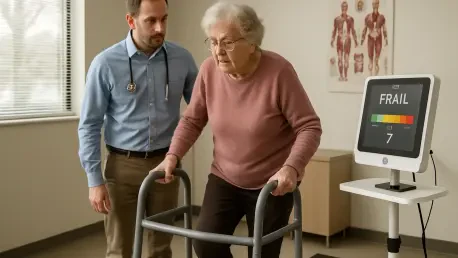

The global healthcare community is currently navigating a profound demographic shift as the population of older adults continues to grow at an unprecedented rate, necessitating more sophisticated diagnostic tools. For decades, primary care providers have struggled to identify which patients are merely aging and which are entering a state of high clinical vulnerability. The recent development and validation of an electronic frailty index (eFI) marks a significant turning point in geriatric medicine, providing a scalable solution that fits into the modern, high-pressure clinical environment. By synthesizing complex patient data into a single, actionable score, this digital innovation allows medical teams to move beyond reactionary treatment. The framework for this tool, as detailed in recent medical research, leverages existing information within electronic health records to create a multi-dimensional view of health status. This shift toward automated detection is designed to bridge the gap between specialized geriatric knowledge and general practice, ensuring that every senior receives the targeted attention required to maintain their long-term independence.
Defining the Challenge: The Complexity of Geriatric Frailty
Frailty is often misunderstood as an inevitable consequence of aging, yet it is a distinct medical syndrome characterized by a significant decline in physiological reserve across multiple organ systems. When an individual reaches this state, even a seemingly minor health stressor, such as a localized infection or a minor adjustment in a daily medication regimen, can trigger a disproportionately severe decline in overall health. These events frequently lead to catastrophic outcomes, including debilitating falls, prolonged hospitalizations, or a permanent loss of functional independence. Traditionally, identifying these high-risk individuals required extensive, manual clinical evaluations that many primary care clinics found impossible to implement due to the sheer volume of patients. This logistical barrier often meant that frailty was only diagnosed after a major crisis had already occurred, leaving little room for preventive intervention. The transition to a digital assessment model addresses this gap by making vulnerability screening a routine part of the data-driven healthcare landscape.
The emergence of the electronic frailty index represents a strategic move away from labor-intensive manual assessments toward a more integrated, automated approach within clinical databases. By utilizing the vast amounts of information already stored in electronic health records, the index eliminates the need for general practitioners to conduct separate, time-consuming physical tests for every patient. This automation is crucial because it allows for the identification of frailty in its earliest stages, often before physical symptoms become obvious to the casual observer. The index functions by scanning historical and current data, identifying patterns of decline that might be missed during a standard fifteen-minute consultation. This technological advancement ensures that the focus remains on the patient’s overall health trajectory rather than just treating isolated symptoms. As healthcare systems globally face increasing pressure, the ability to quickly and accurately stratify patients by their level of vulnerability becomes an essential component of sustainable geriatric care and proactive medical management.
Digital Transformation: Leveraging the Deficit Accumulation Model
At the heart of the new electronic frailty index is the Comprehensive Geriatric Assessment, a holistic framework that examines much more than just physical symptoms or specific disease diagnoses. While older models of assessment relied heavily on phenotypic markers like grip strength or walking speed, the digital eFI adopts a “deficit accumulation” approach. This model recognizes that an individual’s health is the cumulative result of various biological, psychological, and social factors. The index calculates a score by aggregating diverse data points, including cognitive function, emotional well-being, nutritional status, and the presence of chronic conditions. By pulling this information directly from a patient’s digital file, the tool provides a nuanced “snapshot” of their actual physiological age as opposed to their chronological age. This multi-dimensional analysis is critical because it identifies vulnerabilities that do not always manifest as physical weakness, such as social isolation or early-stage cognitive impairment, which are equally important for long-term health.
The operational feasibility of this tool is what truly sets it apart from previous attempts at digital frailty screening in the primary care setting. Because the index is designed to function using data that is already being collected during routine doctor visits, it does not impose an additional administrative burden on already overworked clinical staff. There are no extra forms to fill out and no new diagnostic tests required for the basic score to be generated, which helps prevent the “alert fatigue” that often plagues new medical software implementations. This seamless integration into the existing clinical workflow means that a frailty score can be automatically updated every time a patient interacts with the healthcare system. Consequently, the tool transforms the electronic health record from a passive storage warehouse into an active diagnostic partner. This evolution ensures that specialized geriatric insights are available to every primary care physician, regardless of their specific training in aging-related syndromes or the time constraints of their practice.
Clinical Validation: Accuracy and Long-Term Reliability
To ensure that the electronic frailty index could be trusted for critical decision-making, it underwent rigorous testing against the established “gold standard” of manual clinical evaluations. Researchers compared the automated scores generated by the index with the deep-dive assessments performed by multi-disciplinary teams of geriatric specialists. The results showed a remarkably high level of concordance, proving that the digital tool can replicate specialist-level insights with high accuracy. This validation is essential for gaining the trust of the medical community, as it demonstrates that the eFI is not merely a statistical curiosity but a reliable clinical indicator. When a primary care doctor sees a high frailty score on a patient’s dashboard, they can be confident that it reflects a genuine medical need. This level of precision allows for more confident referrals to specialists and more aggressive management of potential health risks, ultimately improving the quality of care delivered to the aging population.
Beyond initial accuracy, the reliability of the tool over extended periods is a vital component of its clinical utility for tracking patient health trajectories. The study confirmed that the index remains stable and consistent across diverse patient demographics, allowing healthcare providers to monitor changes in a patient’s status over several years. This longitudinal tracking is particularly valuable for determining whether specific interventions, such as tailored physical therapy, social support programs, or nutritional adjustments, are having the intended effect. If a patient’s eFI score begins to stabilize or improve following a new treatment plan, clinicians have empirical evidence that their strategy is working. Conversely, a rising score serves as an early warning signal, prompting medical teams to re-evaluate the care plan before a significant health event occurs. This constant, data-driven monitoring fosters a more dynamic relationship between the patient and the provider, where healthcare becomes a continuous process of adjustment rather than a series of disconnected episodes.
Strategic Implementation: Proactive Care and Systemic Benefits
The widespread adoption of the electronic frailty index signals a fundamental shift in the philosophy of senior care, moving from reactive crisis management to a proactive model. By identifying individuals in the “pre-frail” stage, healthcare providers can introduce targeted preventive measures that have the potential to stall or even reverse the progression of frailty. This early intervention is the most effective way to help older adults maintain their independence and avoid the downward spiral often associated with aging. For example, a slightly elevated frailty score might trigger a review of a patient’s home safety or a specialized exercise program to improve balance, preventing a fall before it ever happens. This approach prioritizes the quality of life and functional longevity of the patient, ensuring that the final years of life are spent in the community rather than in institutional care settings. This personalized attention ensures that medical resources are used to support the patient’s specific goals and needs.
On a broader scale, the integration of the eFI into primary care offers significant advantages for public health policy and the overall economics of the healthcare system. As populations age, health systems must find ways to manage increasing demands with limited resources, and the index provides the data necessary for effective population health management. By stratifying the entire patient population according to risk levels, administrators can allocate resources more efficiently, focusing intensive care coordination on those with the highest scores. This data-driven approach aligns perfectly with the global transition toward value-based care, where the primary objective is to keep patients healthy and out of the hospital. Reducing the number of avoidable emergency room visits and hospitalizations not only improves patient outcomes but also significantly lowers the total cost of care. The electronic frailty index thus serves as both a clinical lifesaver and a strategic tool for building a more resilient and sustainable healthcare infrastructure for the future.
Advancing Gerontology: Integration and Future Directions
The success of the electronic frailty index has established a clear blueprint for the future of geriatric medicine, where technology and clinical expertise work in tandem to improve senior health. Moving forward from 2026 to 2028, there is an increasing push to integrate these digital tools with advanced machine learning algorithms and predictive analytics. By analyzing vast, anonymized datasets, future versions of the eFI will likely be able to predict specific adverse events, such as the likelihood of a stroke or cognitive decline, months in advance. Furthermore, there is a growing interest in incorporating patient-reported outcomes directly into the index via mobile health applications. This would allow patients and their families to contribute real-time data about their daily functioning and well-being, making the index even more responsive to the subtle changes that occur between doctor visits. This convergence of data sources will create a more comprehensive and real-time understanding of aging, further democratizing specialized geriatric care.
In the final analysis, the implementation of an electronic frailty index based on comprehensive geriatric data proved to be a transformative step for primary care. Medical institutions successfully synthesized complex theoretical frameworks into a practical tool that met the rigorous demands of daily clinical practice. Healthcare providers utilized these automated insights to identify high-risk patients earlier than ever before, leading to more timely and effective interventions. The transition to a data-driven model reduced the administrative burden on physicians while simultaneously increasing the precision of care for the aging population. Stakeholders across the healthcare spectrum recognized the value of this innovation in promoting functional independence and reducing systemic costs. By establishing a culture of proactive monitoring and personalized medicine, the medical community moved toward a more compassionate and evidence-based system. These advancements ensured that aging was managed with foresight and technical precision, securing a higher standard of living for seniors globally.