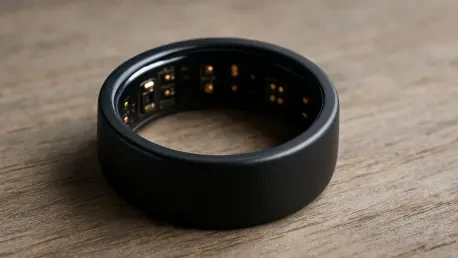

The latest iteration of Oura’s popular smart ring enters a market increasingly saturated with wearable technology, yet it carves out a unique space by deliberately challenging the industry’s long-held conventions. It presents a compelling synthesis of sophisticated health monitoring and high-end fashion, moving beyond the utilitarian aesthetics that have defined wearables for years. By wrapping its powerful sensors in a shell of polished ceramic, the device forces a reevaluation of what consumers expect from their technology, blurring the lines between a functional health gadget, a piece of fine jewelry, and an undeniable status symbol. This evolution prompts a crucial question about its core identity in the ever-expanding landscape of personal tech.
Paying for Style The Core of the Ceramic Appeal
The Fashion Tax Explained
The most defining characteristic of the Oura Ring 4 Ceramic is that its premium positioning is based entirely on its exterior design and material composition, not on any technological superiority over its counterparts. Internally, the device houses the exact same advanced sensors, battery, and processing hardware as the standard Oura Ring 4, and it runs on the identical software platform. This means that the substantial $150 price increase for the Ceramic model is, in essence, a “fashion tax”—a premium paid exclusively for its aesthetic qualities and the prestige associated with its unique materials. This pricing strategy consciously segments the market, targeting consumers who prioritize personal style and are willing to invest more for a device that seamlessly integrates into their wardrobe as a beautiful accessory rather than a purely functional piece of technology that must be tolerated for its health benefits.
This approach mirrors strategies long employed in the luxury goods sector, where brand identity, craftsmanship, and material choice justify a higher price point for products with similar core functions to less expensive alternatives. By adopting this model, Oura is making a calculated wager that a significant portion of the wearable market is ready to move beyond function-first design. The company is tapping into the growing “quiet luxury” trend, where subtlety and quality are valued over conspicuous branding. This widens the product’s appeal from the typical early adopters and bio-hackers to a new demographic of style-conscious individuals who have historically been deterred by the bulky, plastic-and-silicone look of traditional smartwatches and fitness bands, thereby expanding the potential user base for personal health monitoring.
A New Standard in Wearable Aesthetics
The choice of zirconia ceramic as the primary material for the new ring is a deliberate move away from the conventions of consumer electronics. This material is lauded not only for its gorgeous, high-gloss finish and smooth, pleasant feel but also for its exceptional durability and scratch resistance. A key advantage over the coated titanium of previous models is that the color is intrinsically part of the ceramic itself, ensuring that the rich hues of the device will not fade, chip, or discolor over time from daily wear. Oura even acknowledges the material’s hardness by including a specialized polishing pad to remove scuffs that the ring might pick up from softer metals it comes into contact with—a detail that underscores its positioning as a piece of fine jewelry. The only physical trade-off for this premium material is a slightly thicker and chunkier profile, a minor compromise for its superior look and feel.
The aesthetic philosophy of the Oura Ring 4 Ceramic is further defined by its unique and carefully curated color palette, which includes soft, airy shades like “petal,” “tide,” and “cloud.” This selection is a strategic departure from the standard metallic finishes common in the tech world, designed to resonate with a more fashion-forward, and potentially more feminine, clientele. The overarching goal is to transform the health tracker into a personal statement piece, allowing the wearer’s individual style to “ring true.” By embracing the principles of quiet luxury, the device becomes an elegant accessory that blends in or stands out as desired, without immediately broadcasting itself as a piece of technology. This successful fusion of form and function sets a new benchmark for the industry, proving that powerful health tracking can coexist with sophisticated design.
Function Beneath the Form
The Power of the Oura Platform
Despite its strong emphasis on fashion, the Oura Ring 4 Ceramic is built upon a robust and highly respected health-tracking platform that remains a leader in the field. The device’s underlying technology is celebrated for its ability to track a comprehensive suite of biomarkers with a high degree of accuracy, presenting the data through a software interface known for its fantastic and intuitive illustrations. The platform delivers a carefully calibrated amount of information, satisfying the needs of both dedicated health enthusiasts who want to delve into deep analytics and more casual users who are simply curious about their sleep quality and daily activity levels. Its practical utility has been demonstrated in its ability to accurately predict the onset of illness by detecting subtle changes in body temperature and heart rate variability, as well as its effectiveness in helping users achieve and maintain good physical shape by providing actionable insights.
Beyond its impressive tracking capabilities, the Oura platform is also recognized for its strong commitment to user privacy, a critical concern in an era where personal health data is increasingly vulnerable. The company has established clear policies around data protection, building a foundation of trust with its user base that adds significant value to its products. This combination of powerful, accessible analytics and a firm stance on data security solidifies the Oura Ring’s identity as a serious and reliable health device, proving that its beautiful exterior is matched by a truly capable and trustworthy technological core. The software experience is a key reason why many users remain loyal to the ecosystem, as it consistently translates complex biological data into meaningful guidance for improving one’s well-being.
A Noteworthy Flaw
A significant issue that has been widely reported by the Oura user community is the degradation of the device’s battery life over time, a problem that stands in stark contrast to its premium build and price point. While the ring is advertised as having a battery life of up to eight days on a full charge, a substantial number of users have found that this capacity diminishes dramatically after approximately one year of consistent use, often struggling to hold a charge for more than a day or two. This critical flaw directly impacts the ring’s core functionality, as frequent charging disrupts the continuous sleep and activity tracking that is essential for generating accurate health insights. For a device marketed on its seamless integration into daily life, a failing battery represents a major inconvenience and undermines its long-term value proposition.
In response to this prevalent issue, Oura appears to be taking active and responsible steps to address customer concerns and mitigate the damage to its brand reputation. The company has reportedly been providing free replacement rings to users who experience significant battery degradation within a reasonable timeframe, demonstrating a commitment to customer satisfaction. Furthermore, the initiation of a ring recycling program for older models indicates a broader awareness of the product’s life cycle and a move toward more sustainable practices. While the underlying engineering challenge of battery longevity in such a small device remains, the company’s proactive response suggests an acknowledgment of the flaw and a dedicated effort to support its customers, turning a potential product crisis into an opportunity to showcase its commitment to quality and service.
A Conclusive Verdict on Value
The final assessment of the Oura Ring 4 Ceramic positioned it as a niche product tailored for a very specific consumer. Its recommendation was aimed at individuals who placed a high premium on aesthetics and were willing to invest significantly more for a health tracker that doubled as an elegant and colorful fashion accessory. The device was presented as the ideal choice for someone who found traditional smartwatches or the standard metallic finishes of other smart rings to be stylistically unappealing and possessed the financial means to comfortably afford a $500 piece of wearable technology. The decision to purchase the Ceramic version over the standard model ultimately hinged on a personal calculation of value, weighing the tangible benefits of advanced health tracking against the intangible but powerful appeal of superior design and personal expression. This product successfully carved out its identity by being a fashion accessory first, a health tracker second, and a status symbol third, proving a market existed at the intersection of wellness and luxury.