
The persistent hum of the fax machine in hospital corridors serves as a stark reminder that while medicine has advanced at a breakneck pace, the administrative systems supporting it remain stubbornly anchored in the last century. This deep-seated reliance on manual processes for handling critical documents presents a profound and often underestimated operational challenge across the healthcare industry. The hidden costs manifest in significant financial leakage, diminished staff morale, and compromised patient care, creating an urgent need for a modern solution. As other sectors have embraced digital transformation, healthcare’s unique regulatory and structural complexities have left it uniquely tethered to archaic tools. Now, the emergence of artificial intelligence, specifically through Intelligent Document Processing (IDP), offers a transformative path to finally bridge this persistent efficiency gap.
The Paper-Plagued State of Modern Healthcare Communication
The modern healthcare landscape is a paradox of cutting-edge clinical technology operating alongside administrative systems that rely on fax machines, paper documents, and non-interactive PDFs. This dependency is not merely an inconvenience; it is a systemic flaw that generates immense operational friction. Every day, countless organizations are inundated with a torrent of unstructured information that requires human intervention to become useful. This constant influx perpetuates a cycle of inefficiency that strains resources and slows down the entire care delivery ecosystem.
This reliance on outdated methods creates what many in the industry refer to as “fax chaos.” This term encapsulates the complex, labor-intensive cycle where thousands of documents, from patient referrals to lab results, arrive daily. Staff must manually sort, scan, and often retype critical information into various systems, a process that is slow and fraught with the potential for human error. The resulting administrative bottlenecks ripple throughout an organization, creating a significant operational drag that directly impacts both the speed of care and the health of the revenue cycle.
Why Paper Persists Key Trends and Hard Data
The Perfect Storm Unpacking the Causes of Workflow Inefficiency
The industry’s slow adoption of automation is not for a lack of desire but the result of a perfect storm of systemic challenges. A primary driver is system fragmentation. The healthcare ecosystem is a complex web of disparate providers, insurers, and labs, each with its own unique forms, rules, and preferred communication methods. This creates an environment where there is little incentive for the sender of information to simplify the process for the receiver, perpetuating a cycle of convoluted communication that defaults to the lowest common denominator: the fax machine.
This fragmentation is compounded by the “walled garden” effect of legacy IT systems, which were often designed without interoperability in mind, creating information silos that are difficult to bridge. Moreover, strict regulatory frameworks like the Health Insurance Portability and Accountability Act (HIPAA), while essential for protecting patient privacy, have inadvertently fostered a culture of extreme caution. This has led many organizations to hesitate in adopting new automation technologies, preferring the perceived safety of established, albeit manual, paper-based processes.
By the Numbers The Quantifiable Cost of Administrative Drag
The scale of this problem is staggering. Market data shows that fax is projected to remain a dominant communication channel, with over half of these transmissions still requiring manual handling to be processed. This has tangible, negative consequences for patient outcomes. A striking 88% of healthcare professionals report that delays related to fax processing directly impact patient care, leading to postponed procedures and deferred specialist referrals. The urgency is magnified by the fact that 44% of all faxed documents are time-sensitive, meaning any delay can trigger immediate downstream disruptions in both clinical and administrative workflows.
Beyond the operational metrics lies a significant human cost. The immense administrative burden is a primary driver of professional burnout, stretching clinical and administrative teams thin. A recent report highlighted this stark reality, noting that 77% of healthcare professionals must work late or take work home specifically to manage excessive documentation tasks. This constant “paperwork firefighting” detracts from high-value, patient-facing activities and contributes to a growing sense of frustration and exhaustion among the healthcare workforce.
Confronting the Chaos The Daily Realities of Manual Document Handling
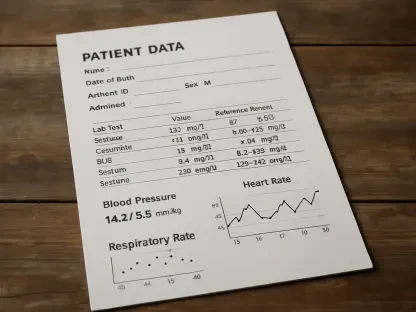
The daily workflow for handling a single inbound document is a testament to the industry’s inefficiency. A referral or medical history document often arrives as a fax or a flat PDF, initiating a multi-step manual process. An employee must first retrieve the document, visually identify the patient and the document type, and then manually re-enter key data points into the Electronic Health Record (EHR). This process is repeated hundreds, if not thousands, of times a day in a typical healthcare facility, consuming valuable staff hours that could be dedicated to more critical tasks.
This labor-intensive workflow creates a significant operational drag, serving as a primary source of errors and delays. A single mistyped digit in a medical record number can send a document into a digital void, delaying a patient’s access to care or causing a costly billing error. The cumulative effect of these small inefficiencies is a weakened revenue cycle, frustrated staff, and a system where the speed of information flow consistently lags behind the speed of medical need.
The Regulatory Balancing Act Navigating HIPAA in the Age of Automation
The healthcare regulatory landscape, dominated by HIPAA, plays a central role in shaping technology adoption. The act’s stringent privacy and security requirements mandate that any system handling protected health information (PHI) must have robust safeguards and auditable trails. While these rules are non-negotiable for patient safety, they have historically created a high bar for new technologies to clear, making many organizations risk-averse.
This fear of non-compliance has inadvertently perpetuated the use of established systems like fax, which, despite its security vulnerabilities, has a long history of accepted use within the industry’s compliance frameworks. For any new automation solution to be viable, it must not only be efficient but also demonstrably secure and compliant. It must provide clear, auditable processes that can withstand regulatory scrutiny, a requirement that has historically slowed the move away from familiar manual systems.
Beyond the Fax Machine How Intelligent Document Processing Is Redefining Workflows
In response to this deeply entrenched challenge, Intelligent Document Processing (IDP) has emerged as a transformative AI-powered solution. IDP is designed to serve as a critical bridge between the unstructured documents that dominate healthcare communication and the structured digital systems, like EHRs, that power modern care delivery. It functions as an advanced digital agent capable of automatically reading, understanding, and acting upon a vast array of document types.
The technology’s core strength lies in its simple yet powerful “Read, Understand, and Act” workflow. An IDP system first ingests unstructured communications, including faxes, PDFs, and scans. Its AI engine then “understands” the document by identifying and extracting key data points—such as patient names, medical record numbers, and relevant clinical details—with a high degree of accuracy. Finally, it “acts” by automatically and securely routing this newly structured data into the appropriate workflow or back-end system. This contextual comprehension distinguishes IDP from basic Optical Character Recognition (OCR), which can only convert an image into text without interpreting its meaning.
From Paperwork to Progress The Transformative Impact of AI on Care and Costs
The implementation of IDP yields clear and substantial benefits. Healthcare organizations see a drastic reduction in manual document handling, which directly translates to improved data accuracy and accelerated information routing. Critical documents like patient referrals and prior authorization requests that once took days to process can now be handled in minutes. This operational acceleration allows human staff to shift their focus from repetitive data entry to higher-value, patient-facing work, such as complex case management and care coordination.
Ultimately, these efficiencies have a direct impact on patient care and provider well-being. By mitigating administrative delays, particularly in time-sensitive areas like prior authorization, IDP helps prevent disruptions in care. One analysis found that approximately 33% of patients abandon necessary treatments due to such delays, illustrating how administrative bottlenecks can lead to negative health outcomes. For staff, the removal of tedious, error-prone tasks reduces burnout and the need for after-hours work, fostering a more sustainable and fulfilling work environment.
The hidden costs of manual healthcare operations were a long-ignored but significant drain on the industry’s resources and effectiveness. This review found that while fax machines and paper-based workflows will not disappear overnight, AI-powered Intelligent Document Processing provided a pragmatic and powerful path forward. By automating the intensive labor of reading, understanding, and routing documents, these solutions enabled healthcare organizations to simultaneously reduce costs, accelerate revenue cycles, and improve the quality of patient care. The ultimate consensus was that this technology represented a fundamental transformation of healthcare operations, paving the way for a system that is faster, safer, and more humane for both providers and the patients they serve.