
The rapid integration of sophisticated algorithms into the clinical environment has shifted from a speculative concept to a foundational reality for nearly eighty-one percent of the medical workforce today. This surge in adoption, which has more than doubled since the beginning of 2026, reflects a fundamental change in how healthcare professionals interact with technology during their daily rounds. Instead of viewing digital tools as mere repositories for data, physicians are now utilizing an average of 2.3 distinct artificial intelligence use cases to navigate the complexities of modern patient care. This evolution is driven by a desperate need to manage the sheer volume of medical information and administrative demands that have historically burdened the profession. By automating the more tedious aspects of practice, such as documentation and research synthesis, these tools are carving out space for doctors to refocus on the nuanced, human elements of healing that no machine can truly replicate.
Operational Enhancements and Clinical Efficiency
Streamlining Administrative Workflows and Documentation
The most immediate impact of current artificial intelligence applications is felt in the reduction of the administrative “tax” that has long plagued the medical community. Ambient listening devices and natural language processing software now allow physicians to document patient encounters in real-time, eliminating the hours of manual data entry that typically followed a full day of clinics. By capturing the essence of a conversation and organizing it into a structured medical note, these systems enable doctors to maintain eye contact with their patients rather than staring at a computer screen. This shift is not merely about convenience; it is a critical intervention designed to mitigate the cognitive overload that leads to burnout. As medical professionals transition toward these automated documentation workflows, the focus moves from being a data clerk to being a diagnostic lead, ensuring that the clinical narrative is preserved without the physical exhaustion of traditional charting methods.
Beyond individual note-taking, artificial intelligence is revolutionizing the way medical research is consumed and applied at the point of care. With thousands of peer-reviewed papers published weekly, staying current with the latest standards of care is a monumental task for any human practitioner. Modern AI tools now summarize vast quantities of longitudinal data and recent clinical trials into actionable insights that can be reviewed in seconds. This capability ensures that treatment plans are backed by the most recent evidence-based guidelines without requiring the physician to spend hours in a library or online database. By synthesizing complex information into digestible summaries, these systems act as a high-velocity research assistant, providing a competitive advantage to those who incorporate them. The result is a more informed decision-making process that bridges the gap between theoretical medical advancement and practical application in the exam room.
Improving Diagnostic Precision and Outcomes
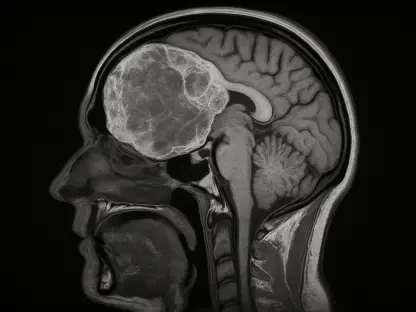
The promise of enhanced diagnostic accuracy is a primary driver behind the seventy-four percent of physicians who express optimism about the current technological landscape. Machine learning models are now capable of scanning radiological images, pathology slides, and genomic sequences with a level of consistency that complements human expertise. These tools do not replace the radiologist or the oncologist; rather, they serve as a rigorous second set of eyes that can flag subtle anomalies that might be overlooked during a long shift. By identifying patterns in massive datasets that are invisible to the naked eye, artificial intelligence helps in detecting chronic conditions or aggressive diseases at much earlier stages. This proactive approach to diagnosis is fundamentally changing the prognosis for many patients, as interventions can begin long before symptoms become severe, thereby improving the overall quality of life and long-term survival rates.
Furthermore, the mitigation of cognitive overload through intelligent triaging and risk stratification is becoming a standard feature in high-volume hospital settings. Systems designed to monitor vital signs and laboratory results in real-time can now predict patient deterioration hours before a clinical event occurs, such as sepsis or respiratory failure. This predictive capability allows medical teams to shift from a reactive stance to a preventive one, allocating resources where they are most critically needed. For the physician, this means receiving alerts that are high-signal and low-noise, reducing the “alarm fatigue” that often desensitizes staff in intensive care units. As these algorithms become more refined, they provide a safety net that supports clinical judgment, ensuring that even in the most fast-paced environments, no critical change in a patient’s status goes unnoticed or unaddressed.
Ethical Boundaries and the Future of Expertise
Addressing Privacy Concerns and Professional Displacement
Despite the clear gains in efficiency, a significant undercurrent of caution remains regarding the sanctity of patient data and the potential for technological overreach. Approximately forty-one percent of physicians have voiced concerns about the risks to patient privacy, fearing that the integration of large-scale data models could lead to unauthorized access or the commodification of sensitive health information. This apprehension is coupled with a split in opinion regarding the sanctity of the physician-patient relationship. While many see technology as a bridge that frees up time for empathy, others worry that the presence of an algorithmic intermediary might degrade the trust and personal connection that is central to the healing process. Establishing robust, transparent data protocols is therefore not just a technical requirement but a moral necessity to maintain the integrity of the medical profession as it moves further into the digital age.
Another pressing issue involves the long-term preservation of medical intuition and clinical skill sets in an era of high automation. An overwhelming eighty-eight percent of practitioners worry about “skill loss,” a phenomenon where over-reliance on automated suggestions might dull the sharp diagnostic instincts developed through years of manual practice. This concern is particularly prevalent among those responsible for training the next generation of doctors. If residents and medical students become overly dependent on AI to interpret labs or suggest treatments, there is a risk that they may lack the foundational knowledge required to intervene when the technology fails or encounters an outlier case. The challenge for the medical community today is to strike a balance where technology is used as an “augmented intelligence” that supports human judgment rather than a crutch that replaces the rigorous mental labor of medical reasoning.
Establishing Regulatory Frameworks for Safe Integration
For these advanced tools to reach their full potential, the medical community is demanding a seat at the table during the development and implementation phases. Roughly eighty-five percent of physicians believe they should have a direct say in how AI is adopted within their specific practices, ensuring that the software serves the needs of the patient rather than the bottom line of a corporation. This requires the creation of clear liability frameworks that define who is responsible when an algorithmic suggestion leads to an adverse outcome. Without these legal and ethical guardrails, the adoption of technology will remain hampered by uncertainty and fear of litigation. Practitioners are calling for rigorous safety validation processes that are independent of the software developers, ensuring that every tool used in a clinical setting has been proven both effective and unbiased across diverse patient populations.
Moving forward, the focus must shift toward creating a synergistic environment where technology enhances the human element of medicine. The goal is to develop “augmented intelligence” systems that are designed specifically to support the physician’s workflow without intruding on the clinical autonomy necessary for personalized care. This involves ongoing education for current practitioners to help them understand the limitations and strengths of the tools they use daily. By fostering a culture of “informed trust,” where physicians are both proficient in using AI and vigilant in overseeing its outputs, the healthcare industry can ensure that technological progress does not come at the expense of clinical excellence. The emphasis remains on maintaining the physician as the ultimate authority in the care delivery chain, using data as a powerful tool to inform, but never dictate, the final treatment plan.
The integration of artificial intelligence into the clinical environment was characterized by a transition from experimental use to essential administrative and diagnostic support. Physicians successfully leveraged these tools to reclaim time previously lost to documentation, yet they remained steadfast in protecting the cognitive rigor required for medical training. To ensure continued success, healthcare organizations must now prioritize the implementation of transparent auditing processes for all clinical algorithms. Practitioners are encouraged to actively participate in institutional committees that govern AI ethics, ensuring that new tools align with specific patient demographics and local standards of care. By maintaining a rigorous oversight role, the medical community ensured that technology served as an extension of human expertise, rather than a replacement for it. Moving into the next phase of digital health, the focus remained on refining these partnerships to enhance patient safety and data security.