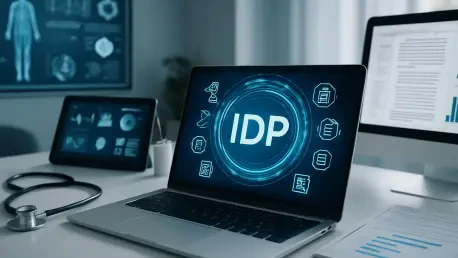

The persistent reliance on physical paper and unstructured digital scans continues to act as a primary drag on medical productivity despite the sophisticated nature of modern diagnostic tools. While the industry has spent the last decade migrating toward Electronic Health Records (EHR), a glaring paradox remains: the “paperless” office is often filled with faxes, manual PDFs, and handwritten notes that require human eyes to decode. This roundup explores how Intelligent Document Processing (IDP) is currently bridging this gap, collecting insights on how cognitive automation is finally dismantling the administrative bottlenecks that have long hindered patient care.
Beyond the Digital Facade: Addressing the Persistent Paper Problem in Medicine
The transition to digital records was supposed to eliminate the friction of analog data, yet many clinics find themselves bogged down by a hybrid reality. Documents arrive via fax or email as “dead” data—static images that the computer can see but not understand. Industry observers note that these administrative hurdles do more than just clutter desks; they create a backlog that directly translates to delays in life-critical treatments and contributes significantly to provider burnout.
By introducing IDP as a sophisticated bridge, healthcare facilities are beginning to turn this unstructured noise into actionable clinical intelligence. Rather than viewing a scanned page as a simple image, these systems treat every pixel as a potential data point. This shift is essential because the stakes of administrative inefficiency are high; a lost referral or a delayed authorization is not merely a filing error but a potential interruption in a patient’s journey toward recovery.
Redefining Medical Workflows Through Cognitive Automation
Transforming the Clinical Entry Point with Automated Intake Triage
The traditional clinical “front door” is often a congested inbox where referrals, lab orders, and insurance authorizations sit waiting for a human to sort them. Experts in healthcare operations suggest that this manual sorting phase is the leading cause of “stalled momentum.” When a document spends forty-eight hours in a queue before it is even identified, the entire diagnostic timeline is pushed back, causing unnecessary anxiety for the patient and extra work for the staff.
AI-powered systems are changing this dynamic by implementing automated triage that instantly identifies and routes incoming files. By recognizing the specific nature of a document the moment it hits the server, the technology ensures that urgent cardiac referrals move faster than routine billing inquiries. This allows organizations to move from a reactive culture—constantly putting out administrative fires—to a proactive distribution model where information flows to the right department without human intervention.
From Basic Character Recognition to Deep Contextual Understanding
Standard Optical Character Recognition (OCR) has historically struggled in the medical field because it lacks the ability to differentiate between similar data types without a rigid template. For example, a legacy system might see a string of numbers and fail to distinguish between a patient’s date of birth and the date of a specific service. This limitation forced employees to spend hours double-checking every field, negating much of the benefit of the technology.
Current machine learning models have evolved to interpret inconsistent layouts and messy handwritten notes with high precision. By understanding the context surrounding the text, AI can turn a chaotic scan into structured, EHR-ready data that fits perfectly into the patient’s digital file. This advancement is particularly praised for reducing “fatigue-based errors,” which occur when overworked staff members mistype critical information after hours of repetitive data entry.
Untangling the Complexity of Multi-Document Medical Bundles
A common frustration in healthcare administration is the “50-page fax” problem, where unrelated records for different patients are transmitted as a single, massive file. Manually splitting these documents is a tedious process that introduces significant risks of privacy breaches if a page from one patient is accidentally filed under another. This “untangling” phase has traditionally been a major drain on human capital, requiring constant vigilance and focus.
Intelligent systems now use AI-aware splitting to identify the natural boundaries between different document types and individual patient records. By automatically recognizing where one medical history ends and an insurance form begins, the software allows staff to bypass the manual separation process entirely. This systemic improvement not only speeds up the workflow but also acts as a safeguard against misfiled clinical information, ensuring that every piece of data reaches its intended destination securely.
Reclaiming Human Capital Through Exception-Based Management
The paradigm of healthcare administration is shifting away from “review-all” mandates toward a model focused on exception-based management. In the past, every document required a human touch to ensure accuracy, regardless of how simple the data was. Administrative experts argue that this waste of talent is unsustainable given the current labor shortages and the increasing complexity of modern medical billing and compliance.
By allowing AI to handle the high volume of routine, standardized paperwork, healthcare leaders are elevating their staff to the role of high-level problem solvers. Employees now spend their time addressing complex data anomalies or resolving insurance discrepancies that require nuanced human judgment. This shift fosters a more resilient workforce and helps mitigate the industry-wide burnout crisis by removing the mechanical, soul-crushing burdens of rote data entry.
Strategic Implementation: Best Practices for Transitioning to Intelligent Systems
Successfully integrating IDP into a healthcare ecosystem requires a focus on transparency and a clear audit trail. Healthcare leaders emphasize that for automation to be trusted, there must be no “black holes” where documents disappear without a trace. Implementing digital tracking allows every stakeholder to see exactly where a document is in the processing pipeline, which eliminates the stress of lost paperwork and ensures that compliance standards are met.
Furthermore, the transition must be handled without disrupting ongoing clinical operations. The most effective strategies involve a phased rollout where IDP is first integrated into the highest-volume areas, such as the referral department, before being scaled across the entire organization. Maintaining rigorous data security protocols throughout this scaling process is non-negotiable, as the benefits of speed must never come at the expense of patient privacy or regulatory adherence.
The Future of Frictionless Healthcare Administration
The synthesis of these technological advancements marked a definitive move from digitization as a storage solution to automation as a clinical necessity. Organizations realized that the true power of AI was not in replacing the human touch, but in clearing away the administrative debris that often gets in its way. By transforming the “dead” data of faxes and scans into structured, actionable insights, providers were able to build a more responsive and patient-centric infrastructure.
The move toward an automated administrative foundation proved essential for the long-term viability of the modern healthcare system. Moving forward, the focus should remain on refining these cognitive tools to handle even more complex linguistic nuances in medical charting. Decision-makers should evaluate their current document intake methods and identify the specific bottlenecks where AI can provide the most immediate relief. Investing in these intelligent bridges today ensured that the human element of medicine was allowed to flourish in an increasingly complex digital landscape.