
The healthcare sector finds itself in a precarious position, facing a relentless barrage of digital threats that have not only intensified but also strategically evolved to exploit the industry’s most critical operational dependencies. An alarming surge in cyberattacks, coupled with the unregulated proliferation of artificial intelligence tools and persistent vulnerabilities within the vendor supply chain, has created a perfect storm of risk. This convergence of threats is challenging the foundational security and operational integrity of healthcare organizations, pushing them into a state of constant crisis management where the continuity of patient care hangs in the balance. The industry is at a critical inflection point, where traditional security measures are proving insufficient against a new class of sophisticated, disruptive attacks.
The Digital Battlefield: An Industry Under Constant Siege
The modern healthcare landscape is a sprawling digital ecosystem, a far cry from the paper-based systems of the past. Its critical infrastructure now leans heavily on interconnected technologies, from electronic health records (EHRs) that serve as the central nervous system of hospitals to Internet of Medical Things (IoMT) devices that monitor and sustain patients. This digital transformation, while enabling unprecedented advancements in care, has simultaneously expanded the attack surface, turning every connected device and software platform into a potential entry point for malicious actors.
At the heart of this vulnerability lies the immense value of protected health information (PHI). A patient’s medical record is a treasure trove of static, personally identifiable information that is far more lucrative on the dark web than a credit card number. This data’s permanence makes healthcare a uniquely attractive target for cybercriminals focused on identity theft and fraud. Consequently, the entire ecosystem—comprising hospitals, specialized clinics, third-party billing services, software developers, and the regulatory bodies that oversee them—operates under a constant threat of infiltration.
This complex technological environment is characterized by deep interdependencies. Telehealth platforms connect patients to providers remotely, EHR systems share data across different facilities, and countless medical devices communicate over hospital networks. This web of connectivity, while essential for efficient patient care, creates systemic risks where a single vulnerability in a third-party software or a compromised medical device can trigger a catastrophic cascade of failures across an entire health system.
Anatomy of the Escalating Threat Landscape
From Data Theft to Digital Disruption: The Evolving Tactics of Attackers
A fundamental shift is underway in the strategic objectives of those targeting the healthcare sector. The era of attackers focusing primarily on the mass exfiltration of patient records for resale is giving way to a more sinister and immediate goal: operational paralysis. Cybercriminals have recognized that disrupting the ability to deliver patient care is a far more powerful extortion lever than the slow-burn threat of identity theft. This evolution marks a transition from data heists to digital sieges aimed at shutting down the core functions of a healthcare facility.
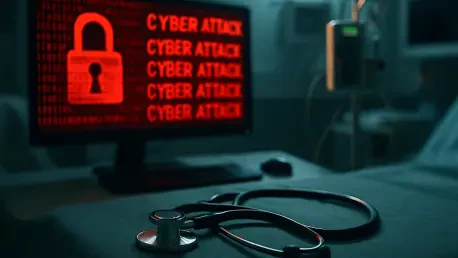
Ransomware has emerged as the weapon of choice in this new disruptive paradigm. By encrypting critical systems—including EHRs, scheduling software, and even networked medical equipment—attackers can effectively halt hospital operations. This tactic forces organizations into an impossible choice: pay a substantial ransom to potentially restore services or endure prolonged downtime that directly endangers patient safety. The immediate and visceral impact of being unable to access patient data or operate essential equipment makes ransomware an incredibly effective tool for financial extortion.
This tactical evolution is amplified by attackers’ growing exploitation of the healthcare supply chain. Instead of targeting well-defended hospitals directly, they often infiltrate through less secure third-party vendors, using them as a Trojan horse to gain access to multiple organizations. Furthermore, a new internal threat has emerged in the form of “shadow AI.” Employees, seeking efficiency gains, are increasingly using unsanctioned public AI tools, sometimes uploading sensitive PHI or proprietary data. This uncontrolled adoption is creating new, unmonitored pathways for data exposure, outpacing the ability of organizations to establish effective governance.
By the Numbers: A Sobering Look at Breach Data and Confidence Levels
The statistical evidence from the past year paints a stark picture of this escalating crisis. The total number of security breaches reported by healthcare organizations in 2025 doubled when compared to 2024, signaling a dramatic increase in successful cyberattacks. However, this surge in incidents was paradoxically accompanied by a significant drop in the total number of individual patient records exposed. This data strongly supports the observation that attackers are pivoting away from large-scale data theft and toward more frequent, targeted attacks designed for maximum operational disruption.
This external pressure has exposed a profound crisis of confidence within healthcare organizations themselves. When it comes to managing risks associated with external partners, a mere 4% of organizations reported feeling highly confident in their third-party risk management programs. A staggering 30% admitted to having no confidence at all, acknowledging a critical blind spot in their security posture. This widespread uncertainty highlights a systemic failure to adequately vet and monitor the vast network of vendors upon which the industry depends.
This lack of confidence extends inward to an organization’s own ability to handle a crisis. Only 6% of security leaders felt very confident in their capacity to respond to and recover from a major cyber incident. While many others claimed to be “somewhat confident,” this lukewarm assurance suggests that while response plans may exist on paper, there is deep-seated doubt about their effectiveness under the intense pressure of a real-world attack. This data points to a dangerous gap between planned security and practical resilience.
The Enemy Within: Systemic Weaknesses and Cultural Hurdles
The pervasive lack of confidence in security capabilities is not merely a technological problem but is rooted in deep-seated organizational and cultural challenges. The healthcare sector is plagued by high rates of staff turnover, a phenomenon that continuously erodes institutional knowledge. Critical security processes and informal workarounds often reside with experienced individuals, and when they depart, the organization’s security memory is effectively wiped, leaving programs fragile and inconsistent.
Many security programs are designed with an inherent flaw: they are built for “perfect staffing conditions” that rarely exist in the high-stress, often under-resourced reality of a hospital environment. These brittle frameworks depend on having a full complement of well-trained staff and fail to account for the pressures of personnel shortages and burnout. When faced with the chaos of a real-world incident, these idealized plans often crumble, revealing their lack of practical resilience.
Underpinning these issues is a persistent financial and cultural tension between funding cybersecurity and investing in direct patient care. Within many healthcare organizations, there remains a perception that every dollar spent on security is a dollar diverted from the bedside. This mindset leads to chronic underinvestment in the necessary tools, talent, and training required to build a robust defense, leaving security teams to fight a modern digital war with outdated and insufficient resources.
When Compliance Isn’t Enough: The Shifting Regulatory Burden
For decades, the regulatory landscape in healthcare cybersecurity has been dominated by frameworks like the Health Insurance Portability and Accountability Act (HIPAA). While instrumental in establishing a baseline for data privacy and security, these regulations were conceived in a different technological era. They are struggling to keep pace with the rapid evolution of modern threats, including the complexity of sprawling vendor ecosystems and the nascent risks posed by artificial intelligence.
Regulators face an uphill battle in adapting rules to a landscape that changes by the month. The speed at which new technologies are adopted and threat actors devise new tactics far outstrips the deliberative pace of the legislative and rulemaking process. This inherent lag means that by the time a new regulation is enacted, it may already be addressing yesterday’s problems, leaving organizations exposed to emerging threats that fall outside its scope.
As a result, there is a growing recognition that compliance is not synonymous with security. Simply checking the boxes on a HIPAA audit is no longer a sufficient defense against sophisticated attackers who exploit gaps that regulations do not cover. The burden is shifting toward a model of proactive risk management, where organizations are expected to demonstrate not just adherence to rules but a comprehensive and dynamic security strategy that actively identifies, assesses, and mitigates risks across their entire digital footprint.
Charting a Course for Cyber-Resilience
The future of healthcare cybersecurity demands a fundamental paradigm shift from a reactive to a proactive and, ultimately, predictive posture. Instead of waiting to respond to alerts, leading organizations are beginning to leverage threat intelligence and advanced analytics to anticipate potential attacks and fortify their defenses before an incident occurs. This forward-looking approach is essential for staying ahead of adversaries in an increasingly hostile digital environment.
Artificial intelligence embodies the dual nature of this new era, presenting both a formidable risk and a powerful defensive tool. While “shadow AI” creates new vulnerabilities, sanctioned and properly governed AI can be a force multiplier for security teams. AI-powered platforms can analyze vast amounts of network data in real time to detect subtle anomalies indicative of an attack, enabling faster threat detection and more automated incident response than human analysts could achieve alone.
The ultimate goal is the development of durable, adaptable security programs built to withstand inevitable changes in personnel, technology, and threat tactics. This involves creating systems that preserve institutional knowledge, automate routine tasks, and are resilient by design rather than by individual effort. The market is responding with a new generation of solutions focused on automated governance, continuous third-party risk monitoring, and platforms that provide a unified view of an organization’s security posture.
A Mandate for Change: Key Takeaways and Strategic Imperatives
The findings presented a stark reality: the healthcare sector faced a dual threat from increasingly sophisticated external attacks and significant, self-inflicted internal vulnerabilities. The strategic pivot by cybercriminals toward operational disruption, combined with the industry’s own crisis of confidence in its defenses, created an environment where patient safety itself was now a primary target. It became clear that cybersecurity could no longer be treated as a siloed IT issue but had to be woven into the fabric of clinical operations and executive strategy.
The organizations that successfully began to navigate this treacherous landscape were those that fundamentally reframed their approach to digital risk. They operationalized the painful lessons learned from past breaches, building resilient systems that were designed to retain knowledge and adapt to constant change. Crucially, they addressed the AI paradox head-on, establishing proactive governance not as a restrictive barrier but as a strategic enabler of safe innovation. This mandate for change elevated cybersecurity from a cost center to a core component of delivering safe, effective, and uninterrupted patient care.