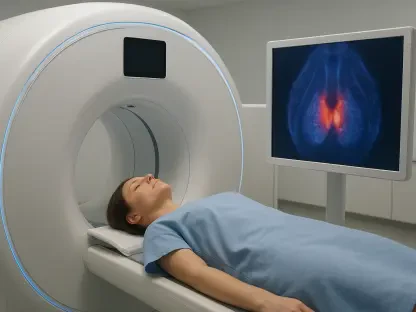

The medical community is witnessing a profound shift where silicon chips and complex algorithms are starting to dictate the necessity of toxic systemic therapies for millions of women worldwide. This evolution marks a departure from a long-standing oncology dilemmwhether to apply aggressive chemotherapy to all early-stage breast cancer patients or risk a dangerous relapse by choosing a more conservative path. Today, artificial intelligence acts as a sophisticated arbiter, uncovering microscopic patterns within pathology slides that were previously invisible to human eyes. As regulatory bodies grant clearances to these tools, the industry is moving toward a model that prioritizes the biological reality of the individual tumor over broad statistical averages.
The Evolution of Risk Stratification in Breast Cancer Care
Historically, the journey toward precision medicine was hindered by the reliance on basic clinical variables like age and tumor dimensions. While the introduction of genomic assays several years ago allowed for a deeper look at genetic expression, these methods proved to be double-edged swords. They successfully identified those who could forgo chemotherapy but demanded significant financial investment and the consumption of physical tissue samples. Consequently, many clinics struggled with long turnaround times and high logistical hurdles, creating a clear demand for a faster, less invasive methodology that could be deployed on a global scale.
Understanding the limitations of these legacy systems is essential for grasping why the move toward digital, AI-powered stratification is seen as the next major frontier. The reliance on centralized laboratories meant that patients in rural or underfunded areas often lacked access to the same level of care as those in major metropolitan hubs. This disparity created a fragmented landscape where the quality of a treatment plan was often dictated by a patient’s zip code. The industry recognized that a more equitable solution was required, leading to the development of software-based tools that could analyze standard pathology slides without the need for specialized shipping or additional biopsy material.
Bridging the Gap Between Digital Pathology and Personalized Treatment
Predictive Modeling vs. Conventional Genomic Assays
Recent breakthroughs in predictive modeling have eliminated the need for destructive testing of biopsy samples. Platforms like ArteraAI Breast utilize existing histopathology images, integrating them with nodal status and tumor size to categorize patients by metastasis risk. Because these models function on digital images, they provide immediate results that reduce the psychological burden on patients waiting for answers. This technological leap preserves tissue for other diagnostic needs and integrates seamlessly into the modern laboratory environment, offering a streamlined alternative to the status quo.
Enhancing Accessibility Through Cost-Effective Diagnostic Tools
Economic barriers have long dictated the quality of care, with advanced genomic testing often restricted to wealthy regions or specialized institutions. AI platforms are democratizing these insights by offering a cost-effective alternative that works within existing digital infrastructures. Recent regulatory milestones, including FDA clearances and European CE marks, have validated these tools for global use. As a result, the geographic location or financial status of a patient no longer serves as a primary barrier to receiving highly individualized treatment recommendations.
Refining Patient Stratification for HR+ and HER2- Invasive Cancer
The most significant impact of these innovations is felt in hormone receptor-positive and HER2-negative invasive cases. In these scenarios, determining the necessity of adjuvant chemotherapy is notoriously difficult due to the nuanced nature of the disease. AI models excel at detecting subtle morphological markers that indicate the likelihood of long-term success. This precision helps prevent the over-treatment of low-risk individuals, sparing them from the debilitating side effects of toxicity, while ensuring high-risk patients receive the necessary aggressive interventions.
The Future Landscape of AI-Driven Clinical Decision Making
The next phase of this transition involves the rise of multimodal AI, which synthesizes genomic data, clinical history, and imaging into a single risk profile. As digital pathology gains deeper regulatory recognition, there is an establishment of entirely new product categories for diagnostic tools. This shift suggests that the future of oncology will depend on real-time data streams rather than static snapshots. Experts anticipate that these methodologies will soon be adapted for other solid tumors, such as lung and colon cancer, further reducing the reliance on traditional, labor-intensive laboratory protocols that have dominated the field for decades.
Implementation Strategies for Modern Oncology Practices
Transitioning to an AI-augmented practice requires more than just new software; it necessitates a total digitization of pathology workflows. Medical centers must invest in high-resolution scanning equipment and robust data storage to handle the massive files required for accurate analysis. Training clinicians to interpret these risk scores alongside traditional markers is vital for fostering patient trust. When treated as a collaborative partner rather than a replacement, AI allows oncologists to deliver recommendations with unprecedented confidence, ensuring that every therapeutic decision is backed by a massive library of analyzed data.
Transforming the Standard of Care for Breast Cancer Patients
The successful integration of AI into breast cancer stratification redefined the boundary between necessary treatment and unnecessary harm. By providing an accessible alternative to tissue-heavy testing, the medical community took a massive step toward a more humane standard of care. These innovations allowed for a strategic shift in how resources were allocated, ensuring that aggressive therapies were reserved for those with the highest biological need. Ultimately, this movement toward data-driven oncology established a foundation for future precision medicine that prioritized both survival and quality of life for survivors across the globe.