
Against a backdrop of nationwide financial headwinds and legislative uncertainty, the University of Iowa Health Care has unveiled a strategic, self-funded capital improvement plan exceeding $32 million, a proposal now awaiting approval from the Board of Regents. This comprehensive initiative is designed to be a multi-pronged assault on aging infrastructure, aiming to modernize critical equipment, enhance the efficiency of patient care, and elevate the institution’s cutting-edge research capabilities. The plan targets key areas across its expanding footprint, from the recently acquired downtown medical center to its core research facilities, representing a crucial reinvestment intended to secure the health system’s long-term viability and leadership in a rapidly evolving industry. This significant expenditure signals a determined effort to fortify its operational foundation while simultaneously navigating a challenging fiscal environment.
A New Vision for a Historic Campus
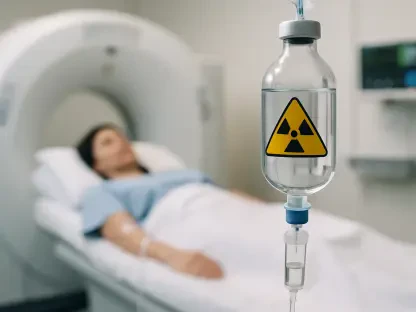
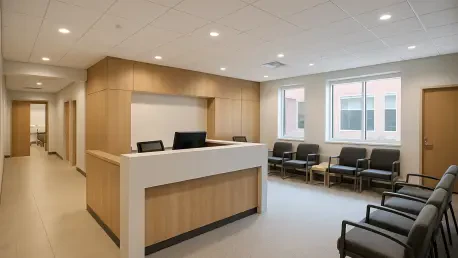
The most substantial component of this capital request is a $12.2 million project to fundamentally transform the radiology and imaging department at the UIHC Medical Center Downtown. This initiative serves as the inaugural phase in a broader, multi-stage strategy to revitalize the facility, which the university acquired in a 2024 bankruptcy auction. The core of the project addresses an urgent need to replace outdated diagnostic equipment, including two computed tomography (CT) scanners and two nuclear medicine machines that have reached the end of their operational lifespan. However, the plan extends far beyond a simple equipment swap. It involves a strategic redesign of the department’s entire layout, relocating main corridors and patient waiting areas to significantly improve patient flow and create dedicated space to accommodate the future installation of two additional CT units. This forward-thinking approach is designed not only to meet current demands but also to future-proof the department for increased capacity, enhancing both patient access and the quality of diagnostic services. If approved, construction is set to begin in the spring and continue through 2028.
Another critical element of the downtown campus revitalization involves a broader effort to modernize various aspects of the historic hospital. Beyond the radiology department, UIHC has committed to a series of multi-million dollar upgrades aimed at bringing the entire facility up to modern standards. This includes the comprehensive modernization of operating rooms to support advanced surgical procedures, upgrading essential medical equipment across multiple departments, and reopening a 26-bed inpatient unit to expand capacity. The plan also addresses fundamental infrastructure needs, such as repairing the roof and service elevators to ensure safety and operational reliability. Furthermore, an expansion of parking is included to improve accessibility for patients and staff. These parallel projects, along with the sophisticated imaging upgrades, underscore a holistic commitment to integrating the downtown campus fully into the UIHC system, ensuring it can provide a consistent and high level of care while functioning as a vital component of the region’s healthcare network.
Modernizing for Advanced Care and Research
In a move designed to streamline operations and enhance patient convenience, UIHC is allocating nearly $5 million to consolidate its sleep lab services into a single, state-of-the-art clinic. Currently, these functions are split between two locations: the Center for Disabilities and Development on the main campus and the Medical Center Downtown. The proposed plan will combine them into a newly constructed facility within existing shell space at the UIHC Heartland Drive clinic in Coralville. This centralization is expected to create significant workflow efficiencies for staff and improve the overall patient experience. The project is also driven by logistical necessity, as the Center for Disabilities and Development is scheduled for demolition next year to clear the site for a major new inpatient tower. The future centralized clinic is designed to be a comprehensive center for sleep medicine, featuring ten dedicated sleep lab testing rooms, a modern reception area, a sophisticated controls space for monitoring, and essential support areas for materials and staff.
To bolster its position as a leading research institution, the Carver College of Medicine is spearheading an $11 million renovation project within the Bowen Science Building. This initiative will modernize 19,000 square feet to better support contemporary scientific needs, specifically accommodating “wet bench” research with updated laboratory support rooms and shared equipment zones. This design philosophy aims to enhance efficiency and maximize the use of valuable resources among research teams. The plan also includes the creation of new faculty offices and departmental administrative areas, with the potential to incorporate a new classroom. Complementing the core renovation, the project will also fund modest upgrades to 2,500 square feet of adjacent corridor and lobby space, including improved lighting and acoustic treatments to create a more collaborative and pleasant environment. Rounding out the capital requests is a crucial $4 million allocation to modernize the HVAC system at the John and Mary Pappajohn Biomedical Discovery Building, an essential update to ensure a stable and precisely controlled environment for the sensitive research conducted within.
Navigating Financial Headwinds
These ambitious capital investments were proposed at a time when UIHC is navigating considerable financial turbulence. The health system, like many across the nation, is contending with significant fiscal pressures, most notably the impact of the One Big, Beautiful Bill Act, which restricts a key Medicaid state-directed payment stream. This revenue has been a critical component of the UIHC budget, contributing $210 million through December of the current fiscal year. While this infusion helped total revenue exceed its budget by nearly $16 million, it was not enough to offset escalating expenses, which were running $37 million over budget. As a result, even with the supplemental payments, UIHC’s operating income stood at $91.1 million, a figure $21.2 million below its target. The financial report starkly illustrated that without this directed revenue, the organization would have faced a substantial deficit of $119.1 million. The uncertainty surrounding this income stream, coupled with rising costs, has forced a cautious approach to larger-scale projects, with administrators confirming they are actively re-evaluating plans for a proposed $2 billion new inpatient tower.